
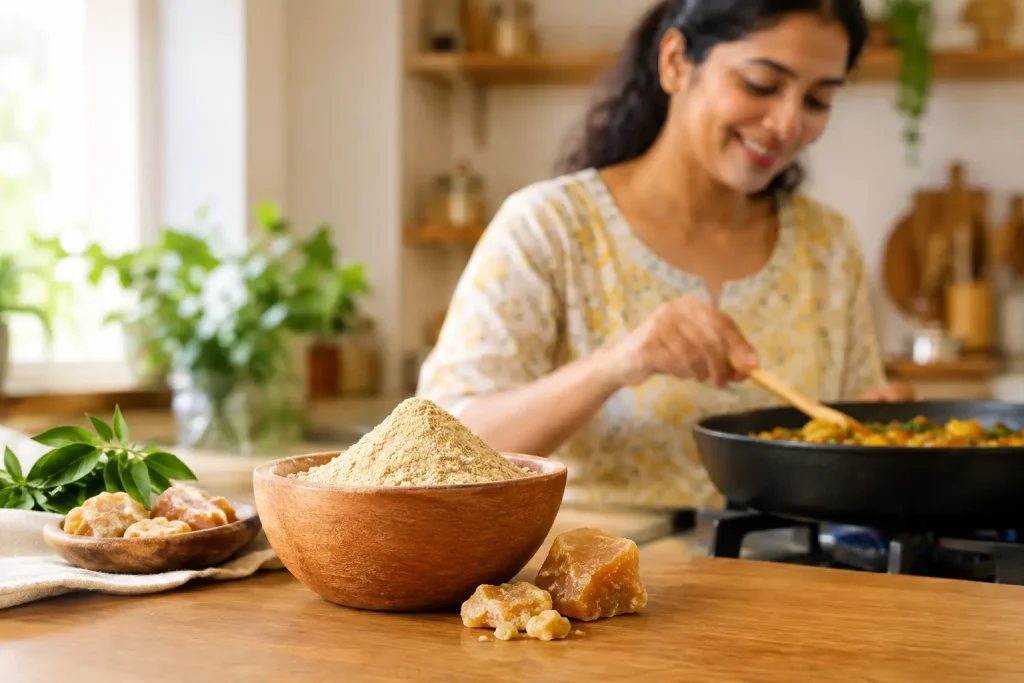
A tiny pinch of hing can change the character of an entire pot of dal. If you have ever asked, what is asafoetida for, the simple answer is flavor – but its role in Indian cooking is more specific than that. Asafoetida brings a deep, savory aroma to everyday dishes, especially when it is briefly heated in oil or ghee at the beginning of cooking.
Often called hing in Indian kitchens, it is one of those pantry staples that lasts a long time and earns its place quickly. The aroma in the jar can seem strong at first. Used correctly, though, it cooks into food with a rounded, appetizing quality that makes familiar meals taste complete.
Asafoetida is a resin derived from the sap of a Ferula plant. The pure resin is very potent, so most asafoetida sold for home cooking is compounded with a base such as starch, flour, or edible gum. That is why different brands may vary in color, strength, and ingredients.
Its main job is to add an allium-like, savory note without using garlic or onion. It is especially valued in recipes where those ingredients are not used for personal, religious, or dietary reasons. Many Jain-style dishes and fasting recipes rely on hing to create more depth while keeping the ingredient list suitable for the household.
Hing is also a traditional choice for lentils, beans, and dishes made with chickpea flour. These foods have a satisfying heartiness, and asafoetida gives them a warm, aromatic edge. In many homes, the familiar crackle of cumin or mustard seeds followed by a pinch of hing signals that a comforting meal is on the way.
Straight from the container, asafoetida can smell sulfurous and intense. This is normal. The key is not to judge it before it reaches warm oil. A few seconds of gentle frying transforms that sharp scent into a mellow, savory fragrance.
Think of it as a supporting spice rather than the main flavor. You may not always be able to identify hing in a finished dish, but you can often tell when it is missing. The food can taste flatter, especially in simple recipes with dals, rice, yogurt, or flour-based snacks.
The trade-off is easy to understand: use too little and it may disappear; use too much and it can take over. Start small. For a family-sized pot of dal, soup, or curry, about one-eighth teaspoon is often enough. If the brand is particularly strong, even less may be right.
The most common method is tempering, also known as tadka or baghar. Heat oil or ghee, add whole spices such as cumin seeds, mustard seeds, or dried chilies if your recipe calls for them, then add the asafoetida at the end. Stir for just a few seconds before adding it to the dish or continuing with the recipe.
Do not let hing burn. It cooks quickly, and burnt asafoetida can become bitter. Keeping the heat at medium and having the next ingredients ready makes this simple step much easier.
Asafoetida is a classic addition to toor dal, moong dal, chana dal, and urad dal preparations. It gives a fuller aroma to everyday dal without requiring a long list of spices. For a quick weeknight meal, a tempering of ghee, cumin, hing, turmeric, and red chili can bring a plain cooked dal to life.
It also works well in lentil soups and bean curries. Add it to the tempering rather than mixing it directly into the cooking liquid. This gives the spice a chance to bloom and spread evenly through the dish.
Hing is often used in kadhi, where its savory warmth balances the tangy base. It is also a useful addition to raita-style seasoning, savory porridge dishes, and simple rice preparations. Because these recipes can be gently flavored, use a very small amount and let it support the other seasonings.
For South Indian cooking, asafoetida is a familiar part of tempering for sambar, rasam, coconut chutney, and many breakfast dishes. A pinch added alongside mustard seeds and curry leaves creates the kind of aroma that feels instantly familiar at the table.
Asafoetida has a natural place in Indian pickles, especially when you want a bold, rounded spice profile. It is also commonly added to savory snacks such as pakoras, sev, and mathri, as well as doughs for pooris or kachoris. Here, it gives a little extra character without making the finished food taste heavily spiced.
For recipes using besan, hing is particularly useful. Besan has a nutty, rich taste, and asafoetida adds a savory lift that works beautifully with cumin, ajwain, chili, and turmeric.
Hing is not a measuring-cup spice. It is a pinch spice. For most household recipes serving four to six people, begin with one small pinch or around one-eighth teaspoon. For a larger pot, increase gradually, tasting the finished dish before deciding whether the next batch needs more.
Powdered asafoetida is usually easier to measure than solid resin, but potency still differs by brand. If you are trying a new packet, start cautiously. You can always add more seasoning later, but you cannot easily remove an overpowering hing flavor.
A useful habit is to keep a dedicated small spoon in the container. This prevents moisture from getting inside and helps you avoid accidentally adding a large amount during busy meal preparation.
When shopping, read the label rather than assuming every asafoetida product is the same. Compounded hing may contain wheat flour, which matters for anyone avoiding gluten. Other versions use rice flour or a different base. If dietary requirements are important in your household, checking the ingredients is worth the extra minute.
The color can range from pale yellow to brownish powder, and stronger products may need a lighter hand. Choose a trusted Indian grocery brand, keep the package tightly sealed, and store it away from direct heat. Hing’s aroma is powerful, so an airtight container also helps prevent it from transferring its scent to nearby pantry items.
At One Stop Supermarket, hing fits naturally alongside the everyday essentials that make Indian home cooking easier: dals, rice, spices, flours, instant foods, and ready-to-eat favorites. Adding one dependable packet to your regular grocery order means it is there whenever a recipe needs that finishing touch.
The first mistake is adding too much. Asafoetida should blend into the dish, not dominate it. A heavy spoonful can make food taste harsh and medicinal rather than savory.
The second is frying it for too long. Add hing after the whole spices have started to sizzle, then move quickly to the next step. Its flavor blooms fast.
The third is assuming it is only for traditional recipes. While hing is deeply rooted in Indian cooking, it can also add interest to pantry-friendly soups, bean dishes, savory batters, and rice meals. Use it where a subtle savory aroma would help, but do not force it into every dish.
It can be stirred into some mixtures, but heating it briefly in oil or ghee usually gives the best flavor. The raw aroma is much stronger and less balanced.
Yes. Hing is the common Indian name for asafoetida. Packets may use either name, and some labels use both.
No. Hing adds a particular savory note, while cumin, coriander, turmeric, chili, mustard seeds, and other spices each bring their own flavor. It works best as part of a balanced seasoning base.
The best way to understand asafoetida is to use one small pinch in your next tadka. Once you notice the warm aroma it brings to a simple home-cooked dish, hing becomes less of a mystery and more of a reliable everyday staple.