
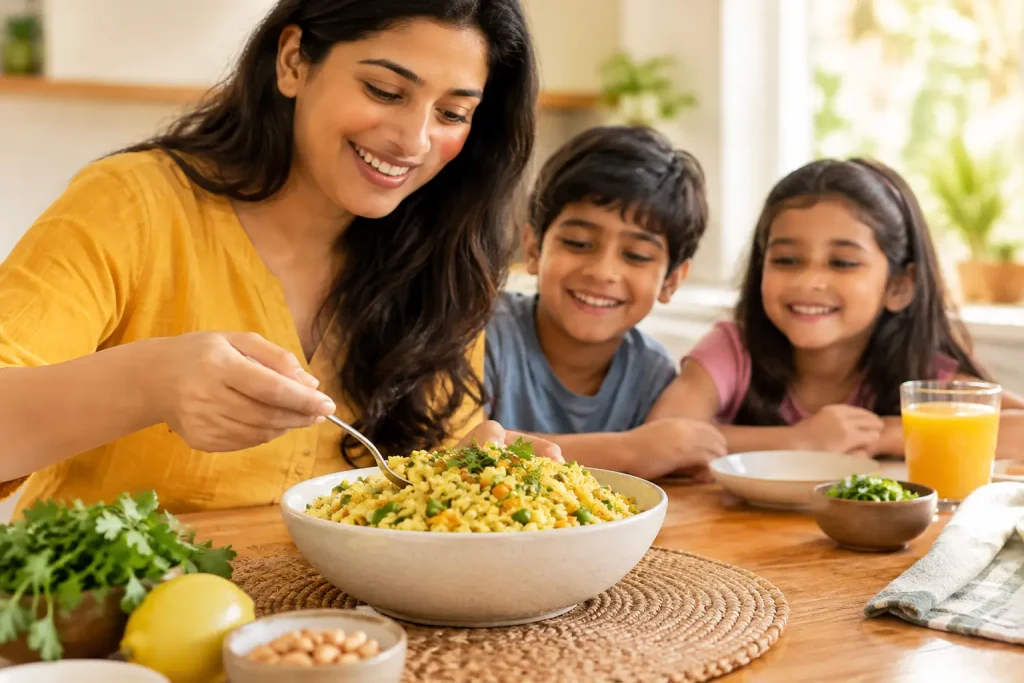
The best weekday breakfasts are the ones everyone recognizes before the first spoonful. A warm poha oats breakfast brings together the light, comforting texture of flattened rice with the staying power of oats, making it a smart option when mornings are busy and the family still wants familiar Indian flavor.
It is not meant to replace classic poha. It is a practical variation for households that want to stretch pantry staples, add more whole grains to the routine, and put breakfast on the table without making separate meals for everyone. With the right poha, a simple tempering, and a little attention to texture, this is the kind of dish that can earn a regular place in the weekly menu.
Poha cooks quickly, absorbs flavor beautifully, and gives breakfast its familiar soft bite. Oats add body and a gentle nuttiness. Together, they create a meal that feels lighter than a heavy breakfast but is more satisfying than plain cereal or toast.
The balance matters. Too much oats can make the dish dense or slightly pasty, while too much poha may leave it feeling like the usual poha with only a small change. For most families, an even mix is a reliable starting point. Once you know whether your household prefers a softer or more textured bowl, adjust from there.
This combination also works well because both ingredients are easy to keep on hand. Poha, oats, peanuts, spices, and a few everyday pantry items can cover breakfast when the refrigerator is nearly empty or there is little time for prep. That kind of flexibility is valuable during school mornings, early work starts, and weekends when a quick hot meal still sounds better than packaged snacks.
Medium or thick poha is usually the better choice for a poha oats breakfast. It holds its shape after rinsing and mixing, so the finished dish stays fluffy rather than turning sticky. Thin poha can work, but it needs a very quick rinse and less resting time. If it sits in water too long, it can break down before it reaches the pan.
Rolled oats give the best contrast to poha. They soften while cooking but keep some structure, which helps the breakfast feel substantial. Quick oats are useful when time is extremely tight, though they absorb moisture faster and can create a softer finish. Steel-cut oats are not a practical match here because they need much longer cooking.
A good shopping rule is simple: buy poha that looks clean and evenly flattened, and choose plain oats without added sweeteners or flavorings. Plain staples give you more control over salt, heat, and seasoning. They also make it easier to turn the same pantry purchase into several meals through the week.
Start by rinsing the poha in a colander under cool water. Do not soak it. Let it stand for a few minutes so the flakes soften naturally. While it rests, dry-roast the oats in a pan over medium heat until they smell lightly toasted. This small step improves flavor and helps the oats stay separate instead of becoming gummy.
In the same pan, heat a little oil and build a classic tempering with mustard seeds, cumin, curry leaves, turmeric, and a pinch of hing if your family enjoys it. Add peanuts and cook until they are crisp and fragrant. A small amount of chopped green chili can add heat, but it is easy to leave out for children or anyone who prefers a milder breakfast.
Add the roasted oats with a splash of water, then cover briefly to soften them. Fold in the rinsed poha, salt, a pinch of sugar if that suits your home style, and a squeeze of lemon. Keep the heat low and stir gently. The poha should warm through, not cook aggressively. Finish with roasted cashews or a spoonful of sev when you want extra crunch.
The key is moisture control. If the mix looks dry, add water one tablespoon at a time. If it looks wet, leave the pan uncovered for a minute or two. Poha and oats continue absorbing moisture after the heat is off, so a slightly loose texture in the pan often becomes just right by the time it reaches the table.
A reliable base does not have to taste identical every time. Small pantry changes can keep poha oats interesting without turning breakfast into a complicated project. For a tangy version, add lemon and a little chaat masala just before serving. For a more savory version, use extra cumin, black pepper, and roasted peanuts.
Families who enjoy a gentle sweet-and-savory balance can add raisins with the peanuts. Coconut, if you already keep it in the pantry, adds a traditional touch and a pleasing texture. A spoonful of plain yogurt on the side can also cool the spices and make the meal feel more complete.
Be careful with strongly flavored additions. Oats have a mild taste, so too much turmeric, lemon, or masala can take over quickly. Start modestly, taste, and adjust. That is especially helpful when cooking a larger batch for different age groups at the same table.
The fastest breakfasts depend on preparation done before the rush starts. Measure poha and oats into a container the night before, or prepare several portions for the week. Keep a small jar of roasted peanuts and cashews ready to use. When the dry ingredients are organized, the cooking itself can take less time than making multiple lunches.
You can also prepare a simple breakfast spice mix with turmeric, salt, cumin, and a little chili powder. Use it only if it suits your family, but it can make the morning routine quicker and more consistent. Store it in a labeled container so anyone in the household can make the dish without guessing measurements.
Leftovers are best eaten the same day. If needed, refrigerate them in a covered container and reheat gently in a pan with a small splash of water. The texture will be softer than when freshly made, but the flavor remains comforting. Avoid making a large batch solely for several days of leftovers, since poha is at its best when it is light and freshly warmed.
A dependable Indian breakfast routine starts with ingredients that work across more than one dish. Poha can become a quick savory snack, oats can be used in porridge or savory cheela-style mixtures, and peanuts bring crunch to many meals. Whole spices, curry leaves, hing, sev, and plain yogurt help turn basic staples into food that feels made with care.
This is where shopping in one place makes a real difference. Instead of making separate stops for poha, oats, authentic spices, snacks, and dairy, families can stock the essentials during their regular grocery run. One Stop Supermarket brings together trusted Indian brands and everyday pantry favorites, making it easier to keep breakfast options ready at home.
When comparing packages, think beyond the next meal. A larger bag may offer better value for a family that makes poha regularly, while smaller packs may suit households trying the oats variation for the first time. The right choice depends on how often you cook it and how much storage space you have. Value is not only the lowest price. It is also buying ingredients your household will genuinely use.
Do not skip rinsing the poha, but do not leave it submerged. This is the most common reason for a mushy result. Roast the oats briefly rather than deeply, because overly browned oats can bring a bitter note. And add lemon near the end, after tasting the salt and spices.
Serving temperature matters too. Poha oats is most enjoyable hot or warmly settled, with the peanuts still crisp and the grains separate. If breakfast is being packed for later, keep a crunchy topping aside and add it just before eating.
A poha oats breakfast does not need many extras to feel generous. Keep the base familiar, adjust the spices to your household, and let a well-stocked pantry do the hard work. On the mornings that feel rushed before they even begin, that warm, simple bowl can be the easiest way to bring everyone back to the table.