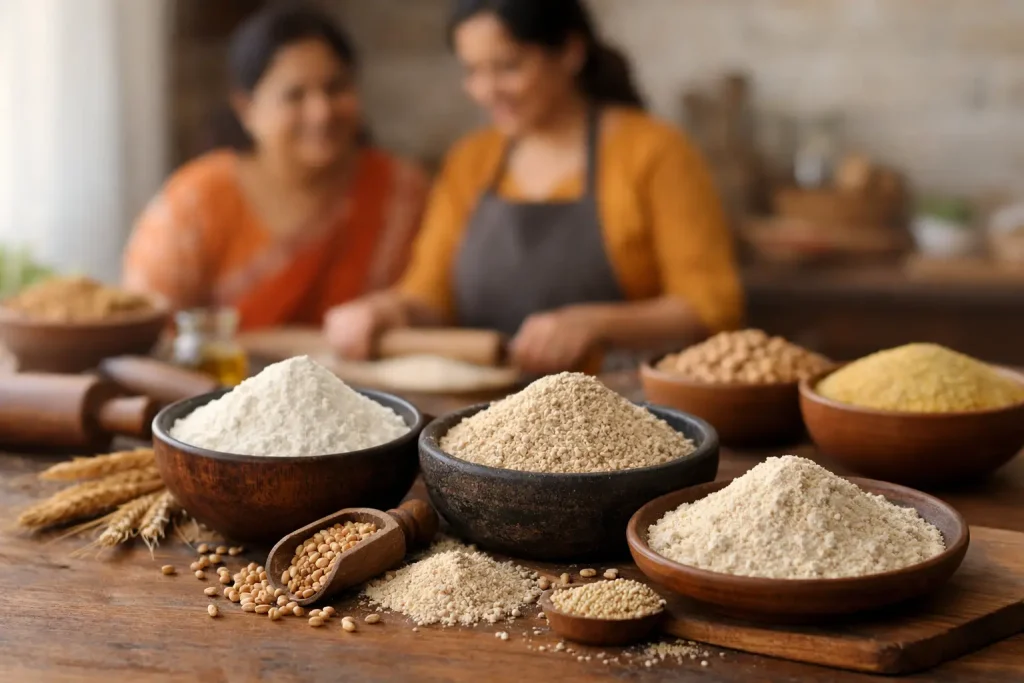
You can tell a lot about a kitchen by the flours in the pantry. One home keeps only atta for daily rotis. Another has besan for pakoras, rice flour for crisp dosa edges, ragi for breakfast, and maida for baking and snacks. If you have ever stood in the grocery aisle comparing bags and wondering what actually belongs in your cart, this guide to Indian flour types will make that choice much easier.
Indian cooking does not rely on one all-purpose flour. Different recipes need different texture, flavor, and strength. Some flours make soft flatbreads. Some add crispness. Some are better for sweets, while others work best for batters, steamed dishes, or everyday family meals. Once you know the basic job of each flour, shopping becomes faster and cooking gets more consistent.
The most common place to start is atta. This is whole wheat flour, usually stone-ground and slightly coarser than standard American whole wheat flour. It is the go-to choice for chapati, roti, and phulka because it gives a soft dough and a flexible bread when kneaded well. Good atta should feel fresh, smell nutty, and produce rotis that stay soft instead of turning dry and brittle.
Not all wheat flour behaves the same way, though. Some atta blends are made specifically for chapati, while others may be labeled for multi-grain use. If your main goal is daily roti, stick with a trusted chapati atta first. Multi-grain versions can be useful, but they sometimes change the dough feel and may need more water or rest time.
Maida is another staple, and it serves a very different purpose. This is refined wheat flour with a fine texture and a lighter color. It is commonly used for naan, bhatura, bakery-style bakes, biscuits, some sweets, and snack doughs. It gives softness and stretch, but it does not have the same hearty taste as atta. That trade-off matters. For everyday flatbreads, most households prefer atta. For puffed breads, soft baked items, and certain festive recipes, maida still has its place.
Then there is sooji, also called semolina or rava in many product labels. Technically it is not always grouped with flour in the usual sense, but it belongs in this conversation because it changes texture in an important way. Sooji is used in upma, halwa, some batters, coating mixtures, and doughs where you want a little bite. Fine sooji and coarse sooji are not interchangeable in every recipe, so the label matters.
Besan is one of the most versatile flours in an Indian pantry. Made from gram or chana dal, it has a rich, savory flavor and works in pakoras, chilla, kadhi, ladoos, dhokla, and binding mixtures for cutlets. It thickens differently from wheat flour and has a stronger taste, so it is not just a substitute ingredient. If you have ever made onion pakoras that turned out heavy, the issue may not have been the recipe – it may have been the besan-to-water ratio or the age of the flour.
A close cousin is sattu or roasted gram flour, which is not the same as besan. Sattu has a roasted flavor and is used in drinks, fillings, and regional dishes, especially in North Indian cooking. If a recipe calls for sattu, regular besan will not give the same result. This is one of those pantry details that saves disappointment later.
Rice flour is another essential, especially if you cook South Indian dishes or like crisp textures in snacks. It is used in dosa batter blends, murukku, chakli, some idiyappam preparations, coatings, and gluten-free recipes. In small amounts, rice flour can make a batter lighter and crispier. In larger amounts, it can turn things dry or brittle. That is why many traditional recipes combine it with urad flour, besan, or wheat flour rather than using it alone.
Corn flour can also confuse shoppers because the name varies by region. In many Indian grocery settings, corn flour often refers to a fine starch used for thickening and for crispy coatings, not coarse cornmeal. Always check the pack. If you are making a sauce, Indo-Chinese gravy, or a crispy fried coating, this fine starch is useful. If you are expecting makki ka atta for flatbread, that is a different product entirely.
Makki ka atta, or maize flour, is more rustic and usually used for makki ki roti. It has a distinct corn flavor and a crumbly nature, which means the dough can be harder to handle than wheat dough. Many home cooks shape it by hand rather than rolling it like chapati. It is worth buying when you want that specific traditional texture, but it is not a direct everyday replacement for atta.
More households now keep millet flours for variety, taste, and traditional cooking. Ragi flour, made from finger millet, is popular for porridge, dosa, roti, and snacks. It has an earthy flavor and a darker color. Some people love it right away, while others prefer mixing it with atta at first. That middle ground often works best if you are introducing it into family meals.
Jowar flour, made from sorghum, is common in rotis and bhakri. It is naturally gluten-free, so it behaves differently from wheat. The dough can crack more easily, and the technique matters. The reward is a soft, wholesome flatbread with a mild flavor that pairs well with many everyday dishes.
Bajra flour, made from pearl millet, is stronger and more assertive in flavor. It is often used in winter cooking and hearty rotis. Like jowar, it does not have gluten, so handling takes practice. If you are new to millet flours, start with small batches and do not judge the result by wheat dough standards.
Singhare ka atta and kuttu ka atta are often bought for fasting recipes. Water chestnut flour and buckwheat flour each have their own role in pancakes, puris, and fasting snacks. These are more occasional pantry items for many families, but if you cook for festival days or fasting periods, they are useful to keep on hand.
The best flour depends on what your household actually cooks each week. If rotis are on the table most days, start with a quality atta and make that your main bag. If weekend snacks are a regular thing, add besan and rice flour. If your family makes dosa, idli, or regional specialties, keep the recipe-specific flours instead of trying to force one flour into every use.
Brand consistency matters more than many shoppers realize. Flour can vary in grind, freshness, absorption, and flavor. A trusted brand often saves time because you already know how much water the dough needs or how the batter sets. That reliability is valuable in busy households where dinner needs to work the first time.
Packaging also tells you a lot. Fresh flour should not smell stale, dusty, or oily. Look for sealed packs, clear labeling, and dates that give you confidence you are buying a fresh product. If you shop regularly for Indian pantry staples, buying from a supermarket that focuses on authentic brands can make the process much easier because the assortment tends to match real cooking needs, not just a token shelf of specialty goods.
Flour is easy to overlook once it gets home, but storage changes quality. Keep flour in airtight containers in a cool, dry place. If you buy larger bags for value, transfer enough for regular use and keep the rest sealed well. Specialty flours, especially those used less often, can lose freshness before you finish them if they are left open.
Another common mistake is treating every flour like a one-to-one substitute. Besan does not replace atta in roti. Rice flour does not behave like maida in baking. Millet flours need different handling. Even within wheat flour, atta and maida do different jobs. A small adjustment in expectation saves a lot of frustration.
If you are building your pantry from scratch, keep it simple. Atta, besan, rice flour, and maida cover a lot of everyday Indian cooking. From there, add ragi, jowar, bajra, sooji, or makki ka atta based on the dishes your family actually enjoys. That is a smarter buy than filling the shelf with bags you use once and forget.
For local households shopping for trusted Indian staples, One Stop Supermarket makes this easier by bringing everyday pantry basics and genuine brands into one place, so routine cooking feels less like a hunt and more like a quick weekly restock.
A good flour choice does more than finish a recipe – it makes the meal taste like home, and that is always worth getting right.