
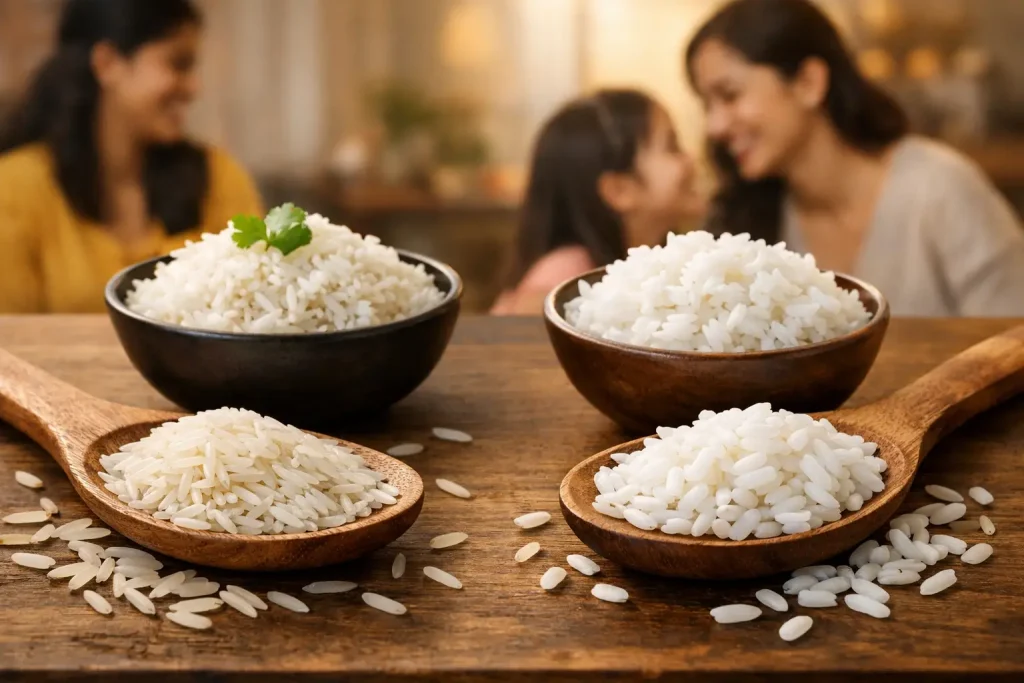
A rice dish can be perfectly seasoned and still feel wrong if the grain does not suit it. In the basmati rice vs jasmine choice, the better option is not about which rice is higher quality. It is about aroma, grain shape, texture, and the meal you are planning. Both are dependable pantry staples, but they create very different results on the plate.
For fragrant biryani, a fluffy pulao, or a simple bowl alongside dal, basmati usually gives the familiar long-grain finish many Indian households expect. For softer, gently clinging rice with a floral fragrance, jasmine is often the better match. Knowing the difference makes weekly grocery shopping easier and helps every bag of rice work harder in your kitchen.
Basmati rice is a long, slender aromatic rice traditionally associated with the Indian subcontinent. Its grains lengthen dramatically as they cook, becoming light, separate, and fluffy when prepared well. It has a distinct nutty fragrance that many people recognize the moment steam rises from the pot.
Jasmine rice is also aromatic, but it is usually shorter and slightly wider than basmati. It is most closely associated with Southeast Asian cooking. Once cooked, jasmine rice is tender, moist, and a little stickier than basmati, with a soft floral scent and a subtle sweetness.
The simplest way to remember the difference is this: basmati is made for distinct, airy grains, while jasmine is made for a softer, more comforting spoonful. Neither is a substitute for the other in every recipe.
Basmati has a pronounced, warm aroma that is often described as nutty or popcorn-like. It stands up well to bold spice blends without getting lost. That is why it works so naturally in dishes where rice carries flavor as well as texture, including biryani, pulao, jeera rice, and saffron rice.
Jasmine has a more delicate fragrance. Its floral note is noticeable but gentle, so it pairs especially well with sauces, broths, and stir-fried dishes where the rice should support the main flavors rather than compete with them. It can also be a lovely everyday rice when you want something softer than basmati.
If your meal includes whole spices such as cardamom, cloves, cinnamon, or bay leaf, basmati is generally the more natural choice. If you are serving a rich curry and want rice that gathers a little sauce in each bite, jasmine may be more satisfying.
Texture is where shoppers notice the difference most clearly. Properly cooked basmati rice should have long, separate grains with a light bite. It should not feel dry, but it should not clump together either. This makes it ideal for layered rice dishes and for serving neatly on a platter.
Jasmine rice has more surface starch, so the grains naturally hold together more. It is not as sticky as glutinous rice, but it is softer and more cohesive than basmati. That texture is excellent for eating with a spoon, serving in bowls, or pairing with saucy meals.
For lunchboxes and reheated meals, jasmine can remain pleasantly tender. Basmati reheats well too, especially when used in fried rice-style dishes or mixed with seasoning, but it can feel firmer if it has dried out. A small splash of water before reheating helps bring back steam and softness.
Basmati earns its place in an Indian pantry because it handles fragrance, spices, and long cooking beautifully. Choose it when the rice is a centerpiece rather than just a side. Aged basmati is especially valued because the grains tend to cook longer, separate more easily, and develop a deeper aroma.
It is a strong choice for biryani because the grains stay defined through layering and steaming. It is equally useful for pulao, fried rice, lemon rice, coconut rice, and simple steamed rice beside dal or rajma. For family gatherings, basmati gives the plate a polished, restaurant-style look without needing complicated preparation.
There are trade-offs. Basmati can be less forgiving if the water ratio is too high or the rice is stirred too much. Overcooking can cause the slender grains to break, and under-rinsing can make the finished rice less fluffy. For best results, rinse until the water is mostly clear, soak for around 20 to 30 minutes when time allows, then cook gently.
A practical stovetop starting point is about 1 cup of basmati rice to 1 1/2 cups of water after soaking. Different brands and cooking methods vary, so use the pack directions as your main guide. Let the rice rest, covered, for 5 to 10 minutes after cooking, then fluff it with a fork rather than stirring vigorously.
Jasmine rice is a smart pantry choice for households that enjoy Thai-style curries, stir-fries, rice bowls, and quick weekday meals. Its natural softness makes it easy to eat with saucy dishes, and its gentle aroma brings warmth without overwhelming other ingredients.
It is also convenient when you want reliable rice without soaking. A good rinse is still worthwhile to remove excess starch, but jasmine generally cooks well straight from the pantry. The grains will not become as separate as basmati, and that is exactly the point. Do not judge jasmine by a basmati standard.
For stovetop cooking, a common starting point is 1 cup of jasmine rice to 1 1/4 cups of water. Some brands call for slightly more or less, particularly when cooked in a rice cooker. Once the water is absorbed, keep the lid on and let it rest for about 10 minutes. This final steam is what gives jasmine its tender, even texture.
Jasmine can be used with Indian meals too, especially simple dals, creamy curries, and everyday dinners where a softer rice is preferred. It may not give biryani the same elegant, separated grain structure, but it is a perfectly good option when the dish does not depend on that finish.
White basmati and white jasmine rice are broadly similar in calories, carbohydrates, and protein per serving. The biggest nutritional difference may come from portion size, what you serve with the rice, and whether you choose a brown variety.
Some people find basmati more satisfying because its grains stay separate and have a firmer texture. Jasmine can feel softer and easier to eat in larger portions. That does not make one automatically better. If you are managing blood sugar or following specific dietary advice, check portion guidance with a qualified health professional rather than relying on a single rice variety to do all the work.
Brown basmati and brown jasmine retain more of the grain’s outer layers, giving them a chewier texture and more fiber than white rice. They also need more water and a longer cooking time. They can be worthwhile for regular meals, but they are not always the best choice for a traditional biryani or a dish where soft, white rice is part of the expected result.
Start with the meals your household cooks most often. If biryani, pulao, jeera rice, and Indian-style rice dishes are regular favorites, keep basmati as your main staple. Look for long grains, a clean aroma, and a trusted brand with clear cooking instructions. Aged basmati is worth considering when fluffy, elongated grains matter most.
If your family often makes rice bowls, stir-fries, or curries where a tender rice is welcome, add jasmine to the pantry as well. Many households benefit from keeping both. It avoids forcing one variety into every dinner and gives you more flexibility during busy weeks.
Storage matters for both varieties. Keep rice in an airtight container in a cool, dry cupboard, away from strong odors and moisture. Buying a larger bag can offer better value when rice is a frequent household staple, but only choose a size you can store properly and use while the aroma is at its best.
For dependable everyday options, One Stop Supermarket makes it easier to stock authentic rice varieties alongside dals, spices, snacks, and other household essentials. Choose basmati when you want long, fragrant grains that stay proudly separate, and reach for jasmine when a soft, aromatic bowl of rice is exactly what dinner needs.