That packet of cumin that smelled incredible when you opened it six months ago should not smell like warm cardboard now. If you are wondering how to store Indian spices so they stay fragrant, colorful, and worth using, the answer is usually not buying more spice jars. It is storing what you already have in a way that protects flavor from heat, light, air, and moisture.
Indian cooking depends on spices doing real work. Turmeric brings earthiness and color. Coriander adds brightness. Kashmiri chili gives a gentler heat and that deep red finish many home cooks want in curries and gravies. When spices lose their aroma, the whole dish feels flatter, even if the recipe is correct. Good storage helps you get better results from everyday pantry staples and saves money because you are not replacing half-used packs too soon.
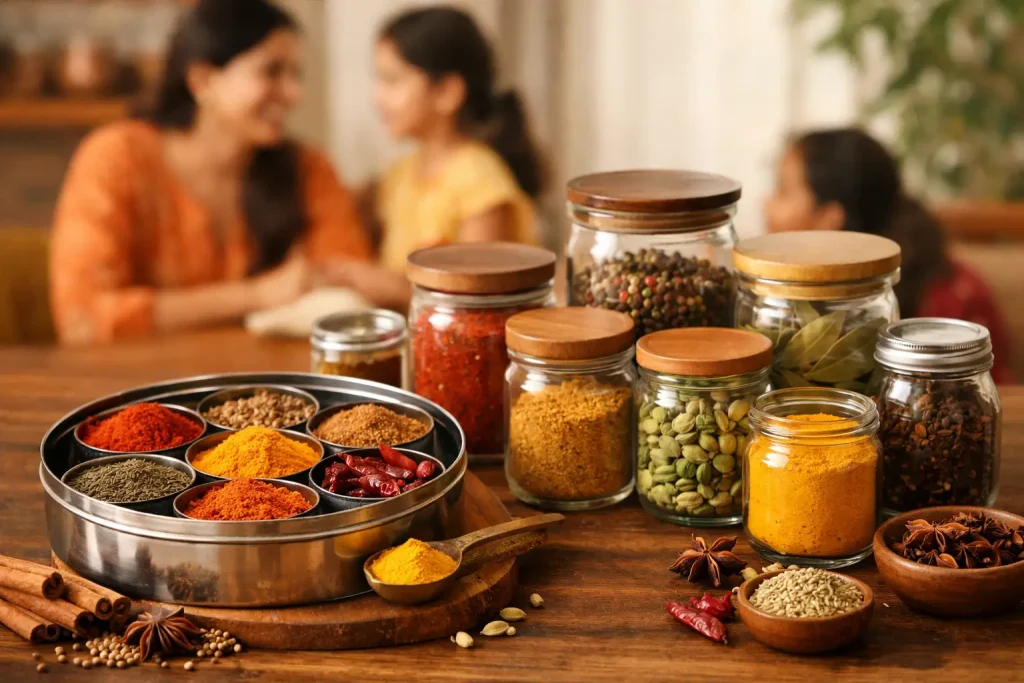
A lot of cuisines use a few dried herbs and a basic spice rack. Indian home cooking is different. Many households keep whole cumin, mustard seeds, cloves, cardamom, cinnamon, black pepper, fennel, fenugreek, turmeric powder, chili powders, coriander powder, garam masala, chaat masala, and more. Some are used daily. Some are used in small amounts but need to stay potent for months.
That variety creates a practical problem. If everything is opened, half-sealed, and scattered across the kitchen, quality drops fast. Powdered spices fade first because they have more surface area exposed to air. Blends like garam masala can lose their balance over time, especially if warm spices start to dominate and fresher top notes disappear. Whole spices usually last longer, but only if they are kept dry and sealed well.
The best place for your spices is cool, dark, and dry. That sounds simple, but many kitchens accidentally offer the opposite. A rack above the stove gets hit with steam and heat every day. Clear jars on a sunny shelf look organized, but light slowly weakens color and aroma. Leaving packets clipped open inside a busy pantry can also invite moisture, especially in humid weather.
A closed cabinet away from the cooktop is usually the safest choice. If you cook often, keep your most-used spices nearby, but not directly over heat. If you use a masala dabba, it is excellent for convenience, but it works best when you refill it with smaller amounts rather than storing your full stock there for months. Think of it as your working set, not your long-term storage.
Container choice matters too. Airtight jars are better than folded packets because they reduce air exposure and spills. Stainless steel containers work well for many Indian kitchens because they block light and are durable. Glass jars are also fine if they seal tightly, but store them inside a cabinet rather than out on display. Plastic can work for short-term use, though over time it may hold odors and does not always seal as reliably.
Not all spices need the same treatment. Whole spices are more forgiving. Cumin seeds, cloves, green cardamom, black peppercorns, fennel seeds, and cinnamon sticks generally keep their character longer than pre-ground versions. If you like cooking from scratch, buying whole spices in larger packs can make sense for both freshness and value.
Ground spices need more attention. Once a spice is milled, its aroma starts fading faster. That does not mean powdered spices are a bad buy. They are practical, convenient, and often essential for quick weekday cooking. It just means you should store them carefully and avoid opening too many packets at once.
There is also a trade-off here. Whole spices last longer, but they take more prep time. Ground spices are faster, but you may need to replenish them more often. For busy family kitchens, a balanced setup usually works best: whole versions of a few staples you toast or grind when needed, and fresh ground versions of everyday essentials you use regularly.
The most common mistake is keeping spices too close to the stove. Heat and steam are constant flavor thieves. Even if the jar is closed, repeated temperature changes can reduce quality over time.
The second mistake is shaking spice directly over a hot pot. It feels convenient, but steam rises into the jar and adds moisture. That is especially hard on powders like turmeric, chili, and coriander, which can clump and lose freshness faster. Spoon out what you need first, then add it to the pan.
The third mistake is mixing new stock into old spice without finishing the old batch. This can leave stale product sitting at the bottom while the fresher spice goes on top. It is better to empty, wipe, and refill the container fully.
A less obvious mistake is buying oversized packs of slow-moving spices. A large bag may look like better value, but not if half of it sits around for a year after opening. Fast-moving staples are worth buying in bigger sizes. Specialty masalas or occasional-use spices are often better in smaller packs.
A good spice setup should help you cook faster, not just look tidy. The easiest approach is to separate your spices into daily use, weekly use, and occasional use. Daily staples like turmeric, cumin, coriander, mustard seeds, chili powder, and garam masala should be the easiest to reach. Special occasion or less frequent spices can stay in backup storage.
Labeling helps more than most people expect, especially when different chili powders or masala blends look similar. Add the purchase or refill date if you can. You do not need to become overly strict about expiration dates, but having a rough timeline helps you use products while they are still at their best.
If your household cooks a lot of Indian food, keeping a small backup section in the pantry is useful. Open one jar for current use and keep sealed refill packs stored properly until needed. This works especially well for staples you buy regularly from trusted Indian grocery brands.
Spices rarely spoil in the same way dairy or bakery items do, but they absolutely lose strength. Whole spices can often stay flavorful for around one to two years if stored well. Ground spices are usually best within six to twelve months after opening, sometimes sooner for delicate blends.
Your nose is the best guide. Crush a little cumin seed between your fingers. Open the jar of garam masala and smell it. If the aroma is faint, dusty, or flat, the spice may still be safe to use, but it will not give you the result you want. Faded color can also be a clue, especially with turmeric and chili powders.
This is why many home cooks prefer to buy spices from a store with steady turnover. When products move regularly, you are more likely to bring home fresher stock to begin with. One Stop Supermarket focuses on authentic Indian grocery brands and everyday pantry shopping, which makes that regular replenishment easier for households that cook these dishes often.
If you want an easy system, start small. Transfer open spice packs into airtight containers. Move them away from heat and direct light. Keep only smaller amounts in your masala dabba or everyday spice shelf, and store backups sealed in the pantry. When a jar is nearly empty, finish it before refilling.
It also helps to shop with your cooking habits in mind. If your family uses turmeric, chili powder, coriander, and cumin every week, larger packs may be worth it. If you only use amchur, kasuri methi, or a specialty masala once in a while, smaller sizes are often the smarter buy. Saving a little upfront is not always the best value if the flavor disappears before you use it.
Good spice storage is not about making your kitchen look perfect. It is about protecting the ingredients that give your food its identity. When your spices stay fresh, your dal tastes fuller, your sabzi smells better, and even a quick weeknight curry feels closer to the version you had in mind. Start with one shelf, one cabinet, or one masala box, and your cooking will thank you every time you open the lid.