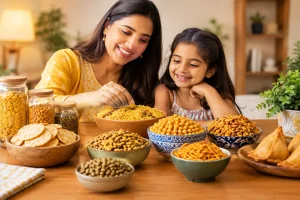
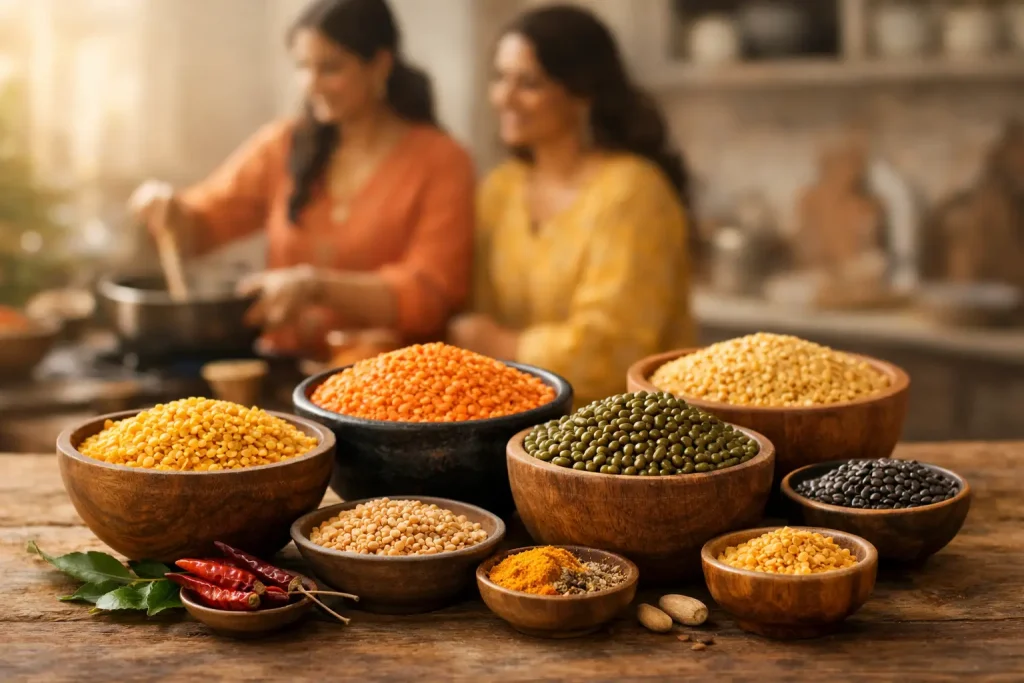
If you have ever stood in the dal aisle wondering whether to pick toor, moong, masoor, or chana, this guide to common Indian dals is for you. A small change in dal can change the whole meal – the texture, the cooking time, even how much tempering and spice the dish needs. For everyday home cooking, knowing a few basics makes shopping easier and helps you keep the right staples in your pantry.
Dal is one of those essentials most households buy again and again. It is budget-friendly, filling, and flexible enough for everything from a quick weekday meal to a full family lunch. But not all dals behave the same way, and that is where many shoppers get stuck.
Some dals break down into a smooth, soft bowl that works well with rice. Others hold their shape and give more bite, which is better for dry sabzi-style preparations, snacks, or hearty soups. If you shop with that difference in mind, you are much more likely to bring home the dal that actually suits the meal you want to cook.
Toor dal, also called arhar dal, is one of the most common choices for everyday Indian meals. It has a mild, slightly nutty taste and cooks into a soft texture that works especially well for South Indian sambar, simple dal fry, and comforting dal served with steamed rice.
If you want a dal that feels familiar and dependable, this is usually a safe pick. It takes a bit longer to cook than masoor or moong unless you use a pressure cooker, but many home cooks prefer its fuller body and classic taste. For households that make dal several times a week, toor dal is often a pantry basic rather than an occasional purchase.
Moong dal is split yellow mung bean, and it is one of the easiest dals to cook. It is light, gentle in flavor, and quick enough for busy evenings when you want something simple without a long simmer.
This dal is a good choice for plain dal, khichdi, and softer dishes where you want a clean, mild base. It is also popular when cooking for children or anyone who prefers lighter meals. The trade-off is that moong dal can taste too delicate for some recipes unless you build flavor with a good tempering of cumin, garlic, chilies, or ghee.
Masoor dal, usually sold split and red or orange in color, is another fast-cooking favorite. It softens quickly and has a mild earthy flavor that works well in everyday dal, soups, and quick one-pot meals.
For shoppers who want convenience, masoor dal is hard to beat. It cooks faster than many other dals and does not need much planning. The texture is usually smoother and a little thinner than chana or toor, so if you want a heavier, more substantial dal, this may not be your first choice. But for speed and value, it earns its place in many kitchens.
Chana dal is split Bengal gram, and it has a firmer texture than toor, moong, or masoor. Even after cooking, it tends to hold its shape better, which gives dishes more bite and structure.
This is a great dal for recipes where texture matters, such as chana dal curry, dal with vegetables, some festive preparations, and certain savory snacks. It can also be ground into flour for besan-based cooking, though whole chana dal and besan serve different purposes. If you are expecting a soft, flowing dal for rice, chana dal may feel too chunky. If you want a richer, heartier dish, it is exactly right.
Urad dal comes in several forms, and that matters when you shop. Split white urad dal is common for tempering, dals, and batters. Whole black urad, often called sabut urad, is the classic choice for dishes like dal makhani.
This dal is known for its creamy quality when cooked properly. Whole urad gives a deep, rich texture, while split urad is often used in smaller amounts in South Indian cooking, especially in tempering and for idli or dosa batter. It is a very useful pantry item, but it depends on what you cook most often. A family making batters and South Indian breakfasts will use it differently from a family focused on Punjabi-style dals.
Once you move beyond split dals, whole versions offer a slightly different experience. Whole moong keeps more shape and gives a heartier feel. Whole masoor has a deeper earthy flavor and works well in rustic dals and soups.
Mixed dal packs are also worth considering for households that like balance. A blend can give you the softness of moong, the body of toor, and the bite of chana in one pot. There is no single best choice here. It depends on whether you want speed, texture, or a more layered taste.
The easiest way to shop is to think about the dish first. If you want a smooth everyday dal with rice, toor or masoor is usually a good place to start. If you want something light and quick, moong works well. If you want a thicker, more textured dish, chana dal or whole dals make more sense.
Cooking method matters too. If you regularly use a pressure cooker or Instant Pot, tougher dals like toor, chana, and whole urad become much easier for weekday meals. If you mostly cook on the stovetop and want speed, moong and masoor are more forgiving.
Your spice style also plays a role. Mild dals like moong and masoor are excellent when you want the tempering to stand out. More assertive dals like chana and whole urad can carry richer gravies and stronger seasoning without disappearing.
When buying dal, look for even color, clean grains, and minimal broken pieces unless the product is meant to be split. Packaging should be sealed well, and the dal should look dry and fresh, not dusty or damp. Trusted brands usually give more consistent cooking results, which matters when you are buying pantry staples for regular family meals.
It also helps to buy based on actual household use instead of just stocking everything at once. Some families go through large bags of toor and moong every month, while others mainly need small packs of urad for batter and tempering. A one-stop Indian grocery store with a broad range of dals and lentils makes that easier because you can pick up your regular staples, compare pack sizes, and buy what fits your routine and budget.
Dal keeps well, but good storage makes a difference. Transfer it to airtight containers once opened and store it in a cool, dry place. This helps protect flavor and keeps the texture more consistent when cooking.
If you buy in larger quantities to save money, label containers with the purchase date. Older dal is still usable, but it may take longer to cook. For busy households, rotating stock is one of the simplest ways to keep pantry staples fresh and ready for everyday meals.
If you like simple rules, here are a few that help. Toor dal is excellent for sambar and classic dal with rice. Moong dal is perfect for khichdi and light weekday cooking. Masoor dal is your quick option when time is short. Chana dal suits thicker curries and dishes where you want texture. Urad dal belongs in creamy dals, batters, and many South Indian tempering mixes.
That does not mean you cannot swap. Many great home cooks do exactly that depending on what is in the pantry. The result may be a little lighter, thicker, or earthier than usual, but that is part of practical cooking too.
A well-stocked dal shelf gives you more than variety – it gives you options for busy nights, comfort meals, and family favorites without overthinking dinner. Once you know how the common dals differ, filling your pantry becomes much simpler, and choosing the right one starts to feel like second nature.