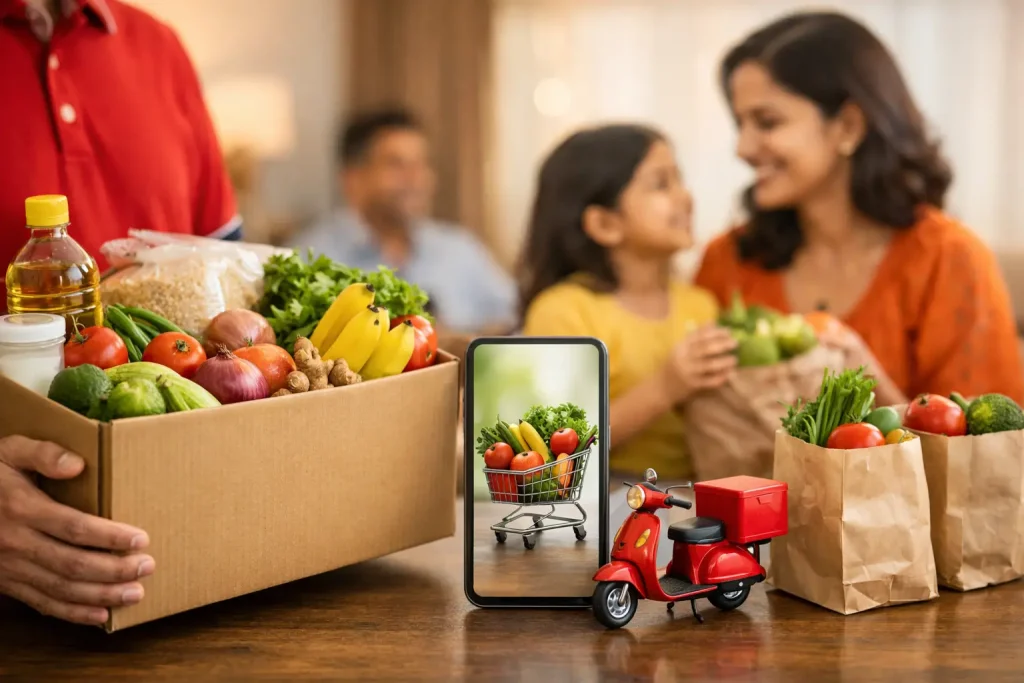
At 6:30 p.m., when dinner is already on the stove and the toor dal jar is nearly empty, shopping stops being a weekend errand and becomes a same-day need. That is exactly why indian grocery delivery trends matter to busy households. Customers are not just looking for speed. They want the right brands, dependable stock, fair pricing, and the comfort of knowing their regular items will arrive without the guesswork.
For Indian and South Asian families, grocery shopping is rarely about one or two items. It is a repeat household routine built around rice, dals, spices, frozen breads, snacks, dairy, sweets, and ready-to-eat options that keep the week moving. Delivery has changed how those routines happen, but it has not changed what shoppers value most. Authenticity still comes first. Convenience simply needs to support it.
The biggest shift is not that people prefer online ordering. It is that they now expect online ordering to feel as reliable as shopping in person. That means customers want familiar brands, clear product availability, and enough variety to complete a real household shop instead of placing three smaller orders from different stores.
This is especially true in Indian grocery. A shopper may need sona masoori rice, urid dal, sabudana, frozen paratha, biscuits for the kids, instant noodles, yogurt, and sweets for guests. If even two of those items are missing, the order feels incomplete. That is why broader assortment has become one of the most important delivery expectations. Convenience only works when the basket makes sense.
Another strong trend is planned replenishment. Many shoppers are no longer browsing aimlessly online. They are reordering known staples. They know which atta they use, which tea brand they prefer, and which snack packs disappear fastest at home. Delivery platforms that support quick repeat purchases are matching the way families actually shop.
There is a clear move toward faster and easier ordering, especially for weekly top-ups. But speed alone does not build loyalty. Shoppers will wait a little longer if they trust the products, recognize the brands, and feel confident about quality.
That is an important trade-off in this category. A general grocery app may be fast, but if the Indian assortment is limited or inconsistent, it cannot replace a trusted neighborhood store. On the other hand, a local Indian supermarket with delivery can be more valuable because it understands the pantry, the brands, and the regular buying habits of the community.
This is where local service has an advantage. It often delivers a better balance of convenience and confidence. Customers are not only saving time. They are avoiding the frustration of substitute products that do not match what they actually cook with at home.
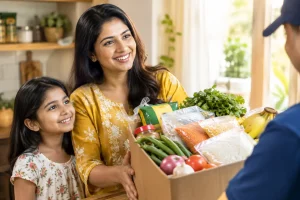
One of the most useful trends for both shoppers and retailers is the rise of larger, more intentional baskets. Instead of ordering only when something runs out, many households now combine pantry refills with easy meal support. A single order might include rice, lentils, spice mixes, frozen roti, ready-to-eat curries, dairy items, bakery basics, and beverages.
This matters because it reflects how Indian grocery delivery fits into real life. It is not just emergency shopping. It is routine family shopping with fewer store visits.
There is also more interest in products that reduce effort during the week. Instant foods, ready-to-eat snacks, frozen breads, and hot food options are becoming more important in online orders because they solve practical problems. Working parents, students, and multi-generational households all value pantry staples, but they also value time. A good delivery order now supports both scratch cooking and quick meals.
The strongest online trend in ethnic grocery is simple: shoppers still buy with their memory, habits, and taste preferences. They search for the brands they grew up with, the ingredients their family recipes depend on, and the snacks they already know will be eaten.
That is why authentic brands continue to drive conversion more than novelty. Customers may try something new now and then, but when they place a real weekly order, they tend to choose what they trust. For Indian grocery delivery, this means stores need strong availability across core categories, not just a few popular items.
It also means that product range has to reflect cultural reality. Stocking one type of rice is not enough. Different homes buy different grains, flours, lentils, and spice blends for a reason. The better a store understands that, the more useful its delivery service becomes.
Household grocery shopping is price sensitive, especially when the same staples are purchased week after week. Customers want convenience, but they are still doing the math. If a delivery order feels too expensive compared with in-store shopping, people will limit it to occasional use.
That is why value-driven indian grocery delivery trends are so important. Shoppers respond well to clear everyday pricing, family pack sizes, combo-friendly baskets, and specials on top-selling staples. Savings do not need to be dramatic to matter. Even small differences on repeat purchases add up over a month.
For retailers, this creates a practical challenge. Delivery adds labor and operating costs, yet customers still expect fair pricing. The stores that handle this best usually focus on dependable value rather than gimmicks. They make it easy to complete a household shop at sensible prices, and that builds repeat business.
Many customers are getting more selective about where they place online orders. Broad apps can be useful, but local ethnic supermarkets often provide a better experience for culturally specific shopping. The reason is straightforward. They know what a real Indian grocery basket looks like.
A local store is more likely to understand why one customer wants a particular brand of basmati rice while another wants sona masoori, or why frozen roti and paratha are regular staples rather than occasional extras. That familiarity improves both stock planning and customer confidence.
In neighborhoods around South Brisbane, this kind of trust matters. Families often prefer ordering from a store that feels connected to their everyday cooking habits rather than from a platform built for generic convenience. One Stop Supermarket fits that local model by pairing in-store shopping with neighborhood delivery for customers who want authentic Indian essentials without making multiple stops.
Not every trend is about speed or repeat ordering. Online grocery is also changing how customers discover products. When shoppers browse by category, they often notice items they would not have searched for directly – a new biscuit brand, a ready-to-eat option for busy weekdays, a sweet for a family visit, or an instant mix that saves time.
This can increase basket size, but only when the site experience is clear and practical. If categories are confusing or product names are too vague, shoppers leave. If products are easy to find and easy to recognize, customers are more likely to add a few extras.
That creates an interesting balance. The best online Indian grocery experience should feel efficient enough for routine reorders but open enough for useful discovery. Too much clutter slows people down. Too little range makes the store feel incomplete.
The next stage of growth will likely be less about dramatic innovation and more about consistency. Better stock accuracy, faster reordering, stronger pantry bundles, and clearer category organization will matter more than flashy promises. Most households do not need grocery delivery to feel futuristic. They need it to work well every week.
There is also likely to be more demand for flexible shopping behavior. Some customers will continue doing a full weekly delivery. Others will order pantry staples online and stop in-store for a few extras. That hybrid pattern suits Indian grocery especially well because shopping habits are personal. Some families plan carefully. Others buy according to what the week looks like.
Retailers that serve both habits well are in a strong position. They can support the customer who wants a fast reorder of essentials and the customer who wants to browse familiar shelves in person before picking up a few ready-to-eat items.
For shoppers, the real takeaway is simple. The best delivery experience is not the one with the biggest promise. It is the one that brings the right Indian groceries, at fair prices, from a store that understands what belongs in your kitchen. When that happens, delivery stops feeling like a backup plan and starts feeling like the easiest way to keep the household running.