A spoonful of fat can decide whether your tadka smells deeply toasted or turns bitter before the cumin has a chance to crackle. Ghee versus butter cooking is not simply a question of which one is healthier or more traditional. Each has a different response to heat, a different flavor, and a different job in the kitchen.
For many Indian households, both belong in the pantry or refrigerator. Ghee brings the familiar aroma needed for dal, rice, halwa, and hot rotis, while butter adds softness and creaminess to dishes where its milk solids are part of the appeal. Knowing when to reach for each one helps you get better results without wasting a good ingredient.
The biggest practical difference is how ghee and butter handle heat. Butter contains butterfat along with water and milk solids. Those milk solids are what give butter its rich dairy flavor, but they can brown quickly and burn when the pan gets too hot.
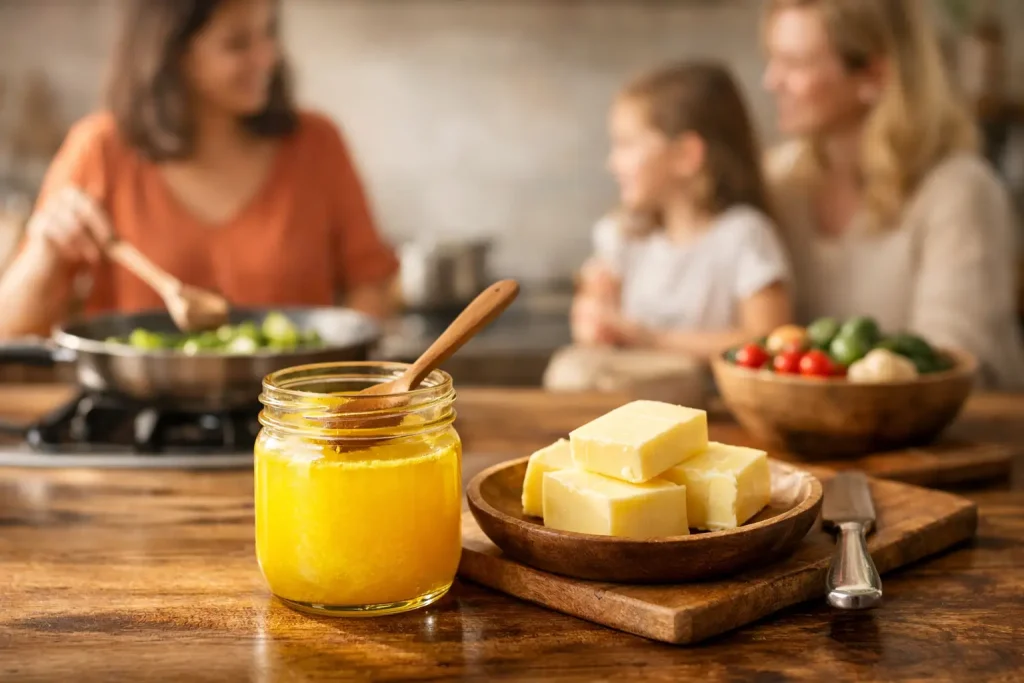
Ghee is butter that has been gently cooked so that most water and milk solids are removed. What remains is mostly pure butterfat, with a warm, nutty aroma. Because there are fewer solids to burn, ghee can handle higher cooking temperatures more comfortably than regular butter.
That makes ghee the safer choice when you are starting a curry base, frying whole spices for a tempering, toasting besan, or cooking parathas over steady medium-high heat. It is also useful when the kitchen is busy and you need a little more room before the fat starts smoking.
Butter is better for gentler cooking. Use it when you want its creamy taste to stay noticeable, such as finishing a mild paneer-style gravy, stirring into mashed potatoes, warming toast, or making a quick butter sauce for noodles. Keep the heat moderate and watch the pan closely.
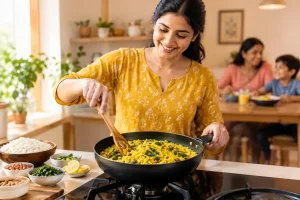
For tadka, ghee is usually the first choice. Heat it until it shimmers, then add ingredients in the order they need: mustard seeds or cumin first, followed by dals, dried chilies, curry leaves, hing, or garlic as the recipe calls for. The ghee carries these aromas through the dish without the rapid scorching that can happen with butter.
If you only have butter, it can still work for a mild tempering at lower heat. The result will be more creamy and less distinctly toasted. Avoid walking away from the stove, especially once spices and garlic are in the pan.
Ghee has a concentrated, rounded flavor that feels familiar in many Indian dishes. A teaspoon stirred into hot khichdi, plain rice, dal, or upma can make a simple meal taste more satisfying. It does not need to dominate the dish to make an impact.
Butter tastes fresher, softer, and more milky. It is often the better choice when you want a creamy finish rather than a toasted richness. Think of butter chicken-style sauces, buttery pav fillings, sweet corn dishes, scrambled eggs, or baked treats where the dairy notes are meant to come through.
The brand and style of ghee can matter here. Some ghee has a delicate aroma, while others taste more deeply browned and nutty. If you are using ghee in a delicate dessert or a lightly seasoned dish, start with a smaller amount and adjust. A stronger ghee can be wonderful in moong dal halwa or atta ladoo, but it may overpower a gentle rice dish.
Adding butter at the end of cooking is a smart way to preserve its flavor. Rather than frying a sauce in a large amount of butter from the beginning, use ghee or another suitable cooking fat for the early stages, then stir in butter just before serving. You get the creaminess without risking burnt milk solids.
This approach works especially well for restaurant-style gravies. A final spoonful of butter can soften spice heat, give the sauce a glossy finish, and make the flavor feel fuller. It is a small step that can make a weekday dinner feel more special.
Ghee earns its place in a regular grocery shop because a little goes a long way. Its low water content means it does not splatter as much as butter, and its flavor brings warmth to both savory and sweet recipes.
Use ghee for rotis and parathas when you want a crisp, golden surface and a rich finish. Brush it on after cooking for a lighter aroma, or use a small amount on the tawa for more color. For frozen roti and paratha, ghee is particularly convenient because it helps create a satisfying homemade finish in minutes.
It is also ideal for roasting or sautéing ingredients that need steady heat, such as onions for a curry, semolina for sheera, or cashews and raisins for a festive garnish. In dal, ghee works beautifully in both the cooking process and the final tempering. One small spoon over a bowl of hot dal and rice is often all you need.
For snacks and breakfast, try ghee with poha, sabudana khichdi, dosa, idli podi, or upma. The goal is not always to use more. Good ghee should add fragrance and richness, not make food feel heavy.
Butter has its own strengths, particularly where texture matters as much as heat. It is a natural fit for baking, because its water and milk solids contribute to tenderness, browning, and flavor. Swapping ghee for butter in a cake, cookie, or pastry can change the final texture, so follow the recipe unless you are ready to experiment.
For everyday cooking, butter works well in creamy sauces, mild curries, sandwiches, toast, and comfort-food meals. It can also be mixed with garlic, cilantro, chili flakes, or chaat masala and spread over warm naan or pav.
Salted versus unsalted butter matters, too. Salted butter is convenient for toast and quick cooking, but unsalted butter gives you more control in sweets and sauces. If a recipe calls for unsalted butter and you use salted, taste before adding more salt later.
Both ghee and butter are calorie-dense fats, so portion size still matters. Ghee is not automatically the right choice for every meal simply because it has a high smoke point. Butter is not automatically less useful because it is more delicate. The best option depends on the recipe, the amount used, and the kind of eating pattern your household follows.
Some people choose ghee because it contains very little lactose and milk protein compared with regular butter. That may suit certain preferences, but anyone with a diagnosed dairy allergy should be cautious and follow professional advice. Ghee is still made from dairy.
Storage is one place where ghee is very convenient. Keep a clean, dry spoon in the jar and store it in a cool place away from direct heat. Butter is best kept refrigerated, and it should be wrapped or covered well so it does not pick up other refrigerator odors.
Buying a larger ghee jar can offer good value for families that use it regularly in dal, rotis, sweets, and tempering. If you only use it occasionally, a smaller container may be the fresher and more practical choice.
Look for ghee with a clean ingredient list and a sealed container. The aroma should be pleasant and buttery, not stale or overly sharp. Trusted Indian brands are useful because the flavor is consistent from one jar to the next, which matters when ghee is a regular part of your cooking.
For butter, choose the type that matches your usual meals. Keep unsalted butter for baking and recipes where you control seasoning. Choose salted butter for easy spreads and quick family meals. If you cook both Indian food and everyday Western-style dishes, having one of each can save last-minute substitutions.
At One Stop Supermarket, you can stock familiar pantry essentials alongside ghee, butter, dals, rice, spices, frozen breads, and ready-to-eat favorites in one regular shop. That makes it easier to keep the ingredients you actually use on hand, rather than changing your meal plan around what is missing.
The next time a recipe starts with “heat fat in a pan,” pause for one second. Choose ghee when you need confident heat and a toasted traditional aroma; choose butter when you want gentle creaminess and its unmistakable dairy flavor. That small decision can make an everyday meal taste exactly the way your family remembers it.