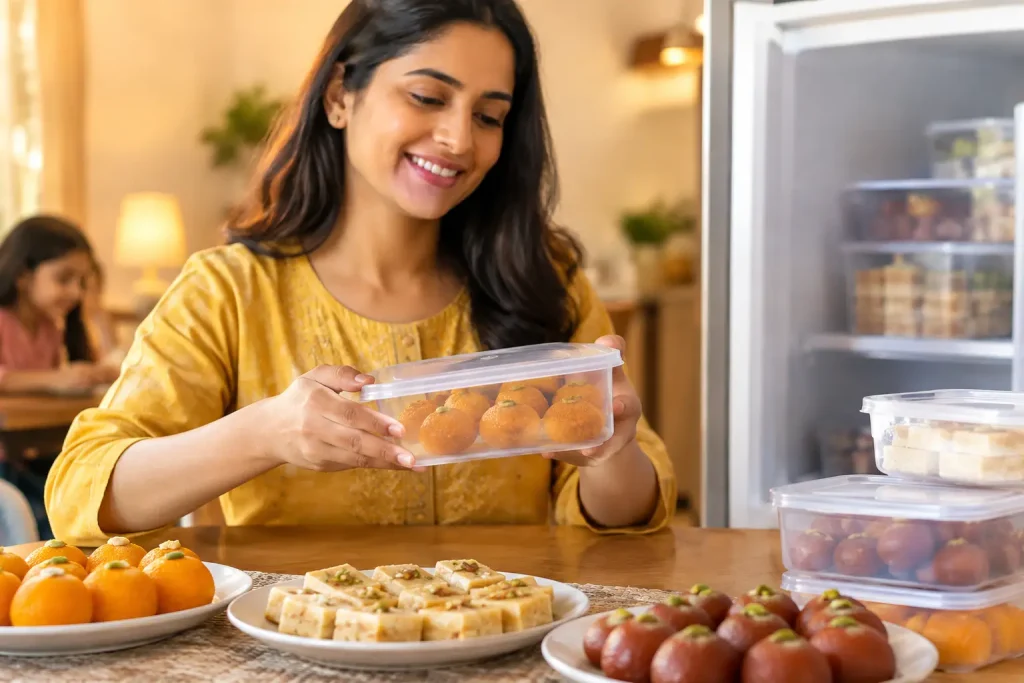
That extra box of mithai after Diwali, a family gathering, or a weekend treat should not have to become a race against the expiry date. So, can you freeze Indian sweets? Yes, many Indian sweets freeze very well when they are packed correctly. The result depends on the sweet itself: firm, dry mithai usually keeps its character better than delicate, syrup-soaked, or cream-heavy varieties.
Freezing is a practical way to keep favorite sweets on hand for guests, celebrations, or a small chai-time treat. The key is starting with fresh sweets, using airtight packaging, and thawing them slowly. A few minutes of care makes a real difference to flavor, texture, and freshness.
Most Indian sweets can be frozen, but not all will taste exactly as they did on the day they were made. Sweets with a lower moisture content generally perform best. Kaju katli, besan ladoo, motichoor ladoo, dry coconut barfi, and many varieties of peda can be frozen with very good results.
Milk-based sweets can also be frozen, but they need more care. Barfi, milk cake, kalakand, and peda may become slightly softer or more crumbly after thawing. This does not mean they are spoiled. It simply means their dairy-rich texture has changed a little in the freezer.
Syrupy sweets such as gulab jamun and rasgulla are possible to freeze, especially if you have bought more than your household can finish in time. However, the syrup may thin out and the sweets can become softer once thawed. They are often still enjoyable, particularly when served chilled or gently warmed, but they are not the best choice if you want the same fresh-from-the-box texture.
The simplest rule is this: freeze sweets you are happy to enjoy at home later, and serve the freshest box for an important celebration or when guests are coming over.
Firm sweets and dry ladoos are the most dependable freezer choices. Their lower moisture content helps prevent icy crystals and protects their shape. Kaju katli holds up particularly well when slices are separated before packing. Besan ladoo and motichoor ladoo are also convenient because they can be thawed one piece at a time.
Barfi is another good option, especially varieties made with cashews, pistachios, besan, or coconut. Plain milk barfi can be frozen too, although it may develop a slightly grainier texture after thawing. If it still smells fresh and has been stored properly, that small texture change is usually no reason to waste it.
Peda freezes well for short-term storage, particularly firmer varieties. For best results, keep each piece from touching the next. This prevents the surface from sticking and makes it easier to take out only what you need.
Halwa can be frozen in small portions, though some types may release a little moisture during thawing. Stir it well after it reaches room temperature, then warm it gently if you prefer a softer, freshly made feel.
Some mithai are better enjoyed fresh or refrigerated rather than frozen. Ras malai is the main example. Its soft cheese patties and creamy milk mixture can separate or become grainy in the freezer. If you do freeze it, expect a change in texture and use it within a short time.
Very soft kalakand, fresh chhena-based sweets, and sweets finished with delicate cream or malai may also lose their appeal after freezing. Their flavor can remain pleasant, but the soft, moist texture that makes them special may not return fully.
Gulab jamun and rasgulla are a matter of preference. They are suitable for freezing when necessary, but leave room in the container for the syrup to expand. Thaw them in the refrigerator, not on the kitchen counter, and avoid reheating rasgulla aggressively. Gulab jamun can be warmed gently after thawing, while rasgulla is usually best served cool.
Do not put an open sweet box straight into the freezer. Cardboard boxes are useful for carrying mithai home, but they do not protect the sweets from freezer odors, drying, or ice crystals. Transfer the sweets into clean, freezer-safe containers as soon as possible.
First, make sure the mithai is completely cool. Warm sweets create condensation inside the container, which can turn into ice and leave the surface wet after thawing. If the sweets are already chilled, they can go directly into your freezer-safe packaging.
For cut sweets such as barfi or kaju katli, place a small sheet of parchment paper between layers. For ladoos, arrange them in a single layer if space allows. If you need to stack them, use parchment between layers so they do not stick together or lose their shape.
Use an airtight container with a secure lid, or wrap the container tightly before freezing. Small portions are far more useful than one large box. You can take out six pieces for a family evening or a few ladoos for unexpected guests without thawing the entire batch.
Label the container with the type of sweet and the date. It sounds simple, but it helps prevent a freezer full of mystery containers after the festive season. For the best flavor, aim to enjoy most frozen mithai within one to two months. Some dry sweets can last longer, but quality is at its best when they are not forgotten at the back of the freezer.
Patience is the best thawing method. Move the portion you need from the freezer to the refrigerator and let it thaw gradually for several hours or overnight. Slow thawing helps control moisture and keeps dairy-based sweets from becoming overly wet.
Once thawed, let dry sweets sit at room temperature for 15 to 30 minutes before serving. Kaju katli, barfi, and ladoos often taste better when they are no longer fridge-cold because their aroma and texture come through more clearly.
For gulab jamun, warm the thawed sweets with a little syrup over low heat until just heated through. Do not boil them, as they can break apart. For halwa, gentle warming in short intervals works well. Add nothing at first, then only add a small spoonful of milk or ghee if the texture genuinely needs it.
Avoid thawing sweets on the counter for long periods, especially dairy-rich mithai. Also, do not refreeze sweets after they have fully thawed. Repeated freezing and thawing affects texture and can make storage less safe.
Choose the refrigerator when you expect to finish the sweets within a few days. This is usually the best option for ras malai, fresh milk sweets, and other delicate varieties that are most enjoyable soon after purchase. Keep them covered tightly so they do not absorb odors from other foods.
Choose the freezer when you have extra mithai for later, are planning ahead for a celebration, or want to avoid waste after a busy festive week. Dry sweets, ladoos, and firmer barfi are ideal for this approach. Freezing individual portions also gives busy households an easy way to enjoy a familiar sweet without opening a whole box.
Always check the storage guidance on the package if you are buying branded or pre-packed sweets. Handmade mithai may vary by recipe, especially when it contains milk, nuts, coconut, or syrup. When in doubt, use your senses after thawing: a sour smell, visible mold, or an unusual slimy surface means it should be discarded.
A well-stocked sweet box is one of those small comforts that makes a home feel ready for visitors and celebrations. Pick fresh, authentic mithai, freeze the extras in sensible portions, and you will have a delicious treat waiting whenever the moment calls for it. For everyday favorites and festival-ready sweets, One Stop Supermarket makes it easier to keep that familiar taste close by.