
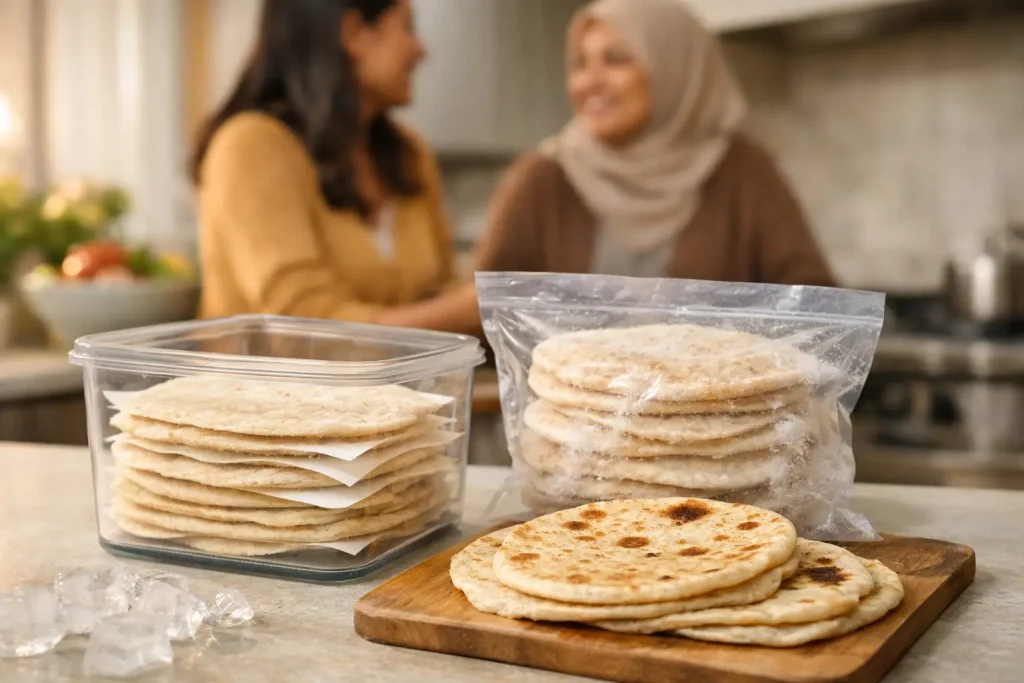
A packet of frozen roti can turn a rushed weeknight into a proper home-style meal in minutes. But knowing how to store frozen roti correctly matters just as much as choosing a trusted brand. Poor freezer storage can leave rotis dry around the edges, stuck together, or covered in ice crystals before you are ready to cook them.
The good news is that frozen roti is simple to keep well. A few practical habits – keeping the freezer cold, sealing opened packs carefully, and taking out only what you need – help preserve the soft texture and familiar taste your family expects.
Frozen roti should go into the freezer as soon as you return from shopping. Avoid leaving the package on the kitchen counter while you unpack other groceries, especially on a warm day. Even brief thawing and refreezing can create extra moisture in the pack, which often leads to icy rotis that do not cook as evenly.
Keep the package at 0°F or below. Most home freezers hold this temperature well, but frequent opening can cause small temperature changes. For best results, place the roti toward the back or center of the freezer rather than in the door. The door is convenient, but it warms up slightly every time someone reaches in for ice, snacks, or other household staples.
If the original packet is unopened and tightly sealed, it can usually stay in its packaging until you need it. Check that there are no tears, gaps, or crushed corners. A damaged package lets dry freezer air reach the roti, increasing the chance of freezer burn.
Once the pack is open, close it carefully after removing the number of rotis you plan to cook. Press out as much excess air as possible, fold the opening over, and secure it with a clip. For longer storage, place the opened packet inside a freezer-safe zip bag or airtight container. This second layer is especially useful for households that cook only a few rotis at a time.
Store frozen roti flat whenever possible. Stacking heavy grocery items on top of the packet can bend or crack the rotis, making them more likely to tear in the pan. If freezer space is tight, slide the packet into a flat freezer bag and stand it upright like a file. This keeps it organized without squeezing the bread.
If you have bought several packs during a discount, avoid packing them too tightly together. Cold air needs room to circulate around frozen foods. A crowded freezer may still feel cold, but food can freeze less evenly and packages are easier to forget at the back.
It also helps to keep frozen breads in one dedicated area. Put roti, paratha, naan, and similar items together so you can quickly see what is available for the week. This simple habit prevents unnecessary duplicate purchases and makes meal planning easier.
Most store-bought frozen roti comes with sheets or liners between pieces, making it easy to remove one at a time. Keep those separators in place. They protect the surfaces of the rotis and stop them from freezing into a single block.
If your rotis do begin to stick together, do not force them apart while they are frozen solid. Pulling too hard can split the dough or tear an edge. Let the pack sit at room temperature for only a minute or two, just enough to loosen the surface slightly, then gently separate the pieces and return the remaining rotis to the freezer immediately.
For homemade roti, cool each cooked roti completely before freezing. Warm roti releases steam inside the container, and that trapped moisture turns into ice. Place parchment paper or freezer-safe sheets between each roti, stack them in small portions, and seal them in a freezer bag. Smaller portions are practical because you can take out exactly what your family will eat without repeatedly opening the entire batch.
A simple date label saves guesswork later. Write the freezing date and the number of rotis in each bag. While frozen roti remains safe when kept continuously frozen, quality is best when you use it within the timeframe listed on a store package or within a couple of months for homemade batches.
Use older packs first. Put newly purchased roti behind the pack already in your freezer, so the earlier one stays visible and gets used before it loses its best texture. This is a small supermarket-style habit that helps reduce household waste.
Freezer burn is not usually a safety issue, but it can make roti tough, dry, and less pleasant to cook. It happens when air reaches the surface of frozen food and pulls out moisture. The best defense is airtight packaging and a consistently cold freezer.
Watch for loose bags, broken seals, and packages covered in heavy frost. A light layer of frost can happen over time, but thick ice inside an opened pack often means warm air has entered. Move the rotis to a clean freezer-safe bag, press out the air, and seal it well.
Try not to leave the package out while the tawa or skillet heats. Take out the portions you need, close the bag, and put it back immediately. This is one of the easiest ways to maintain quality, particularly when several people in the household are cooking at different times.
Do not store frozen roti beside strongly scented foods without extra protection. Roti can absorb odors from the freezer, which may affect its flavor. A sealed outer bag or container helps maintain the mild, clean taste that works with dal, curries, chutneys, and everyday meals.
Usually, no. Many frozen rotis are designed to cook straight from the freezer on a hot tawa, skillet, or pan. Cooking from frozen is convenient and often gives the best result because the roti stays soft inside while warming evenly on the outside.
Follow the package instructions, as cooking times differ by brand and thickness. In general, preheat the pan over medium heat, place the frozen roti on the hot surface, and turn it as directed until it is warmed through with light brown spots. A little ghee or oil can be added after cooking if that suits the meal.
If you accidentally thaw more rotis than you need, it is best to cook them rather than refreeze them. Refreezing thawed roti may affect texture and can add moisture to the package. Cooked leftover roti can be cooled, stored in the refrigerator, and reheated later, but it is usually at its best when served soon after cooking.
For households that rely on quick Indian meal staples, keep one open pack of frozen roti near the front of your designated freezer section and keep unopened backup packs behind it. Check the open pack before adding a new one to your cart. This makes it easier to shop for what you actually need and ensures you always have a convenient bread option ready.
At One Stop Supermarket, frozen roti is a practical choice for families who want authentic everyday food without the extra preparation time. Keeping a few packs stored properly means you can serve warm roti alongside your favorite pantry dishes whenever the day gets busy.
A well-sealed packet, a steady freezer temperature, and a quick check of what is already on hand are all it takes. When dinner needs to come together fast, good freezer storage lets every roti cook closer to the soft, satisfying result you had in mind.