A warm roti beside dal, a crisp paratha with chai, or a soft naan ready for a rich curry can turn an ordinary weeknight meal into something everyone looks forward to. The best frozen Indian breads make that familiar comfort possible without mixing dough, waiting for it to rest, or rolling out each portion after a busy day. Keep a few varieties in the freezer and a satisfying Indian meal is never far away.
Frozen breads are not all meant for the same plate. Some are light enough for everyday meals, while others are layered, buttery, or made to carry bold gravies. Choosing well comes down to the meal you are serving, the texture your family prefers, and how much time you have before dinner.
For most homes, frozen roti and whole wheat chapati are the most useful place to start. They are simple, soft, and mild enough to serve with everyday dishes such as dal, chana, rajma, or dry sabzi. Because they are usually thinner and less rich than parathas, they work well when bread is part of the meal rather than the main attraction.
Look for rotis that puff lightly on the skillet and stay flexible after heating. A good frozen roti should have a wheat-forward taste and a tender bite, not a dry or stiff texture. Whole wheat options are especially popular for regular family dinners because they feel familiar, filling, and easy to pair with almost anything.
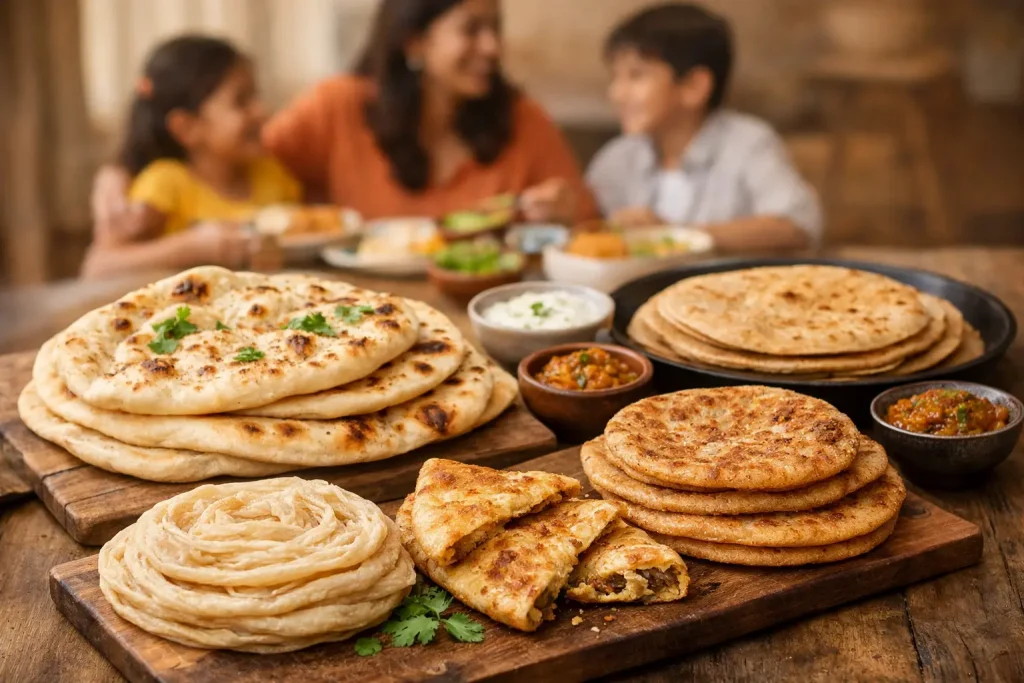
Paratha is the choice when you want more flavor and a more substantial meal. Plain parathas have delicate layers that become crisp and golden on a hot skillet, while stuffed varieties bring their own character to the table. Aloo paratha, gobi paratha, methi paratha, and mixed vegetable paratha can make a quick breakfast, lunch, or light dinner when served with yogurt, pickle, or a cup of tea.
The trade-off is that parathas are richer than roti and usually benefit from a little more cooking time. That is part of their appeal. Their flaky layers and satisfying texture make them especially useful on weekends or on evenings when the meal needs to feel a little more generous.
Naan is best saved for dishes with plenty of sauce. Its soft, slightly chewy texture is ideal for scooping up butter chicken-style curries, paneer gravies, korma, or dal makhani. Plain naan is versatile, but garlic naan and butter naan add an extra layer of flavor when the rest of the meal is simple. Heat naan until it is warm through with a few toasted spots, then serve it right away. Left sitting on the counter, it can lose its softness quickly.
Kulcha offers a similar comfort-food feel, but it is often thicker and more filling. Plain kulcha is a good match for chole, while stuffed options can stand on their own with yogurt and chutney. If your family likes a softer bread with a slightly heartier bite, kulcha is worth keeping as a freezer staple alongside roti and paratha.
The right choice depends less on which bread is “best” overall and more on what is happening at your table. Roti is the practical everyday option. It is quick, light, and easy to serve with a wide range of home-style dishes. Paratha is for when you want layers, crisp edges, and a more filling meal. Naan is a natural partner for restaurant-style curries, and kulcha is particularly satisfying with chickpea dishes or as a more substantial snack.
For a household that cooks Indian food regularly, variety matters. A freezer stocked only with naan may leave you without the right bread for a simple dal-and-rice dinner. On the other hand, keeping only roti can make special curry nights feel less festive. A balanced freezer usually includes everyday rotis, a favorite paratha, and one softer bread such as naan or kulcha.
Package size matters, too. Larger packs can offer better value for bigger families and frequent use, but only if the bread will be used before it develops freezer burn or picks up odors. Smaller packs can be the smarter buy when you are trying a new brand or want several types on hand. Check whether individual pieces are separated, as this makes it much easier to heat only what you need.
Authentic flavor starts with a short, recognizable ingredient list. Wheat flour, water, oil or ghee, salt, and traditional seasonings are exactly what many shoppers expect. Stuffed breads should taste like the filling named on the package, whether that is potato, fenugreek, cauliflower, or paneer, rather than tasting overly salty or greasy.
Texture is the real test. Rotis should remain soft and foldable. Parathas should have visible layers and crisp gently without becoming hard. Naan and kulcha should warm through evenly, with a soft center and a few browned spots. Quality frozen Indian bread should feel close to homemade when cooked properly, even though it is designed for convenience.
Trusted Indian brands are also worth seeking out. Familiar brands often understand the texture and flavor that families expect from roti, paratha, naan, and kulcha. At One Stop Supermarket, shoppers can choose from genuine Indian grocery favorites and keep practical freezer staples ready for the week ahead.
Most frozen Indian breads cook best directly from the freezer. There is usually no need to thaw them first, and thawing can sometimes make them sticky or uneven. A preheated skillet or tawa is the most reliable method because it gives you control over browning and softness.
For roti or chapati, place the frozen bread on a medium-hot dry skillet. Turn it every 20 to 30 seconds until it is heated through and develops light brown spots. A brief press with a spatula can help it puff. If you prefer a softer finish, wrap cooked rotis in a clean kitchen towel or place them in a covered container while you heat the rest.
Parathas need a little more patience. Cook them over medium heat, turning regularly so the layers warm through before the outside gets too dark. Many parathas release enough oil on their own, but a small amount of ghee or oil can add extra color and flavor if desired. Avoid very high heat, which can leave the center cold while the outside burns.
Naan and kulcha can be warmed in a skillet, oven, or air fryer, depending on the package directions and the finish you prefer. A skillet gives a softer, more flexible result. An oven or air fryer can create a lightly crisp surface, which is excellent for thick kulcha or garlic naan. For a softer naan, brush it lightly with butter or ghee after heating and cover it briefly before serving.
Microwaving is fast, but it is rarely the best first choice. It can make bread soft without giving it the toasted flavor and texture that make Indian breads so enjoyable. If time is tight, use the microwave only to begin warming, then finish the bread on a hot skillet for a few seconds per side.
Roti belongs with everyday comfort food. Serve it with a bowl of dal, a simple lentil dish, or a dry spiced vegetable preparation. Its gentle flavor lets the main dish lead, and it is easy for children and adults alike to enjoy.
Paratha is perfect when breakfast needs more staying power. Plain paratha with yogurt and pickle is simple and satisfying, while a stuffed paratha can make a complete quick meal. It also works beautifully with leftover curry, turning last night’s dinner into an easy lunch.
Naan and kulcha shine with thicker gravies and party-style meals. Bring out naan for paneer tikka masala, creamy lentils, or any curry you want to scoop up to the last spoonful. Pair kulcha with chole for a classic, filling combination that feels special without requiring hours in the kitchen.
Frozen bread is at its best when it supports the way your family actually eats. Choose roti for dependable weekday dinners, paratha for hearty breakfasts and quick meals, and naan or kulcha when a curry night calls for something softer and more indulgent. Store packages flat, seal them carefully after opening, and rotate older packs to the front so nothing gets forgotten.
A well-stocked freezer does more than save time. It gives you the freedom to serve familiar, satisfying food whenever the day runs late, unexpected guests arrive, or everyone simply wants a warm bread fresh from the skillet.