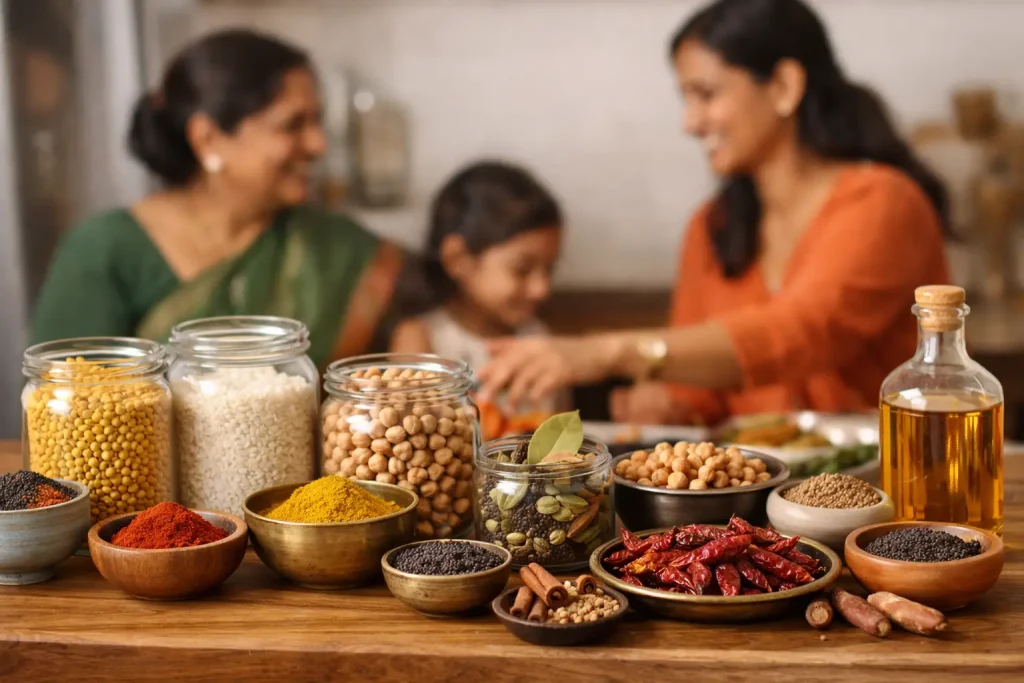
A well-stocked kitchen usually shows itself at 6:30 p.m. on a busy weekday. You open the cabinet, see rice, dal, atta, a few trusted spices, and something quick in the freezer, and dinner feels manageable again. If you are figuring out how to stock indian pantry essentials for daily cooking, the goal is not to buy everything at once. It is to build a practical setup that covers your household’s real meals, saves extra trips, and keeps familiar brands within reach.
For most families, the smartest pantry is not the biggest one. It is the one that makes breakfast, lunch boxes, tea-time snacks, and simple dinners easier through the week. That means buying the staples you use often, choosing pack sizes that match your household, and balancing scratch-cooking ingredients with a few convenient backups.
Start with the foods that appear in your kitchen every week. For many South Asian households, that begins with rice, atta, dals, oil, spices, tea, and a few snack staples. If your family cooks more South Indian meals, you may lean more heavily on idli rice, urad dal, poha, rava, and ready mixes. If your meals are more North Indian, atta, basmati rice, rajma, chana, and frozen roti or paratha may move up the list.
This is where many shoppers overbuy. They see a long list online and assume they need ten lentils, twenty spices, and every flour on day one. In practice, you only need the versions you actually cook with. A smaller pantry that gets used well is better value than a large pantry full of ingredients that sit untouched.
Rice is usually the backbone of an Indian pantry, but the right rice depends on your meals. Basmati works well for biryani, pulao, and everyday table rice if you prefer long grains. Sona masoori is a favorite for lighter daily meals in many homes. If you make dosa or idli at home, idli rice may belong on your regular list.
Atta is just as important for households that make chapati or roti regularly. Buy a size you can finish while it still smells fresh. Larger bags often offer better value, but only if you have storage space and use them consistently. If your schedule is packed, keeping frozen roti or paratha on hand can be a very practical add-on rather than a compromise.
Other useful pantry grains depend on your cooking habits. Rava is handy for upma, halwa, and quick breakfasts. Poha makes an easy weekday option. Vermicelli can cover both sweet and savory dishes. These are not mandatory for every home, but they are worth adding once your basics are in place.
Dals are where an Indian pantry starts to feel complete. Toor dal, moong dal, chana dal, masoor dal, and urad dal cover most daily needs for many households. Rajma and chickpeas are also worth treating as staples if they appear often in your weekly meals.
A good rule is to keep two or three dals that rotate into your menu often, then add specialty lentils later. Toor dal might be your everyday sambar or dal base. Moong dal is quick, light, and useful when you want something simple. Chana dal adds body and texture to many dishes. Urad dal may be essential for tempering, batters, or regional recipes.
If storage is limited, avoid buying every variety in large bags. It is better to keep dependable medium sizes that you replenish regularly. That way you maintain freshness and avoid tying up your grocery budget in ingredients that move slowly.
The best spice shelf is not the most impressive one. It is the one that helps you cook confidently on an ordinary Tuesday. For most kitchens, the real core includes turmeric, red chili powder, coriander powder, cumin seeds, mustard seeds, garam masala, hing, and black pepper. Salt is obvious, but many households also keep jaggery or sugar nearby because balance matters in Indian cooking.
From there, your regional style decides the rest. Curry leaves are often used quickly and belong more in regular shopping than long pantry storage, so dry alternatives or nearby frozen options can help in a pinch. Sambar powder, rasam powder, chaat masala, pav bhaji masala, and biryani masala are the blends that save time when you know you will use them. Whole spices such as cloves, cardamom, bay leaves, cinnamon, and fennel seeds are worth keeping if you cook rice dishes, chai, or festive meals often.
There is a trade-off here. Whole spices last longer and often give better flavor, but ready blends save time and are easier for newer cooks. Many households do best with a mix of both.
Every Indian pantry also needs the quiet workhorses. Cooking oil is one of them, and your choice may depend on what you prepare most often. Ghee is another staple that earns its space quickly, whether for dal, rotis, sweets, or finishing dishes. Tamarind, pickles, papad, and chutneys can turn a simple meal into a satisfying one without much extra effort.
Ginger-garlic paste is one of those convenience items that busy families appreciate. Purists may prefer making it fresh, but for weekday cooking, a trusted ready jar can save real time. The same goes for coconut milk, tomato puree, and canned beans if they fit your routine.
Tea, coffee, and milk powders also belong in many Indian homes as pantry basics, especially when hospitality is part of daily life. If guests drop in often, biscuits, rusk, and savory snacks are not extras. They are part of being ready.
When people talk about how to stock indian pantry supplies, they often focus only on dry goods. In real life, a useful kitchen usually includes a freezer strategy too. Frozen roti, paratha, naan, and selected frozen vegetables can make weeknights much easier. Instant upma, poha, noodles, soup mixes, and ready-to-eat curries also have a place, especially for students, working couples, and families juggling school and office schedules.
This does not mean replacing home cooking. It means creating backup options so that one busy day does not send you into a takeout spiral. Convenience foods work best when they support your pantry, not when they replace it completely.
Snacks matter for the same reason. Mixtures, namkeen, biscuits, khari, and sweets help cover lunch boxes, tea breaks, and visitors. They also reduce the number of small last-minute shopping runs that end up costing more over time.
This depends on your household size, storage, and shopping rhythm. A large family that cooks daily may go through rice, atta, and dal quickly enough to justify bulk packs. A smaller household may save more by buying medium sizes more often, especially for flours and spices that lose freshness over time.
Think in terms of two layers. Your first layer is the weekly-use base: one rice, one atta, two or three dals, core spices, oil, tea, and a few condiments. Your second layer is your flexibility stock: snacks, frozen breads, instant foods, specialty masalas, sweets, and entertaining items. If your first layer is strong, the second layer becomes much easier to manage.
The easiest way to keep an Indian pantry stocked is to stop treating every grocery trip like a full reset. Refill your essentials before they run out, then top up the convenience items that make your week easier. Many families do well with a larger monthly staples shop and a smaller weekly or fortnightly refill for dairy, snacks, freezer items, and household favorites.
Shopping from a trusted local Indian supermarket helps here because you can get genuine brands, familiar staples, and ready-to-eat options in one order instead of piecing everything together across multiple stores. For households around Brisbane south, One Stop Supermarket makes that routine easier with reliable pantry staples, freezer basics, snacks, sweets, and local delivery that fits everyday family shopping.
If you are setting up a new kitchen, keep it simple. Buy one rice, one atta, three dals, one cooking oil, ghee, your basic spice set, tea, a pickle, papad, and two convenience items you know you will use. That is enough to cook a surprising number of meals. After two or three weeks, you will know what is missing.
That approach is usually better than copying someone else’s pantry list. Every Indian home cooks a little differently. Your shelves should reflect your food, your budget, and your schedule.
A good pantry does not have to look perfect. It just needs to make dinner easier, chai time ready, and your family’s everyday meals feel close to home.