If you have ever stood in the dal aisle wondering whether to pick toor dal or masoor dal, you are not alone. The toor dal vs masoor dal question comes up all the time in everyday Indian cooking, especially when you want the right texture, the right flavor, and a meal that fits your schedule.
Both are pantry staples, but they are not interchangeable in every dish. One gives you that familiar, comforting bowl of dal with a fuller body. The other cooks faster and brings a softer, slightly earthy taste that works well on busy weeknights. Once you know the difference, shopping gets easier and your cooking gets more predictable.
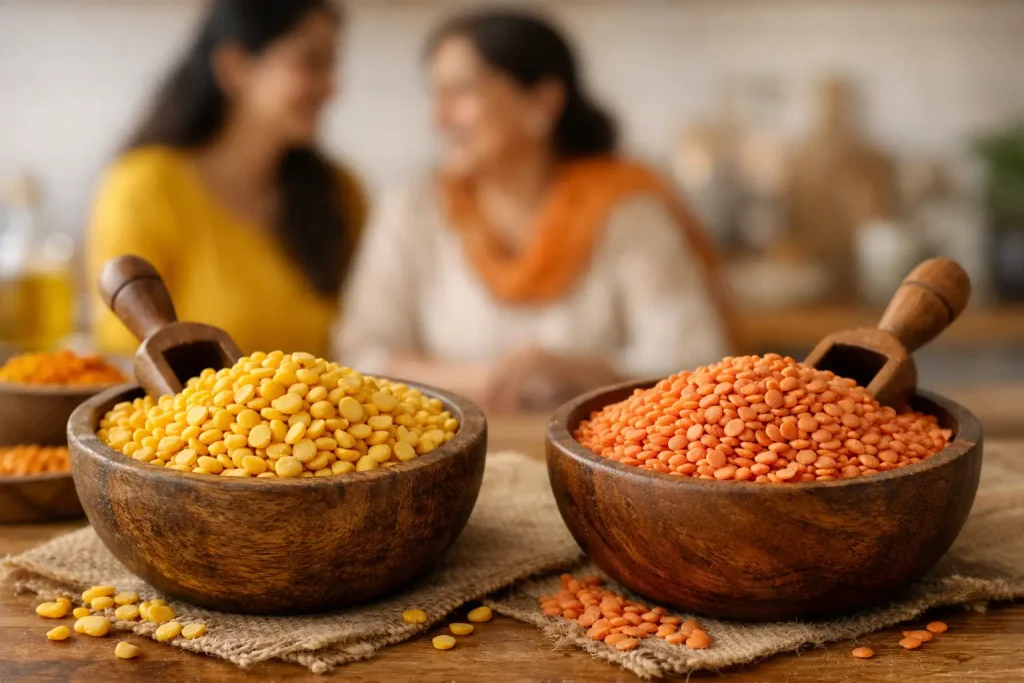
Toor dal, also called split pigeon peas, is a classic choice in many Indian homes. It has a mild, nutty flavor and usually cooks into a thicker, creamier consistency when prepared properly. It is widely used for everyday dal, sambar, and regional comfort dishes where you want substance and a gentle taste that carries tempering well.
Masoor dal is red lentil, usually sold split and often without skin. It has a warmer color and a softer, earthier flavor than toor dal. It breaks down more quickly while cooking, which makes it ideal when you want a smoother dal in less time.
The biggest practical difference is this: toor dal is often chosen for traditional flavor and body, while masoor dal is often chosen for speed and softness.
When people compare toor dal vs masoor dal, taste is usually the deciding factor.
Toor dal has a cleaner, more neutral flavor. That makes it very versatile. If you like adding cumin, garlic, curry leaves, tomatoes, green chilies, or a good tadka with ghee or oil, toor dal gives those flavors room to stand out. It also keeps a bit more structure unless you cook it down fully, so it works well when you want a dal that feels hearty with rice or roti.
Masoor dal tastes more earthy and slightly sweet. It cooks into a softer texture faster, so the final dish can feel lighter and smoother. That is useful when you want a simple dal soup style meal, a quick weeknight curry, or a base that blends easily with onion, tomato, and spice.
Neither is better across the board. It depends on the dish and on how you like your dal to feel on the plate.
Masoor dal wins on speed.
If you are cooking on a busy evening, masoor dal is usually the more convenient option. It softens quickly on the stovetop and does not always need pressure cooking, depending on the texture you want. For home cooks managing work, school pickups, and dinner at the same time, that matters.
Toor dal usually takes longer and often benefits from pressure cooking for the best soft, creamy result. That extra time is worth it for dishes where the classic flavor of toor dal is central, but it is not always the quickest route to dinner.
A lot also depends on the brand, age of the dal, and whether you soak it first. Older stock can take longer to soften. That is why shoppers often look for trusted brands and good turnover when buying staples they use every week.
Toor dal is the go-to for dishes where you want a classic, familiar dal flavor. It is especially well suited for everyday yellow dal served with steamed rice, for South Indian style sambar, and for thicker lentil preparations that hold up well with tempering.
If you like a balanced dal that is neither too heavy nor too thin, toor dal usually gives you that middle ground. It pairs especially well with tamarind, curry leaves, mustard seeds, asafoetida, and tomato-based seasoning.
It is also a smart pantry choice if your household regularly cooks traditional Indian meals and wants a dal that fits a wide range of lunch and dinner recipes.
Masoor dal is excellent when speed matters and when you want a softer finish. It works beautifully for quick red lentil dal, light weekday soups, khichdi variations, and simple home-style lentil dishes with onion, garlic, and tomato.
Because it breaks down so easily, masoor dal is also useful when cooking for children, for anyone who prefers a smoother texture, or for meals where you want the lentils to blend fully into the gravy.
It may not always give you the same taste as toor dal in traditional recipes like sambar, but that does not make it the wrong choice. It just means the result will be different – usually softer, earthier, and less structured.
From a nutrition point of view, both toor dal and masoor dal are good staples for everyday meals. Both offer plant-based protein, fiber, and important nutrients that support a balanced diet. For many households, the better question is not which one is healthier overall, but which one fits the meal, the cooking time, and the family’s taste.
Masoor dal is often seen as slightly lighter in texture once cooked, while toor dal can feel more filling in certain preparations because of its body. But in a practical home kitchen, both are solid choices. The bigger nutrition win usually comes from cooking dal regularly, pairing it with rice or flatbread, and building meals around reliable pantry basics instead of relying too much on packaged convenience foods.
Sometimes yes, sometimes not.
If you are making a simple dal for dinner and only have one type at home, you can usually make it work. You may need to adjust water, cooking time, and seasoning. Masoor dal tends to cook down faster and become softer, while toor dal may need more time and may keep a thicker body.
For recipes where dal is the main identity of the dish, substitution is less ideal. Sambar made with masoor dal will not taste quite the same as one made with toor dal. A quick red lentil dal made with toor will likely need more time and produce a different texture.
A practical solution many home cooks use is keeping both in the pantry. That gives you flexibility – toor dal for traditional flavor and masoor dal for faster meals.
When choosing between toor dal vs masoor dal, look beyond the name on the packet. Check the color, cleanliness, and overall appearance. Dal should look fresh, consistent, and free from excess dust or broken bits beyond what is normal for the variety.
Brand trust matters too. If you cook dal every week, it is worth buying from a store that understands Indian pantry staples and keeps reliable stock. One Stop Supermarket focuses on everyday essentials like these because repeat household shopping depends on quality you can trust, not guesswork.
Price matters, but so does cooking performance. A cheaper dal that takes much longer to soften or gives inconsistent results is not always the better value. For regular family meals, dependable texture and taste usually save more time and frustration in the long run.
If your cooking leans traditional and you often make classic Indian dal with rice, start with toor dal. It gives you the flavor profile many families expect and works across a wide range of familiar dishes.
If your schedule is packed and you want something quick, flexible, and easy to cook, masoor dal deserves a regular place in the pantry. It is especially useful for fast dinners that still feel homemade.
For many households, the best answer to toor dal vs masoor dal is not choosing one forever. It is knowing when each one makes sense. Keep toor dal for the dishes where taste and texture really matter. Keep masoor dal for the nights when convenience matters just as much.
A well-stocked pantry is not about having everything. It is about having the right staples ready when dinner needs to happen without fuss.