If your curry tastes flat even after you have added onions, tomatoes, ginger, garlic, and spices, the cooking fat may be part of the story. When it comes to ghee vs butter for curry, the difference is not small. It changes the aroma in the pan, the way spices bloom, and the final flavor on the plate.
For many home cooks, both are familiar and both can work. But they do not behave the same way. If you want a curry that tastes deeper, richer, and more like what you expect from a good home-style Indian meal, it helps to know when ghee is the better choice and when butter makes more sense.
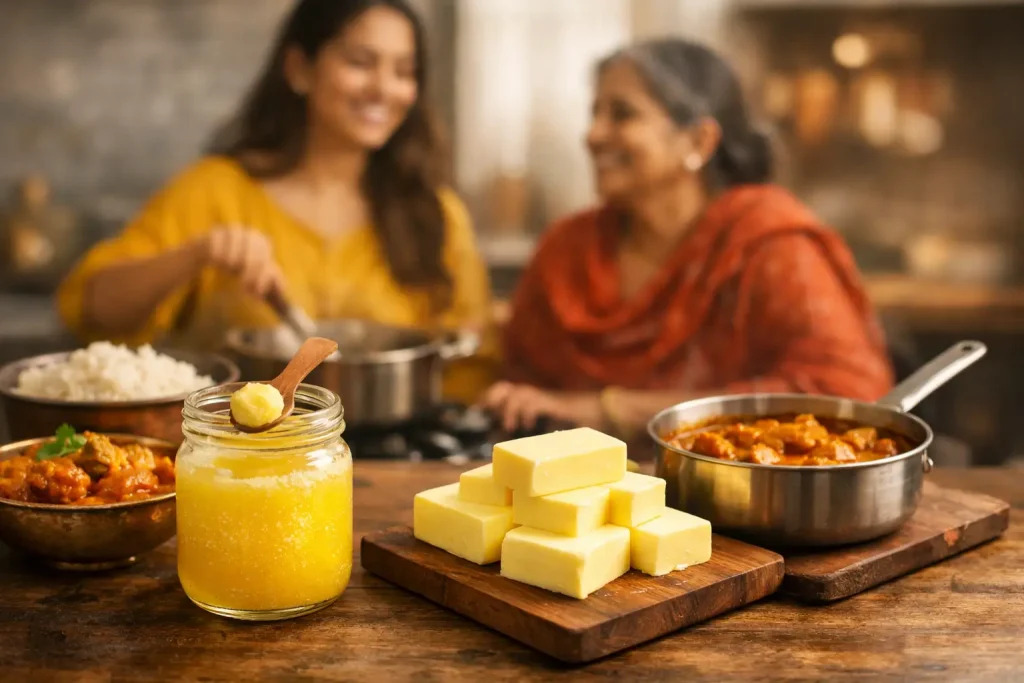
Ghee is clarified butter. The water and milk solids are removed, leaving behind pure butterfat with a richer, nuttier taste. Butter still contains water and milk solids, which gives it a creamy flavor but also makes it more likely to burn at higher heat.
That matters in curry because so much of the cooking happens at the start. You heat the fat, add whole spices or aromatics, and build the base. Ghee handles this stage especially well because it has a higher smoke point and a cleaner cooking performance. You can fry cumin seeds, bay leaf, cloves, onions, or ginger-garlic paste with more confidence before the fat starts browning too fast.
Butter is softer and sweeter in flavor. It can add richness, but it is less stable when the pan gets hot. If you are making a curry that starts with a long saute of onions and spices, butter needs more care. If the heat is too high, the milk solids can catch and create a slightly burnt taste.
Ghee has a natural advantage in Indian cooking because it supports the way spices are traditionally cooked. When you add whole spices to hot ghee, they release aroma quickly and evenly. The result is a fuller flavor right from the beginning.
It also brings its own taste to the dish. Good ghee has a warm, nutty, slightly roasted flavor that blends beautifully with garam masala, turmeric, coriander, cardamom, and chili. In simple curries, this can make a big difference. When ingredients are straightforward, every layer matters.
There is also a texture benefit. Ghee gives curry a smooth, glossy finish without making it feel heavy in the same way cream or extra butter can. For dal-based curries, vegetable curries, and many everyday gravies, that balance is exactly what home cooks want.
This is why ghee is often the default choice for tadka, masala bases, and finishing. It does not just carry flavor. It contributes flavor.
Butter still has a place, and in some curries it is the flavor people want. If you are making a mild, creamy, restaurant-style dish, butter can add a rounded richness that feels familiar and comforting. Think of sauces that lean slightly sweet, smooth, and rich rather than intensely spiced.
Butter can also soften sharper spice edges. If a tomato-based curry tastes too acidic or a sauce feels a little aggressive, a small amount of butter stirred in near the end can mellow it out.
This is where the trade-off comes in. Butter is often better as a finishing fat than a base cooking fat. You can saute carefully with it, but it usually shines most when added toward the end for richness and a gentle dairy note.
If your goal is bold spice aroma, ghee usually wins. If your goal is soft richness in a creamy curry, butter can be a very good fit.
The easiest way to think about ghee vs butter for curry is by asking what kind of result you want.
For heat tolerance, ghee is more reliable. It stands up better when frying onions or blooming spices. That makes it easier for everyday cooking, especially if you are multitasking or cooking a larger batch for the family.
For flavor, ghee tastes deeper and more traditional in many Indian dishes. Butter tastes creamier and sweeter. Neither is wrong, but they point the dish in slightly different directions.
For texture, both can make a curry rich. Ghee tends to feel cleaner and lighter on the palate, while butter can feel softer and more velvety. In a coconut-based curry or a tomato-onion masala, ghee often blends in more naturally. In a creamy makhani-style sauce, butter may be exactly what the dish needs.
Ghee is usually the stronger choice for everyday Indian home cooking. It works especially well in dal tadka, chana masala, aloo-based curries, paneer dishes with a spiced masala base, and dry sabzi where the fat needs to carry aroma without burning quickly.
It also suits recipes where tempering matters. If you are adding mustard seeds, cumin, hing, curry leaves, or dried red chilies, ghee helps those ingredients bloom beautifully. The kitchen smells right almost immediately, and that is often the first sign the dish is going in the right direction.
For cooks who want one dependable fat for many Indian recipes, ghee is often the more practical pantry staple.
Butter is best for curries that are meant to feel rich, smooth, and slightly indulgent. It fits naturally in butter paneer, makhani-style gravies, and mild tomato cream sauces where the dairy flavor is part of the identity of the dish.
It can also be useful in small amounts for balance. A spoon of butter at the end can round out a curry that tastes too sharp or too lean. That does not mean the whole dish has to be cooked in butter. In many kitchens, the smart move is to cook the base in ghee and finish with butter if the recipe calls for extra richness.
That combination gives you the best of both. You get the high-heat cooking strength of ghee and the soft finishing flavor of butter.
If you are stocking your kitchen for regular curry nights, ghee is usually the better all-around buy. It stores well, performs reliably, and suits a wide range of Indian recipes. For busy households, that matters. You want ingredients that work across dals, curries, rice dishes, and quick tempering without needing special handling.
Butter is still worth keeping for specific dishes, especially if your family enjoys creamy restaurant-style curries. But if you are choosing just one for general Indian cooking, ghee gives you more flexibility.
This is also where quality matters. A good ghee made for Indian cooking gives a cleaner aroma and better flavor than a random substitute. The same goes for butter. Better ingredients give you a better curry base, even when the recipe is simple.
At One Stop Supermarket, many families shop this way already – keeping trusted Indian pantry staples on hand so weeknight meals are easier, faster, and more consistent.
If the curry starts with frying spices, onions, ginger, or garlic, start with ghee. If the curry needs creamy richness at the end, add butter. That simple rule works for a lot of home cooking.
There are always exceptions. Some cooks love the full dairy richness of butter in tomato-based gravies from start to finish. Others use only ghee because they want a more classic aroma. Both approaches can work if the heat is managed properly and the rest of the recipe is balanced.
But for most households, ghee is the safer and more versatile choice, while butter is the specialty extra that brings softness and richness when the dish calls for it.
A good curry is built in layers, and the fat you choose is one of the first layers. Get that part right, and everything that follows tastes better.