
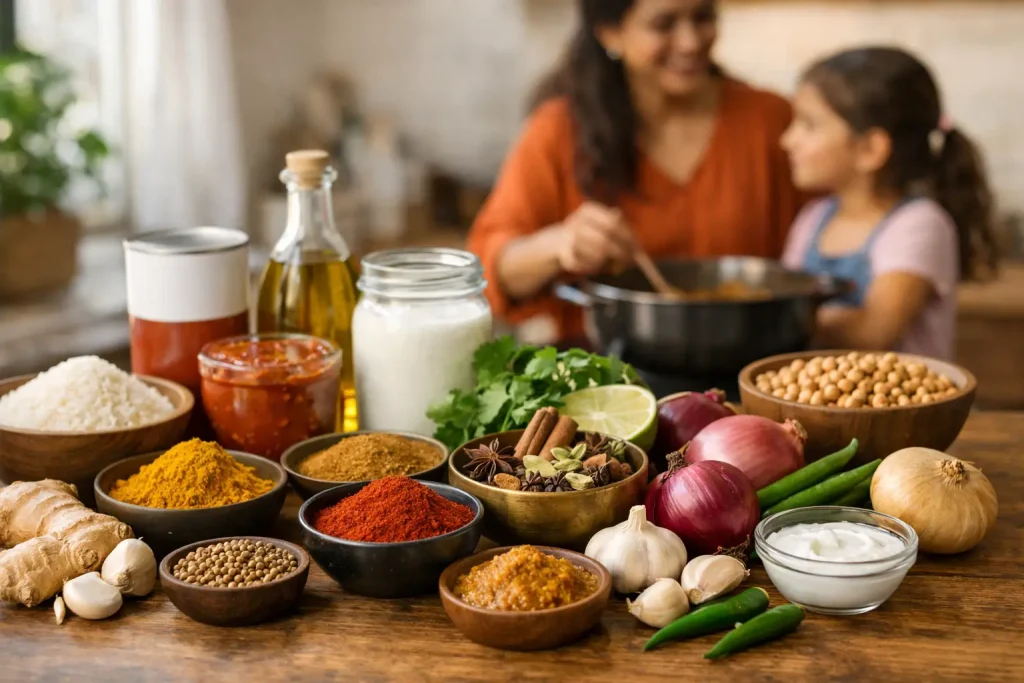
A good curry night rarely starts with a long shopping list. It starts with the best pantry staples for curry already on the shelf: fragrant spices, dependable lentils, rice that cooks just right, and a few flavor builders that make a simple meal taste familiar. For busy households, this kind of pantry is less about collecting every ingredient and more about keeping the essentials you will reach for every week.
The right staples also give you flexibility. You can make a quick dal after work, prepare a comforting South Indian-style sambar, build a rich North Indian curry base, or serve a ready-to-eat meal with rice and roti without making a separate trip for every item.
Curry means different things across Indian homes and regions. A Bengali-style curry may lean on mustard and turmeric, while a Punjabi dish may begin with cumin, coriander, and garam masala. South Indian cooking often brings in curry leaves, mustard seeds, urad dal, and tamarind. There is no single correct pantry, but these staples cover a wide range of everyday dishes.
Turmeric is one of the first spices to keep stocked. It gives curries, dals, and rice dishes their warm golden color and an earthy, slightly bitter flavor. A little goes a long way, so use it with restraint. For most household cooking, a reliable packet of ground turmeric is more practical than buying large quantities that may lose freshness before you use them.
Red chili powder brings heat, color, and character. The type you choose matters: Kashmiri chili powder is valued for bright color with gentler heat, while hotter varieties suit families that enjoy a stronger kick. Keeping both can be useful, but one good chili powder is enough for an everyday pantry. Start small, then adjust as the curry cooks.
Ground coriander adds mellow citrusy warmth, while cumin brings a deeper, toasted note. Together, they form the backbone of countless curry gravies. Whole cumin seeds are equally useful for tempering in hot oil or ghee before adding other ingredients. If storage space allows, keep whole cumin plus ground coriander rather than relying only on a generic curry powder.
Garam masala is usually added toward the end of cooking, when it can keep its aromatic lift. It is not meant to replace every other spice. Think of it as a finishing touch that rounds out a curry, chana, rajma, or dal. Blends vary by brand and region, so choose one that suits your family’s preferred flavor. A mild, balanced blend is generally the easiest place to start.
Mustard seeds, cumin seeds, fenugreek seeds, bay leaves, cloves, cardamom, cinnamon, and black pepper are small pantry items with a big impact. You do not need every whole spice for every meal, but a basic selection makes home cooking more authentic and versatile.
Mustard seeds and cumin seeds are especially practical for everyday tadka. Black mustard seeds work beautifully in many South Indian dishes, while cumin is common across regional cooking. Fenugreek seeds have a distinct pleasant bitterness, so use only a small pinch. Whole spices stay flavorful longer than pre-ground blends when stored in airtight containers away from heat and sunlight.
A well-stocked pantry needs more than spices. Dals and beans make everyday meals satisfying, economical, and easy to plan around. They are also forgiving: cook a pot ahead, season it differently through the week, and serve it with rice or flatbread.
Toor dal, also called split pigeon peas, is a staple for many Indian households. It cooks into a comforting, smooth dal and is central to dishes such as sambar. Keep it on hand when you want a dependable meal that is simple but full of flavor. A tempering of cumin or mustard seeds, dried red chili, and curry leaves can make it feel special without adding much time.
Moong dal is mild, quick-cooking, and ideal for lighter everyday meals. Yellow split moong works well when you want a soft, soothing texture, while split moong with skin has a heartier taste. Masoor dal, or red lentils, cooks quickly and gives a creamy result that works well with warm spices.
These are smart choices for busy nights because they do not require the longer preparation of many dried beans. Keep both if your family uses dal often. If you prefer to start with one, masoor dal is among the most convenient pantry staples for a fast curry-style meal.
Chana dal has a nutty flavor and firmer bite than softer lentils. It is useful for dal curries, tempering, and traditional snacks. Dried chickpeas and kidney beans are excellent for chana masala and rajma, though they need soaking and longer cooking time. Canned versions can be a practical backup for quick meals, especially when time is short.
The trade-off is simple: dried pulses often provide better control over texture and seasoning, while canned beans save time. Keeping one of each gives your pantry more flexibility.
A curry needs something dependable alongside it. Rice, flour-based breads, and convenient pantry bases turn a flavorful sauce or dal into a complete family meal.
Basmati rice is the natural choice for biryani, pulao, and richer gravies because of its long grains and fragrance. Sona masoori rice is lighter, softer, and a familiar everyday choice for many South Indian households. There is no need to choose only one if your family enjoys both. Use basmati for special dishes and sona masoori for regular meals.
Store rice in a sealed container and buy a size that matches your household’s weekly cooking habits. A larger bag can offer better value, but only if you have room to keep it dry and protected.
Whole wheat atta is worth keeping for homemade chapati, roti, and paratha. It is a true everyday staple for families who prefer fresh flatbreads with curry. On especially busy evenings, frozen roti or paratha can be a convenient backup that still makes dinner feel complete.
This is where a one-stop grocery shop helps. You can stock the flour for weekend cooking and keep easy bread options for weeknights, without compromising on familiar brands or flavor.
Tamarind paste or tamarind concentrate adds tang and depth to sambar, rasam, and many South Indian curries. Coconut milk brings a creamy texture and balances spice in regional curries. Both are shelf-stable choices that can save dinner when the pantry feels limited.
Ginger-garlic paste is another useful shortcut. It does not replace every homemade preparation, but it can make weekday curry cooking much faster. Choose a trusted brand, check the date, and refrigerate after opening as directed. Tomato puree and canned crushed tomatoes are also handy for smooth, consistent gravy bases.
These basics may sound obvious, but they determine whether a curry tastes balanced. Salt should be added gradually, particularly when using packaged spice mixes or ready-to-eat items that may already be seasoned. Ghee provides richness and a distinct aroma for tadka, dal, and rice dishes. A neutral cooking oil is useful for everyday frying and spice tempering.
Keep ghee for dishes where its flavor will be noticed, and use your regular cooking oil for larger batches. That small choice helps manage household spending while still giving favorite meals the taste everyone expects.
Start with the ingredients your household actually uses. If dal and rice are on the table several times a week, buy those in family-sized packs. If you make a particular regional curry only occasionally, choose smaller spice packets until you know how quickly you will use them.
Check packaging for freshness, especially on spice powders, flours, and ready-made pastes. Whole spices usually last longer, while ground spices are best bought in amounts you can finish while their aroma is still strong. Keep opened packets sealed tightly, label containers if needed, and place older items at the front so they are used first.
For households in Brisbane’s south side, One Stop Supermarket makes it easier to replenish trusted Indian brands alongside rice, dals, spices, frozen breads, snacks, and convenient meal options. That means less time chasing separate ingredients and more confidence that a familiar dinner is within reach.
A useful curry pantry does not need to look impressive. It needs to work on a Wednesday evening, when everyone is hungry and you want to put a warm, flavorful meal on the table with what you already have.