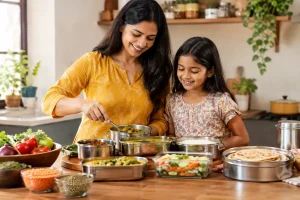
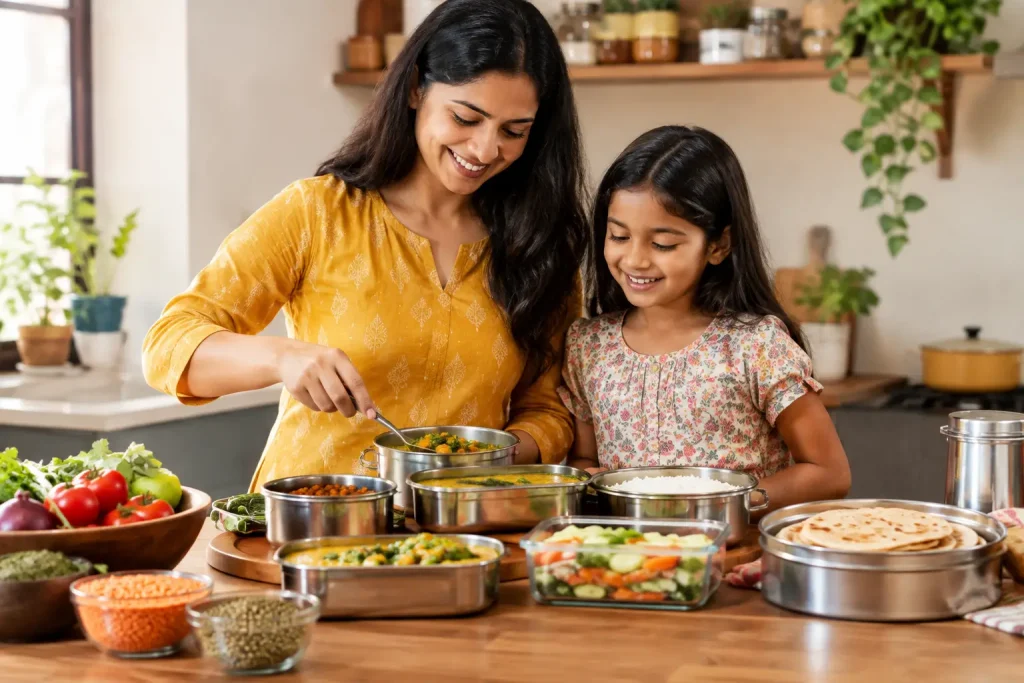
The 6 p.m. question is rarely, “What do we feel like cooking?” It is usually, “What can be on the table soon that everyone will actually eat?” Family meal prep with Indian staples gives busy households a practical answer: prepare a few flexible basics once, then turn them into familiar meals throughout the week without starting from scratch every evening.
The goal is not to fill the fridge with seven identical containers. A better plan is to keep cooked grains, a dal base, a versatile masala, and convenient backups ready to use. With a well-stocked pantry, meals can stay comforting, varied, and budget-friendly even during the busiest weeks.
A successful weekly plan begins with ingredients that work across several meals. Sona masoori rice is a family favorite because it cooks into light, separate grains and pairs easily with dal, curries, yogurt, and leftovers. Basmati rice is another good choice when you want a more fragrant dinner or are planning a special weekend meal.
Dals and lentils do the heavy lifting. Toor dal makes a dependable everyday dal, while moong dal cooks quickly for lighter meals. Chana dal, masoor dal, urid dal, and whole lentils each bring a different texture, so there is no need to eat the same bowl every night. Choose two varieties for the week rather than buying for an ambitious menu that may not happen.
Build your shopping around these core categories:
These are not rigid rules. If your household prefers millet, poha, vermicelli, or dosa batter for breakfast and lighter dinners, make those your repeat staples. Meal prep should match the food your family already enjoys, not create extra work just because a recipe says it is ideal.
The easiest way to make Indian home cooking faster is to prepare components with more than one purpose. A large pot of rice can cover two dinners and a lunch. A cooked dal can be served simply one night, then seasoned differently the next. A small batch of tempering can bring fresh character to meals in minutes.
Make a plain pot of toor dal or moong dal with turmeric and salt. Keep it mildly seasoned at first. On the first night, finish it with cumin, garlic, and ghee for a classic comforting dal. Later in the week, use a different tempering with mustard seeds, curry leaves, dried chilies, and hing for a sharper South Indian-style flavor.
This approach matters because it avoids flavor fatigue. The base is already cooked, but the meal does not feel like a repeat. If you have children or family members who prefer less heat, keep chili separate until serving so everyone can adjust their own bowl.
A cooked onion-tomato masala is one of the most useful preparations for weeknight meals. Make it with oil or ghee, onions, ginger-garlic paste, tomatoes, turmeric, cumin, coriander powder, and a little chili powder. Cook it until the flavors are well combined, then cool and refrigerate in small portions.
Use this base for paneer, chickpeas, kidney beans, egg curry, or a quick lentil dish. The trade-off is that one all-purpose masala will not have the exact personality of every regional recipe. That is fine for a weekday plan. Add finishing spices, kasuri methi, coconut, tamarind, or yogurt when you want the dish to lean in a particular direction.
Weekday meal prep works better when it includes mornings and after-school hunger. Poha, upma mixes, vermicelli, instant idli options, biscuits, and ready-to-eat snacks can reduce the pressure on the person cooking. For a warmer breakfast, a frozen paratha with yogurt and a simple pickle can be more useful than a complicated recipe on a rushed morning.
There is no prize for making every item from scratch. Convenience foods have a place in a family plan when they help you avoid last-minute takeout and keep meals familiar.
Instead of planning five completely separate menus, use a rhythm that shares ingredients. On the first evening, serve dal, rice, and a frozen vegetable side finished with a quick tempering. The next day, use the onion-tomato base for paneer and serve it with roti.
Midweek, make a chickpea or kidney bean curry using another portion of masala, with rice already prepared or freshly cooked. The following night, turn leftover dal into a thicker soup-style meal with rice or paratha. For the final weekday dinner, use frozen roti or paratha with a quick yogurt-based side, a ready-to-eat item, or any curry portion you saved.
This is a framework, not a rulebook. A larger family may need two pots of rice and a double batch of dal. A smaller household may do better freezing half of the cooked base immediately. If your week includes late work nights, place your fastest meal on those days instead of saving it for the end.
Cool cooked foods promptly and store them in shallow, covered containers. Labeling containers with the day can sound overly organized, but it saves time when someone else in the household is looking for dinner. Keep rice, dal, curry base, and cooked beans in separate containers so you can combine them in different ways.
For best quality, plan to use refrigerated cooked foods within a few days and freeze portions you will not reach in time. Reheat meals until piping hot, adding a small splash of water to dal or rice if needed. Frozen roti and paratha are especially helpful here because they can be cooked as needed, rather than taking up fridge space as leftovers.
Spices also deserve simple care. Keep them tightly closed and away from heat so their aroma lasts longer. Whole cumin, mustard seeds, and coriander seeds can be toasted or tempered when needed, while ground spices are best added thoughtfully rather than by habit. A small change in the final seasoning can make prepared food feel freshly cooked.
Before shopping, check what is already in the pantry. Many households have half-used bags of lentils, multiple spice packets, and rice tucked behind newer purchases. Build the week around those items first, then replenish the essentials that are running low.
One Stop Supermarket brings together trusted Indian brands, everyday pantry basics, frozen favorites, dairy, snacks, sweets, and hot food, making it easier to cover a week of family meals in one shop. For households around Brisbane’s south side, local delivery can also help keep the regular grocery run from becoming another weekend task.
Look for value in the products you truly use often. A larger rice bag makes sense for a rice-eating household, while smaller packs may be smarter if you are trying new lentils or specialty ingredients. The best deal is not always the lowest unit price if it sits unopened in the cupboard.
A well-prepped Indian kitchen should make ordinary evenings feel less rushed, not more controlled. Keep your favorite rice, dals, spices, and backup breads within reach, then let the week’s meals take shape around what your family is ready to eat.