A half-used block of paneer should not force you to plan the same curry three nights in a row. Can paneer be frozen safely? Yes. When it is packed promptly, kept consistently frozen, and thawed with care, paneer can be a very practical ingredient to keep on hand for quick family meals.
Freezing does change paneer slightly. Its texture may become a little firmer, drier, or more crumbly after thawing, especially with softer varieties. That is usually not a problem in dishes with gravy, spices, or a crisp pan-fried finish. The key is knowing when freezing helps, how to prevent freezer burn, and which dishes make the best use of thawed paneer.
Paneer can be frozen safely as long as it is fresh when it goes into the freezer and has not been left at room temperature for too long. Refrigerate or freeze it within two hours of opening or cooking. If the kitchen is particularly warm, act sooner.
An unopened, commercially packed paneer block can often be frozen in its original packaging if the seal is fully intact and the package is in good condition. For the best quality, place that package inside a freezer bag or wrap it tightly to give it an extra barrier against cold, dry air.
Once opened, homemade, or cut from a larger block, paneer needs more protection. Air is what causes freezer burn and dulls the clean, milky flavor that makes paneer so useful in Indian cooking. Freeze it at 0°F or below and aim to use it within two to three months. It may remain safe beyond that period when kept properly frozen, but the texture will be better if you use it sooner.
Think about the meal you are likely to make before you freeze the paneer. A whole block is useful if you regularly make curries for the family. Cubes are better for weeknight dishes such as palak paneer, matar paneer, paneer butter masala, or a quick masala stir-fry.
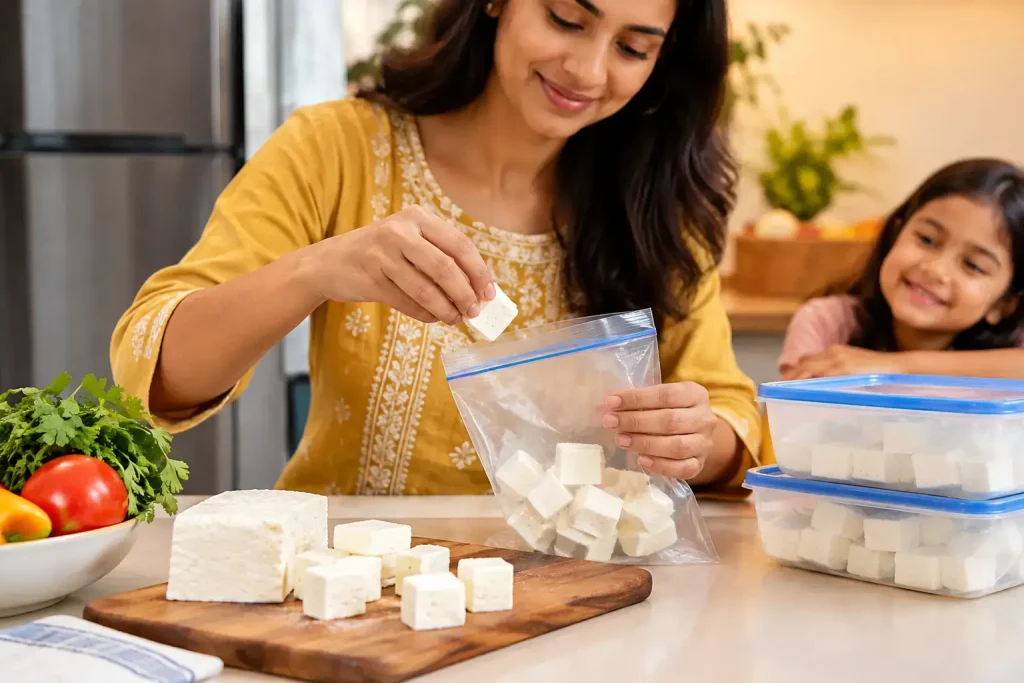
Start by patting the paneer dry with a clean paper towel. If you are freezing cubes, cut them into even pieces so they thaw and cook at the same rate. Arrange the cubes on a lined plate or tray in a single layer, leaving a little space between them. Freeze until firm, usually one to two hours, then transfer them to a freezer-safe bag or airtight container.
This short pre-freeze step stops the cubes from becoming one solid frozen block. It means you can take out only what you need for a lunchbox portion, a small curry, or a last-minute dinner.
For a whole block, wrap it snugly in plastic wrap or foil, then place it in an airtight freezer bag. Press out as much air as possible without crushing the paneer. Label the package with the date and portion size. A simple label saves time later, especially when your freezer also holds frozen roti, paratha, vegetables, and ready-to-cook favorites.
Avoid freezing paneer in a loosely covered bowl or thin shopping bag. It may seem convenient at the time, but the paneer can absorb freezer odors and lose moisture quickly.
Paneer is sometimes stored in water in the refrigerator to help it stay moist. That approach is less useful for freezing. Water expands as it freezes, and thawed paneer can become wetter on the outside while still feeling dry or grainy in the middle.
If your paneer came packed in liquid, drain it well before freezing. Pat it dry, portion it, and pack it airtight. The result is usually more reliable for cooking.
There is one exception: if the paneer is especially dry after thawing, you can soak the thawed cubes in warm water for 10 to 15 minutes before adding them to your dish. Drain gently and use right away. This can improve tenderness, particularly for paneer going into a rich gravy.
The refrigerator is the safest thawing method. Move the packed paneer from the freezer to the refrigerator and let it thaw overnight. Smaller portions may be ready in several hours. Keeping it in its package while it thaws helps protect it from excess moisture and refrigerator odors.
Need paneer sooner? Keep the paneer in a leak-proof bag and place it in a bowl of cold water. Change the water every 30 minutes until thawed, then cook it immediately. Do not thaw paneer on the counter. The outside can warm too quickly while the center is still frozen, which is not a safe way to handle dairy foods.
For many cooked dishes, you do not need to thaw paneer completely. Frozen cubes can go straight into a simmering sauce near the end of cooking. Give them a few extra minutes to heat through gently. Avoid boiling them hard for a long time, as that can make paneer chewy.
Microwaving is possible, but it requires a light touch. Use a low or defrost setting in short bursts, checking often. High heat can make the edges rubbery before the middle has thawed. If you plan to pan-fry paneer, refrigerator thawing gives you the best control and a more even golden surface.
Thawed paneer shines in saucy, warmly spiced dishes where a small texture change is barely noticeable. Creamy tomato-based curries, spinach gravies, and onion-based masalas are all forgiving choices. Add the paneer near the end so it warms through without becoming tough.
It also works well in stuffed parathas, wraps, rice bowls, and crumbled paneer bhurji. If the paneer feels a little more crumbly than usual, that is an advantage for bhurji or stuffing. Season it with your favorite spices, onions, and herbs, then cook just until hot.
For crispy paneer tikka-style bites or shallow-fried cubes, thaw it first and dry the surface well. A light coating of spices and yogurt can add flavor, but do not leave it sitting in a watery marinade for hours. Paneer that has already been frozen is best treated gently.
Fresh paneer is still the better choice when you want very soft, delicate cubes for a simple dish with minimal sauce. Freezing is about reducing waste and making everyday cooking easier, not necessarily replacing the just-bought texture of a fresh block.
The biggest mistake is freezing paneer that is already close to spoiling. Freezing pauses bacterial growth, but it does not restore freshness. If the paneer has a sour smell, slimy surface, unusual discoloration, or a damaged package, do not freeze it or try to cook it.
Another common problem is repeatedly thawing and refreezing the same portion. This weakens texture and increases the chance of unsafe handling. Portion paneer before freezing so you only thaw what your household will use. If paneer has thawed in the refrigerator and remained cold, it can technically be refrozen, but quality will drop. Cooking it instead is usually the better choice.
Do not forget the date label. A freezer can turn good intentions into mystery packages very quickly. When you shop for trusted paneer and everyday Indian cooking essentials at One Stop Supermarket, freezing a few meal-size portions can help make each pack go further while keeping dinner planning simple.
For busy households, buy paneer with the week ahead in mind. Keep the portion you expect to use soon in the refrigerator and freeze the rest on the day you buy it. Divide a large pack into family-size portions, remove the air, label each bag, and place it toward the back of the freezer where the temperature stays steadier.
When dinner needs to happen quickly, reach for a portion and build the meal around it. A reliable paneer freezer routine means less waste, fewer extra shopping trips, and more flexibility when you want familiar home-style food on the table.
Freezing paneer is not complicated: start with fresh paneer, pack it tightly, thaw it safely, and choose a dish that welcomes its slightly firmer texture. That small bit of planning keeps a dependable Indian kitchen staple ready whenever the craving for a comforting paneer meal arrives.