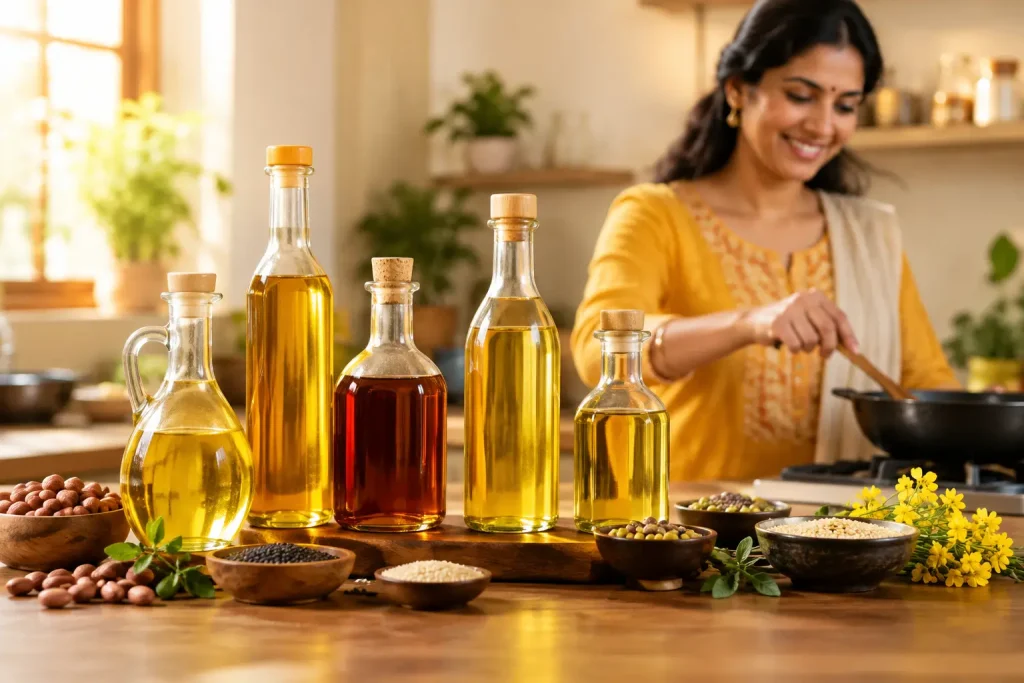
The oil you reach for can decide whether a simple dal tadka tastes deeply familiar or merely hot and oily. This guide to Indian cooking oils helps you stock your kitchen with the right options for daily cooking, from crackling cumin in a tempering pan to frying snacks for family tea time. The best choice is rarely one oil for everything. It depends on the dish, the heat, your household’s taste, and the flavor you want on the plate.
For many Indian households, cooking oil is a weekly staple, not a one-time purchase. Keeping a few reliable oils at home makes everyday meals easier, gives you more control over flavor, and means you do not have to compromise when a recipe calls for a particular finish.
Indian cooking uses oil in several distinct ways. It may be heated briefly to bloom mustard seeds, curry leaves, chilies, and spices. It may form the base of a long-cooked onion and tomato masala. It may be used for shallow frying, deep frying, or brushed onto breads and snacks. Each job asks something different from the oil.
A neutral oil can carry spices without competing with them. A stronger oil can become part of the recipe’s identity. Mustard oil, for example, gives certain eastern and northern Indian dishes their signature sharp, pungent character. Coconut oil brings a recognizable South Indian note that a mild seed oil simply cannot replace.
There is also a practical reason to choose carefully. Oils have different smoke points, aromas, and strengths. Using the right one can help spices toast cleanly rather than burn, and it can make a familiar recipe taste more like the version you grew up with.
Sunflower oil is a popular choice for everyday Indian cooking because its flavor is mild and it handles medium to high heat well. It is useful when you want spices, dals, paneer dishes, or gravies to take center stage without a strong oil flavor in the background.
Use it for regular sautéing, frying onions for curries, preparing pulao, or making a simple tadka. It is also a convenient option for households that cook across several regional styles and want one dependable bottle for many meals. Its main trade-off is that it adds little character, so it will not give dishes the distinctive taste that mustard or coconut oil can provide.
Canola oil is another practical, neutral option for busy kitchens. Its light taste makes it suitable for a broad range of recipes, including everyday sabzis, lentils, dosa fillings, and snack frying. If your family prefers familiar spice flavors without a pronounced oil aroma, canola is an easy fit.
It works especially well when you are making dishes with carefully balanced seasonings, such as a mild korma-style gravy or a tomato-based curry. Keep in mind that authenticity sometimes comes from the oil itself. For a recipe traditionally made with mustard oil or coconut oil, canola is a convenient substitute, but the final flavor will be gentler and less regional.
Mustard oil has a strong aroma and peppery bite that many cooks associate with Bengali, Punjabi, Assamese, and Bihari cooking. It is often chosen for pickles, fish-style curries, achars, and robust vegetable dishes, but it can bring depth to everyday cooking when used with confidence.
The first time you cook with mustard oil, use a modest amount. Heat it until it reaches its smoking point, then lower the heat before adding whole spices. This traditional step softens its raw sharpness and creates a more rounded flavor. The oil is not meant to disappear into the dish. It is meant to be noticed.
Mustard oil is a great pantry choice for households that enjoy bold regional flavors. It is less suited to recipes where you want a completely neutral result, such as a lightly seasoned sweet dish or a delicate gravy.
Coconut oil adds a warm, unmistakable flavor to many South Indian and coastal dishes. It is especially good in sambar, rasam, avial, thoran, chutneys, and curries where curry leaves, mustard seeds, and dried red chilies are part of the tempering.
A little goes a long way. You can cook the full dish in coconut oil or use it at the end for a fragrant finishing tadka. That final spoonful can make a simple bowl of dal or a vegetable stir-fry taste much more traditional.
Choose coconut oil when you want its flavor, not merely its cooking performance. If a household member finds the aroma too pronounced, blend it into your routine by using a smaller amount for tempering while keeping a neutral oil for the main cooking.
Peanut oil has a subtle nutty flavor and is valued by many cooks for frying and high-heat cooking. It pairs well with western Indian styles, including Gujarati and Maharashtrian recipes, as well as snacks that need a crisp finish. It is a useful option for frying pakoras, pooris, and other occasional treats, provided it suits your household’s dietary needs.
Its flavor is more noticeable than sunflower or canola oil but less assertive than mustard oil. That balance makes it versatile for masalas, stir-fried dishes, and savory snacks. As with any ingredient, check labels carefully and keep individual allergies in mind when cooking for guests.
Sesame oil can mean different things depending on the product. Indian sesame oil, often called gingelly oil or til oil, is used in South Indian cooking, pickles, and festive preparations. It has a distinct but generally gentle sesame character and is excellent in dishes where its aroma belongs.
Toasted sesame oil is much darker and more intense. It is usually better used in small quantities as a finishing flavor rather than as the main cooking oil for Indian recipes. Reading the label helps you choose the version that matches your recipe instead of ending up with an unexpectedly strong taste.
Ghee is clarified butter rather than a cooking oil, yet it earns a place beside the oils in any Indian pantry. Its rich aroma makes it ideal for finishing dal, rice, khichdi, halwa, and festive dishes. It can also be used for sautéing spices and building a luxurious base for certain gravies.
Because ghee has such a full flavor, it is often best used intentionally rather than as the only fat for every meal. A spoonful added near the end can deliver the comfort and aroma your dish needs while allowing a more neutral oil to handle the everyday cooking.
For tempering, think first about flavor. Coconut oil suits many South Indian tadkas, mustard oil brings intensity to eastern Indian recipes, and ghee adds richness to dals and rice. For routine curries and sautéed dishes, sunflower or canola oil keeps the spice blend in focus.
For frying, use an oil that performs well at higher heat and has a flavor that works with the food. Sunflower, canola, and peanut oil are common choices. Fry in small batches and avoid reusing oil repeatedly after it has become dark, smoky, or strongly scented.
For finishing, choose the oil or fat that adds the final signature note. This might be ghee over khichdi, coconut oil with curry leaves over sambar, or a small amount of mustard oil in a bold regional dish. A finishing tempering is a small step, but it can transform an ordinary dinner.
Start with the meals your household actually makes in a normal week. A practical pantry may include one neutral daily oil, one flavor-led oil such as mustard or coconut, and ghee for special finishing. This avoids buying bottles that sit unused while still keeping your kitchen ready for different recipes.
Look for trusted brands, clear labeling, a secure seal, and a date that gives you enough time to use the product comfortably. Store oils away from direct light and heat, and close the cap tightly after each use. Smaller bottles can be a smart choice for strongly flavored oils that you use less often.
At One Stop Supermarket, families can find trusted Indian pantry staples for routine cooking, festive recipes, and quick meal preparation in one convenient shop. Stock up on the oils you use most, then add one regional favorite that brings a familiar taste back to your table.
A well-stocked oil shelf is not about owning every variety. It is about knowing which bottle helps tonight’s meal taste right – and having it ready when the spices hit the pan.