
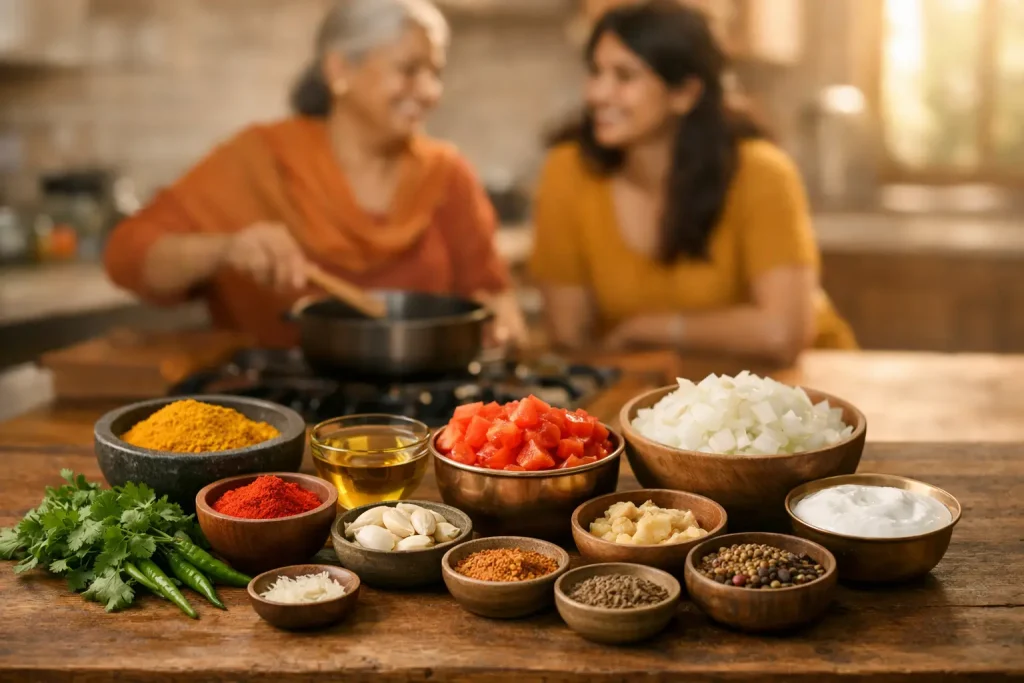
A dependable curry starts long before the main ingredient goes into the pan. It begins with the aroma of spices blooming in oil, the depth of slowly cooked onions, and the right balance of tang, heat, and body. This guide to curry base ingredients helps you stock a practical Indian pantry so familiar, satisfying curries are always within reach on busy weeknights.
A curry base is the flavor foundation of the dish. It is not one fixed recipe, because a North Indian-style tomato and onion gravy, a yogurt-based curry, and a coconut curry all build flavor differently. Still, most everyday curries rely on a few dependable elements: cooking fat, whole spices, aromatics, ground spices, and a component that gives the gravy body.
The key is balance. Whole spices provide fragrance, ground spices bring warmth and color, and onion, tomato, yogurt, coconut, or cream rounds out the sauce. If one element is rushed or missing, the curry can taste flat, raw, overly sharp, or too heavy.
For households that cook Indian food regularly, buying these staples in sensible sizes saves time and makes meal planning easier. You can keep the same core ingredients on hand while changing the style of curry from day to day.
Most curry bases begin with oil or ghee. Neutral oil is a reliable everyday choice, while ghee adds a fuller, richer aroma. Mustard oil has a distinctive sharp character that suits specific regional dishes, but it is not necessary for every home pantry.
Once the fat is hot, whole spices are added first. This step is often called tempering or tadka. It wakes up the spices and transfers their fragrance into the oil. Cumin seeds are one of the most useful everyday choices, with a warm, earthy flavor that works across many curries. Mustard seeds, fennel seeds, ajwain, fenugreek seeds, curry leaves, dried red chilies, bay leaves, cinnamon, cloves, green cardamom, and black cardamom each take the base in a different direction.
You do not need every whole spice in one pan. A simple combination of cumin seeds, bay leaf, cinnamon, cloves, and cardamom creates a classic North Indian profile. Mustard seeds, curry leaves, and dried red chilies give a more South Indian-style opening. Use a light hand with cloves, cardamom, and fenugreek, as their flavors can take over quickly.
Onions bring sweetness, color, and structure to many curry bases. They need time to cook properly. Lightly softened onions create a lighter gravy, while deeply golden onions build a darker, sweeter, more intense base. The right stage depends on the recipe, so do not assume every curry needs dark-browned onions.
Ginger and garlic are equally central. Freshly blended ginger-garlic paste gives a bright, familiar flavor, while a good-quality prepared paste is a valuable shortcut for busy family cooking. Add it after the onions have softened, then cook until its raw smell disappears. If the pan looks dry, add a small splash of water instead of extra oil.
Some dishes use a simpler base with only ginger, garlic, curry leaves, and spices. Others rely heavily on onion paste. Keeping onion paste and ginger-garlic paste in the pantry or refrigerator makes it easier to prepare a proper curry without a long prep session.
Tomatoes add acidity, slight sweetness, and the red-gold color associated with many popular gravies. Tomato puree, canned diced tomatoes, and passata are convenient options when you want consistent results. Cook the tomato component until it darkens slightly and the oil begins to separate at the edges. That separation is a useful sign that the spices and tomato have cooked together rather than sitting raw in the sauce.
The amount matters. Too much tomato can make a curry sour or thin, especially when yogurt is also included. If the base tastes too sharp, cook it longer first. A small pinch of sugar can help in some tomato-forward curries, but it should not make the gravy sweet.
For paler curries, skip tomato altogether and let yogurt, cashew paste, or onion provide the body instead.
Ground spices are where a simple base becomes a recognizable curry. Turmeric gives earthiness and color. Coriander powder adds citrusy warmth and helps create a rounded gravy. Cumin powder offers a deeper roasted note, while red chili powder delivers heat and color.
Kashmiri chili powder is useful when you want a vibrant color with gentler heat. Hot red chili powder is better used carefully, especially when cooking for the whole family. Garam masala is usually added near the end, not fried aggressively at the start, because its delicate aroma can fade or become bitter.
A practical everyday spice shelf includes turmeric, coriander powder, cumin powder, red chili powder, Kashmiri chili powder, garam masala, and kasuri methi. Kasuri methi, or dried fenugreek leaves, is particularly helpful for finishing creamy or tomato-based gravies with a restaurant-style aroma. Crush it between your palms before adding it.
These ingredients create body, richness, and regional character. Plain yogurt adds creaminess and gentle tang. Whisk it before adding, keep the heat moderate, and stir steadily so it blends smoothly. Full-fat yogurt is generally more forgiving than low-fat yogurt.
Coconut milk or coconut cream creates a softer, rounded gravy that pairs well with mustard seeds, curry leaves, and spices such as turmeric and coriander. It should be simmered gently rather than boiled hard. Coconut can soften chili heat, so taste and adjust seasoning near the end.
Cashew paste, almond paste, or melon seed paste can make a curry luxuriously smooth without relying on heavy cream. These are best for special meals or when you want a richer finish. They are not required for every curry, and a simple onion-tomato base is often more suitable for an everyday dinner.
Even quality ingredients need the right sequence. Start by heating oil or ghee, then add whole spices. Add onions and cook to the stage your dish requires. Stir in ginger-garlic paste, followed by ground spices with a splash of water to stop them from catching. Then add tomato, yogurt, or another gravy-building ingredient and cook until the base looks cohesive.
Only then should you add water, lentils, paneer, eggs, chickpeas, or other ingredients that will cook in the sauce. Salt can be added in stages, but always taste near the end. A curry often needs more time rather than more spice. A gentle simmer gives the flavors a chance to settle together.
If your curry tastes raw, the onion, ginger-garlic paste, tomato, or ground spices likely needed more cooking time. Keep the heat moderate and stir often. If the spices stick, add a tablespoon or two of water instead of turning up the heat.
If it tastes bitter, too many whole spices, burned garlic, or scorched chili powder may be the cause. In that case, a little yogurt, coconut milk, or a small amount of tomato can soften the edge, depending on the curry style. If it is too thin, simmer uncovered. If it is too thick, add hot water gradually so the gravy stays smooth.
A bland curry usually needs salt, acidity, or a finishing aroma rather than more chili. Try a small pinch of garam masala, crushed kasuri methi, a spoonful of yogurt, or a little lemon juice if it suits the recipe.
Build your pantry around ingredients you will genuinely use each week. Start with cumin seeds, turmeric, coriander powder, cumin powder, chili powder, garam masala, ginger-garlic paste, onion paste, tomato puree, yogurt, and a cooking oil or ghee you enjoy. Add regional favorites such as curry leaves, mustard seeds, coconut milk, kasuri methi, or whole garam masala as your cooking expands.
Choose trusted Indian brands and check spice packets for aroma and color. Ground spices lose their strength over time, so smaller packs can be better if your household cooks curry only occasionally. Families who cook frequently may find larger value packs more practical.
At One Stop Supermarket, you can find everyday spices, pantry staples, dairy, lentils, ready-to-cook essentials, and authentic Indian brands in one convenient shop. Keep your curry base ingredients replenished, and a comforting homemade meal is never far away.