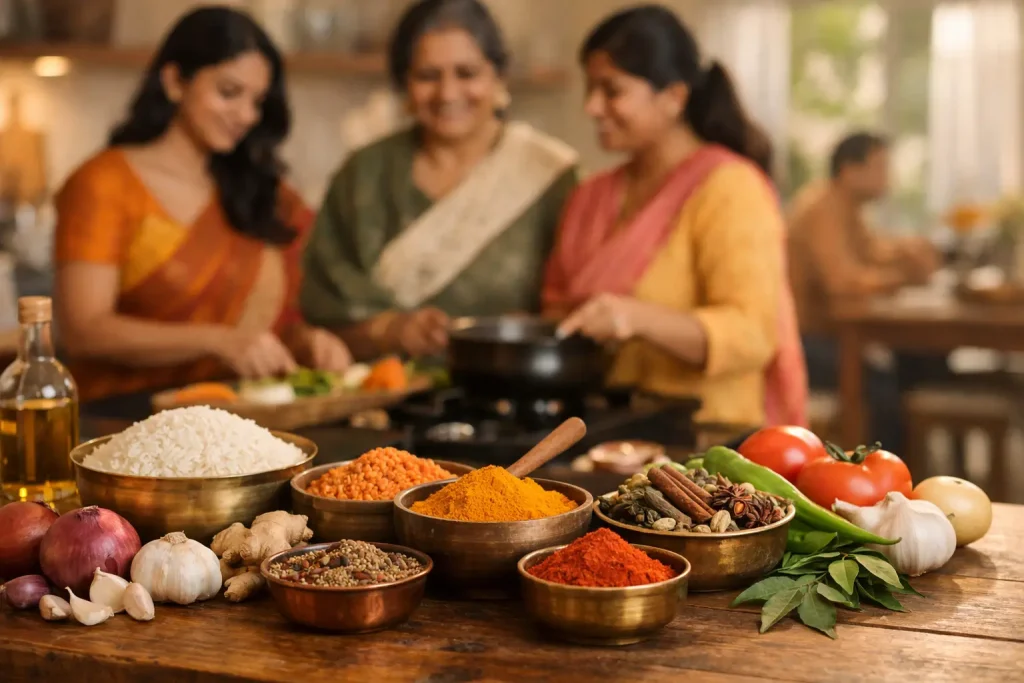
A well-stocked Indian pantry makes everyday cooking feel less like a task and more like a familiar routine. When rice, dals, spices, flour, and favorite snacks are already at home, you can put together comforting meals without making extra stops or settling for substitutes. Whether you cook traditional family recipes every day or enjoy Indian flavors a few times a week, the right staples bring convenience, value, and authentic taste to your kitchen.
The best Indian pantry is built around ingredients your household genuinely uses. There is no need to buy every spice or every type of lentil at once. Start with dependable basics that work across several meals, then add regional favorites, convenience foods, and specialty ingredients as your cooking routine grows.
Rice is often the foundation. Sona masoori rice is a popular everyday choice for its light texture and versatility, while basmati rice is ideal for biryani, pulao, and special meals where long, fragrant grains matter. Many households keep both on hand: one for regular lunches and dinners, and one for recipes that call for a more distinct finish.
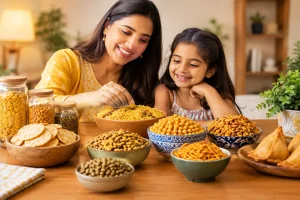
Dals and lentils deserve their own shelf space because each one brings something different to the table. Toor dal is a reliable choice for sambar and everyday dal. Moong dal cooks quickly and works well in lighter meals, khichdi, and sweets. Masoor dal has a soft texture and a gentle flavor, while chana dal adds body to curries and snacks. Urid dal is essential for many South Indian recipes and is also useful for tempering. Buying the varieties your family uses most often helps reduce waste while keeping meal options open.
Flour is another everyday essential. Atta supports homemade rotis and other flatbreads, while besan is useful for pakoras, chillas, kadhi, and savory snacks. Rice flour, semolina, and poha can be worth keeping if they are part of your usual breakfast or snack rotation. For busy evenings, frozen roti and paratha offer a practical backup that still feels close to home cooking.
Spices are where a simple meal becomes recognizably Indian. Whole spices stay fresh longer and are especially useful when you enjoy making masalas from scratch. Ground spices are faster for weekday cooking. A balanced pantry usually has room for both.
Begin with cumin seeds, mustard seeds, turmeric, red chili powder, coriander powder, garam masala, and black pepper. These cover a wide range of everyday dishes. Add hing, ajwain, fenugreek seeds, curry leaves, cinnamon, cloves, cardamom, and bay leaves based on your family’s recipes and regional preferences.
If you cook frequently, whole spices are a smart value purchase because a small amount can flavor an entire pot. Ground spices are convenient, but they should be stored away from heat and moisture to protect their aroma. Keep jars clearly labeled and avoid buying oversized packs of a spice you only use once or twice a year.
Ready-made spice blends can also earn their place in a practical pantry. Chaat masala, pav bhaji masala, sambar powder, biryani masala, and kitchen king masala save time when you want a familiar flavor without measuring several spices. The trade-off is that blends vary by brand, so it is worth choosing genuine brands your household already trusts.
A small tempering section makes daily cooking faster. Keep cumin, mustard seeds, urid dal, chana dal, dried red chilies, hing, and curry leaves together in easy-to-reach containers. This simple setup helps when you are preparing dal, rice dishes, chutneys, or quick breakfast recipes after a busy day.
Beyond rice, lentils, and spices, an Indian pantry needs the ingredients that help bring a meal together. Cooking oils, ghee, salt, sugar, jaggery, tamarind, coconut milk, tomato-based cooking sauces, and pickles all play a role depending on what your family enjoys.
Ghee is useful for everything from tempering and sweets to finishing a bowl of dal. Tamarind is a pantry favorite for sambar, rasam, chutneys, and tangy sauces. Jaggery adds a deep sweetness to traditional recipes, while coconut milk can quickly turn a simple curry into something richer and more satisfying.
Pickles, papad, chutneys, and sauces are not just extras. They can make a quick rice-and-dal dinner feel complete. Keep a few varieties so there is always something familiar to serve when time is short. If your household prefers milder flavors, choose smaller jars until you know which varieties disappear fastest.
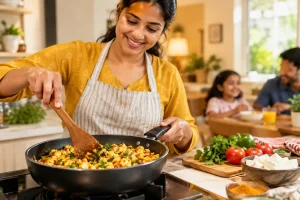
A pantry should support real life, including late workdays, school nights, and weekends when cooking from scratch is not the plan. Instant mixes, ready-to-eat meals, noodles, poha mixes, upma mixes, and heat-and-serve options can be helpful additions when chosen with care.
These products are not a replacement for every homemade meal, but they are valuable for flexibility. A packet of instant dosa mix, a ready meal, or frozen paratha can make a dependable meal when the pantry is otherwise running low. Keep a few options your family actually likes rather than filling the cabinet with products that stay unopened.
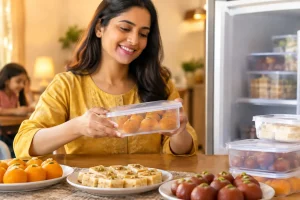
Biscuits, namkeen, roasted snacks, and traditional sweets also belong in many homes. They are useful for tea time, guests, lunchboxes, or a small treat after dinner. Choose a mix of everyday favorites and occasional specialties, especially around celebrations and family gatherings.
A good pantry is easier to maintain when it is organized around how you cook. Put everyday items such as rice, atta, dal, salt, and cooking oil where they are easy to reach. Keep specialty ingredients together so they do not get forgotten behind larger packages.
Clear storage containers can help you see what needs replenishing, but keeping items in their original sealed packaging is also perfectly practical. The key is freshness: close bags tightly, store spices in dry cabinets, and check use-by dates before opening a new package. Buy larger sizes for household staples you use every week, and smaller packs for specialty ingredients or new products you are trying for the first time.
Before placing your next grocery order, take a quick look at your rice, flour, lentils, spices, dairy essentials, snacks, and freezer staples. This helps prevent last-minute shortages and avoids duplicate purchases. A simple weekly check is usually enough for most families.
One easy way to shop smarter is to think about the meals you expect to make. If you are planning dal and rice, check toor dal, rice, ghee, cumin, and pickle. For a weekend breakfast, make sure you have the flour or mix, spices, and any sides your family prefers. This approach keeps your cart useful and helps you spot missing essentials before they become a problem.
Authenticity matters most when it comes to the ingredients you use week after week. Familiar brands often deliver the flavor, texture, and consistency your recipes need, whether you are buying basmati rice, masala blends, atta, biscuits, or ready-to-eat favorites. Everyday value matters too, especially for staples that need regular replenishing.
One Stop Supermarket brings together trusted Indian grocery brands, household essentials, snacks, sweets, and convenient meal options so local families can shop for more of what they need in one place. With in-store shopping and local delivery for nearby neighborhoods, it is easier to keep the pantry ready without turning routine grocery shopping into a full-day errand.
Start with the staples your family reaches for most, keep a few quick options for busy days, and leave room for the flavors that make a simple meal feel like home.