
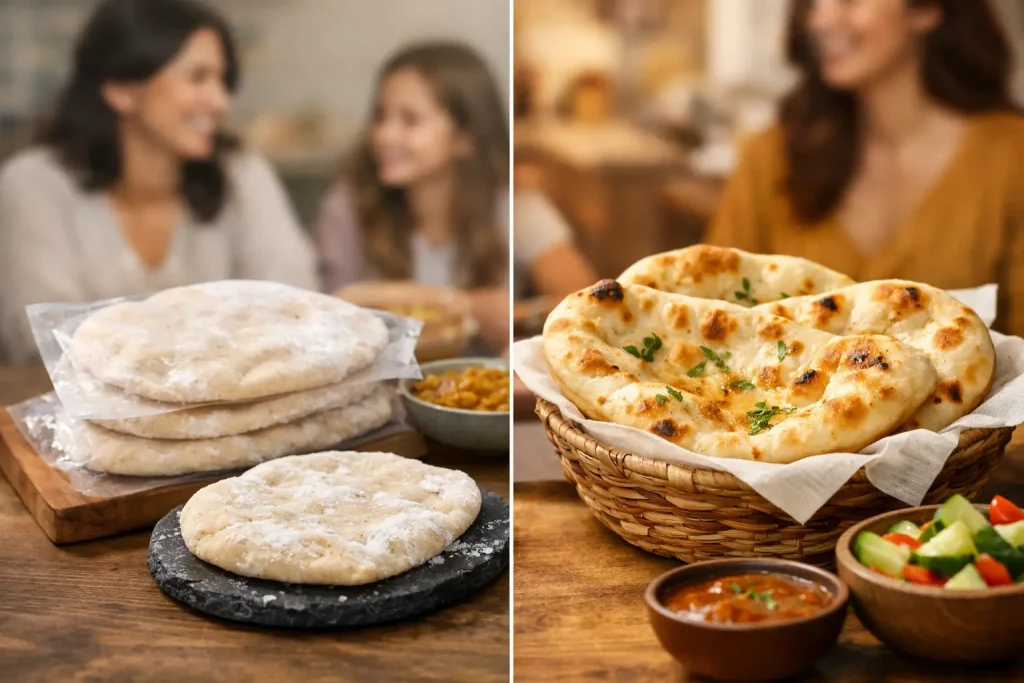
A curry can be beautifully spiced, a dal can be simmered just right, and still the meal feels incomplete if the naan is dry, tough, or late to the table. The frozen naan vs fresh naan decision comes down to more than convenience. It affects texture, timing, waste, and how easily a regular weeknight dinner comes together.
For many households, both have a place in the kitchen. Fresh naan brings that just-made softness and charred flavor when you plan to eat it straight away. Frozen naan earns its space because it is ready when plans change, guests arrive, or dinner needs to happen quickly. The best choice depends on how your family eats.
Fresh naan is usually the better pick when you are serving a meal right away and want the softest center, light chew, and bakery-style aroma. It is especially satisfying alongside butter chicken, chana masala, paneer dishes, or a hot bowl of dal. When it has been baked recently and warmed properly, fresh naan can feel like the centerpiece of the meal rather than just a side.
Frozen naan is designed for flexibility. It can stay in the freezer until you need it, then go straight into a skillet, oven, toaster oven, or air fryer depending on the product instructions. A good frozen naan can come out warm, tender, and lightly crisp at the edges in minutes, without requiring a last-minute store run.
Neither option wins every time. If you are feeding everyone immediately, fresh naan has an advantage. If you want dependable backup for several dinners, frozen naan is often the smarter household buy.
The biggest difference between frozen naan and fresh naan is usually moisture. Fresh naan has not spent time frozen and thawed, so it often has a more delicate, pillowy interior. The surface may have small bubbles, browned spots, and a pleasant chew that works well for scooping thick gravies.
Frozen naan varies more by brand and how it is heated. Some varieties are fully cooked and simply need reheating, while others are partially baked or made for cooking from frozen. The better options are soft inside with enough structure to hold a generous spoonful of curry. Others can turn dry if left too long in high heat.
Heating method matters as much as the package. A hot dry skillet gives frozen naan a toasted base and more natural-looking brown spots. An oven is helpful when serving several pieces at once. An air fryer is fast and can create crisp edges, but it needs a close eye because naan can dry out quickly. If the naan feels a little firm after heating, cover it briefly with a clean kitchen towel to let the trapped steam soften it.
Fresh naan also benefits from a quick reheat. Even naan bought earlier the same day can lose softness as it cools. A few seconds in a skillet, or a short warm-up wrapped in foil in the oven, helps bring back its best texture. Avoid overheating either type. Naan should be warm and flexible, not brittle.
Flavor choice can influence the comparison. Plain naan is versatile and lets the main dish lead. Butter naan adds richness and is popular with creamy curries. Garlic naan brings a stronger savory note and can make a simple meal feel more special.
With fresh naan, butter or garlic toppings may taste more pronounced right away. With frozen naan, flavored options are convenient because the seasoning is already portioned and ready to heat. For a busy family dinner, that can be a real advantage. Just choose a flavor that supports the meal instead of competing with it.
A pack of fresh naan is ideal when you know it will be eaten soon. Once opened, it has a shorter window for its best taste and texture. If dinner plans change, those leftover pieces may not be as enjoyable a day or two later unless they are stored carefully and reheated well.
Frozen naan gives you more control over portions. Need two pieces for a quick lunch? Heat two. Need a full basket for family dinner? Make more without opening several packages. This helps reduce waste, particularly in homes where everyone eats different amounts or where naan is not served every day.
Keeping frozen naan on hand also makes meal planning less rigid. It works for unexpected visitors, a late return from work, or the evening when you realize the curry is ready but there is no bread in the pantry. It is one of those practical freezer staples that supports home-cooked Indian meals without adding extra pressure to your week.
For best results, keep the package tightly sealed and follow the storage date and instructions on the label. Once the package is opened, remove only what you need and close it securely to protect the remaining naan from freezer burn.
Fresh naan can be excellent value when you are serving a group that will finish the pack that day. It is often an easy choice for a planned weekend meal, family gathering, or a dinner where the warm bread is a key part of the experience.
Frozen naan may offer better value across multiple meals because it is portion-friendly and keeps longer. The price per piece is only part of the calculation. Consider whether you will use the full pack, how often you serve naan, and whether having it available prevents an extra trip to the store.
Look at pack size as well as price. Larger packs can suit big families and regular entertaining, while smaller packs may make more sense for couples or households that prefer variety. If you enjoy roti, paratha, and naan at different meals, a modest frozen naan pack may be the most practical fit.
Authenticity matters, too. A well-made naan should have a balanced flavor, a soft but substantial bite, and an ingredient list that suits your preferences. Trusted Indian brands can make a noticeable difference, especially when naan is serving a familiar family recipe. One Stop Supermarket carries Indian grocery essentials so local households can choose breads that suit both traditional meals and busy schedules.
Fresh naan is worth choosing when the timing is right. If you are picking it up close to dinner, serving it while it is still warm, and sharing a meal where everyone will enjoy it immediately, it brings a special restaurant-style feel to the table.
It also suits dishes that deserve a very soft bread for scooping. Rich kormas, slow-cooked dals, and creamy paneer gravies pair beautifully with fresh naan because the bread stays tender while absorbing sauce. For a family meal where the table is set and everyone is ready, fresh naan makes sense.
The trade-off is planning. You need to buy it close enough to serving time and expect to use most or all of the pack. That is easy on a planned dinner night, but less useful when schedules are unpredictable.
Frozen naan is the reliable choice for ordinary weeknights. It lets you build a complete meal from staples you already have, whether you are serving dal and rice, warming a ready-to-eat curry, or turning leftovers into a quick dinner.
It is also useful for families with different schedules. One person can heat a piece for lunch, while another can make more later without compromising the rest of the pack. That convenience does not mean settling for poor quality. When heated properly, good frozen naan can be soft, flavorful, and satisfying.
Keep a few pieces on hand for simple ideas beyond curry night. Use warm naan as the base for a spiced cheese toast, fold it around paneer filling, or serve it with yogurt and chutney for a fast snack. These are not replacements for traditional meals, but they are smart ways to make a grocery staple work harder.
There is no need to treat this as an either-or choice. Buy fresh naan for the dinners you have planned and want to make memorable. Keep frozen naan for the meals that need flexibility. This small combination gives your household the best chance of enjoying warm, satisfying bread without rushing or wasting food.
The next time you shop, think about the week ahead rather than only tonight’s menu. A pack of frozen naan in the freezer can take care of the unexpected, while fresh naan can make the planned family dinner feel properly complete.