
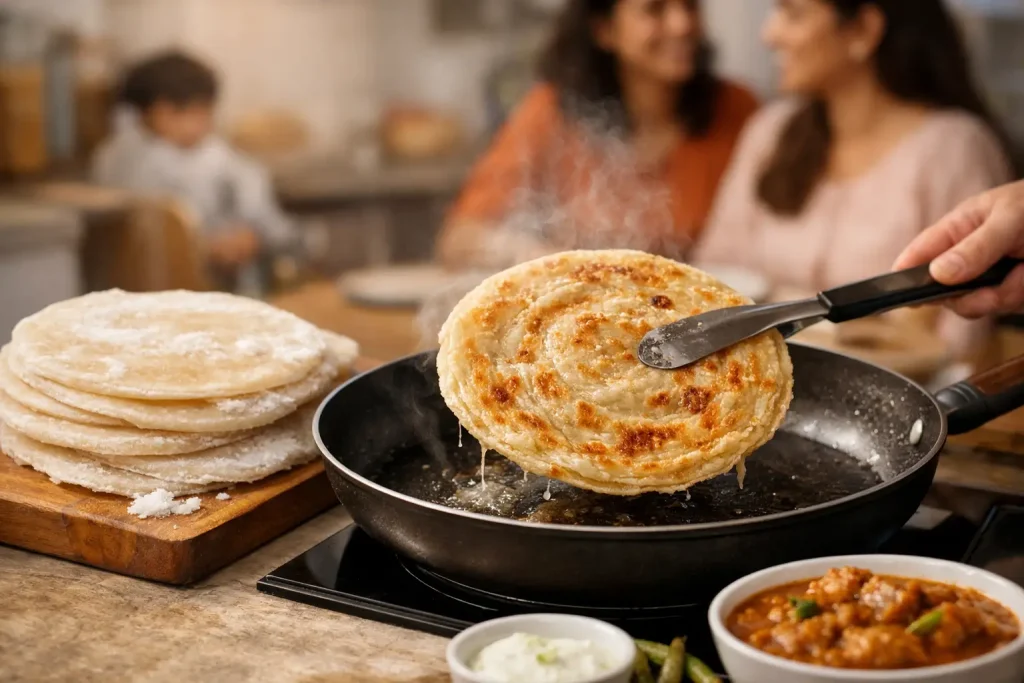
You only need one bad paratha to know the difference between warmed up and properly reheated. A frozen paratha that turns dry, tough, or pale in the middle can ruin an otherwise easy meal. If you are wondering how to reheat frozen paratha so it tastes close to fresh, the method matters more than people think.
For most households, the best result comes from dry heat and a hot surface. You want the outer layers to crisp lightly while the inside heats through without becoming leathery. That balance is easy to get once you know which method suits your schedule, your kitchen, and the kind of paratha you bought.
The first thing to know is that not every frozen paratha needs the same treatment. Plain paratha, lachha paratha, aloo paratha, and stuffed varieties all behave a little differently. Thinner layers usually reheat faster and crisp more easily, while stuffed parathas need a little more time so the center warms properly.
It also depends on whether the paratha was pre-cooked before freezing. Many store-bought versions are partially cooked and designed to go straight onto a hot pan. In that case, follow the pack directions first, then adjust for your stove or appliance. If there are no instructions, start with medium heat and avoid rushing it.
For everyday use, a skillet or tawa gives the most reliable texture. Heat the pan over medium heat first. Place the frozen paratha directly onto the dry pan and let it sit until the surface starts to soften and small golden spots appear. Then flip it and cook the other side.
Once both sides have started heating, press gently with a spatula, especially around the edges. This helps the layers make better contact with the pan and heat evenly. If the paratha looks too dry, add a very small amount of ghee or oil. You do not need much. A light coating is enough to bring back some softness and flavor.
Most plain frozen parathas take around 3 to 5 minutes total, depending on thickness. Stuffed versions can take a bit longer. The goal is a hot center, flexible layers, and some browning on the outside. If the heat is too high, the surface will darken before the middle is ready.
Usually, no. Most frozen parathas are better cooked straight from frozen. Thawing can make the dough sticky or uneven, especially if condensation builds up. Straight-from-freezer cooking also helps the layers hold their shape.
The exception is a very thick stuffed paratha. If you know the filling stays cold while the outside overcooks, resting it at room temperature for 5 to 10 minutes can help. Not fully thawed, just slightly less frozen.
The stovetop wins on texture, but sometimes you need a hands-off option. If you are reheating several parathas for family breakfast or a quick dinner, the oven or air fryer can save time.
Preheat the oven to 375 F. Place the frozen parathas on a baking tray in a single layer. If you want a softer finish, cover loosely with foil for the first few minutes, then uncover so the surface can firm up. Bake for around 8 to 12 minutes, flipping once halfway through.
This method works well when you are serving several people at once, but the trade-off is texture. Oven reheating is even and convenient, yet it may not give the same flaky finish as a hot pan. A light brush of ghee before baking can help.
Air fryers are fast, but they can also dry out layered breads if the temperature is too high. Set the air fryer to about 350 F and cook for 4 to 7 minutes, flipping once. Check early, especially for thinner parathas.
If your air fryer runs hot, lower the temperature slightly and add an extra minute. That is usually better than blasting it at high heat. You want the inside warmed through, not a brittle shell.
The most common mistake is using high heat from the start. It feels faster, but it usually gives you a scorched outside and a cold center. Medium heat is slower by a minute or two, but the result is much better.
Another mistake is adding too much oil or ghee too early. A little fat helps with flavor and browning, but too much can make the paratha greasy and heavy. Start dry or nearly dry, then add a small amount only if needed.
Microwaving is another weak point. It does warm the paratha, but the texture often turns chewy or limp. If you must use a microwave, do it only as a short first step, around 15 to 20 seconds, then finish on a pan. That combination can work well when you are in a hurry.
Finally, avoid stacking freshly reheated parathas immediately without any airflow. Steam gets trapped, and the crisp surface softens fast. If you are making a batch, keep them wrapped loosely in a clean kitchen towel rather than piling them tightly on a plate.
Plain paratha and lachha paratha do best on a skillet because the layers have room to crisp and separate slightly. This is where you get that fresh-cooked feel.
Stuffed parathas like aloo or paneer need a little more patience. Lower heat and a longer cook time are better than aggressive browning. If the outside is done and the filling is still cool, reduce the heat and cover the pan briefly for 30 to 45 seconds to trap a little warmth.
Mini parathas or breakfast-size pieces do well in the air fryer because they heat fast and evenly. Family-pack flat parathas are often easiest on the stovetop, especially when you want more control.
A reheated paratha should bend without cracking, feel hot in the center, and show light golden spots on both sides. If it feels stiff, it likely needs either less heat or a touch of ghee. If it is pale and soft but not appealing, it likely needs a bit more time on the pan.
For stuffed parathas, press the middle lightly with a spatula. If the center is still firm and cold, keep cooking on lower heat. With practice, this becomes easy to judge by touch and smell.
A good frozen paratha is already a practical staple for busy households. Reheat it well, and it can carry a full meal without much extra effort. Serve it with chai and pickle in the morning, or pair it with yogurt, chutney, dal, or a quick sabzi at night.
It also works well as a wrap base for leftovers, especially on weekdays when everyone is eating at different times. That is one reason frozen Indian breads stay popular in family kitchens. They are reliable, fast, and easy to keep on hand.
If you regularly stock frozen paratha at home, it is worth choosing trusted brands with good layering and flavor. Quality makes a difference, especially when you are relying on freezer staples for quick meals. Stores like One Stop Supermarket make that easier by keeping authentic Indian household favorites in one place, so you can add everyday essentials to cart without overcomplicating your weekly shop.
If your paratha keeps turning out too dry, lower the heat and cook it a little longer. If it stays soft but never gets those appetizing brown spots, your pan may not be hot enough at the start. And if one method keeps disappointing you, switch appliances. The best approach is not always the same for every kitchen.
Frozen paratha is supposed to make life easier, not feel like a compromise. Once you find the reheating method that suits your routine, you get the convenience of a freezer staple with much better texture on the plate. A few extra minutes on the right heat can make all the difference.