A good weekly indian pantry shopping example starts the same way most real households shop – not with a perfect meal plan, but with a quick check of what is running low and what will actually get cooked this week. If your family rotates dal, rice, chai, breakfast basics, snacks, and a few freezer backups, your shopping list does not need to be complicated. It needs to be practical, familiar, and easy to repeat.
For most homes, the weekly shop is less about buying every ingredient from scratch and more about replenishing the staples that keep daily cooking moving. That usually means topping up one rice, one or two dals, a few spice essentials, dairy, tea, biscuits, instant options, and frozen breads or frozen vegetables for busy nights. When the pantry is steady, weekday meals feel much easier.
Indian grocery shopping can get expensive or scattered when you buy without a pattern. One week you overbuy snacks, the next week you forget atta, and then suddenly there is no poha, no curd, and no masala for a simple dinner. A weekly rhythm helps balance convenience, value, and variety.
It also helps you shop smarter across household types. A couple cooking four nights a week will buy very differently from a family making daily breakfasts, lunchboxes, chai rounds, and evening dinners. The point of an example is not to copy it exactly. It is to show how a realistic basket comes together from pantry staples, refill items, and a few convenience products that save time.
Let us take a common household scenario – a family of four that cooks Indian meals most days, wants good value, and prefers one reliable store instead of picking up bits and pieces from different places.
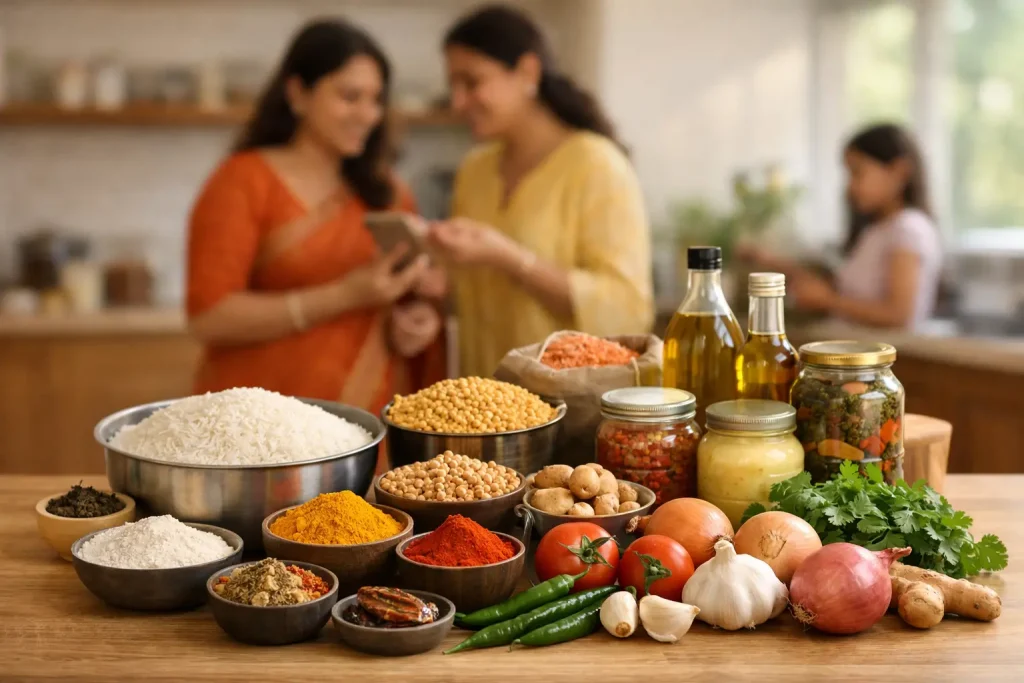
Start with the base staples. If rice is a regular part of lunch or dinner, one bag of sona masoori or basmati may be enough for the week if the household already has some in stock. If your family uses atta daily for chapati or paratha, that is usually a priority refill item rather than an occasional buy. The same goes for dal. Many homes keep two or three types in rotation, such as toor dal for sambar or dal tadka, moong dal for lighter meals, and urad dal for dosa or idli batter support.
A realistic weekly basket might include rice, atta, toor dal, moong dal, a pack of poha or rava, cooking oil, salt, sugar or jaggery, tea, milk, yogurt, ghee, and one or two biscuit or snack packs for the family. Then come the flavor builders – cumin, mustard seeds, turmeric, chili powder, coriander powder, garam masala, and a ready ginger-garlic paste if convenience matters during the workweek.
This is where shopping habits differ. Some shoppers buy spices in larger packs and only replace them occasionally. Others prefer smaller packs for freshness and easier budgeting. Neither is wrong. It depends on how often you cook, how much storage space you have, and whether your household sticks to a predictable menu.
The easiest method is to think in three layers – daily staples, meal helpers, and backup foods. Daily staples are your rice, atta, dal, oil, tea, dairy, and basic masalas. Meal helpers are things like papad, pickles, chutneys, instant noodles, vermicelli, dosa mix, or ready-to-cook items that make breakfast or dinner faster. Backup foods are frozen roti, paratha, frozen vegetables, and ready-to-eat meals for the nights when no one has time to cook properly.
If you shop this way, the basket becomes easier to control. You are not walking every aisle wondering what looks good. You are refilling the items that support the week ahead.
For example, a working family might stock one frozen paratha pack for quick breakfasts, one frozen roti pack for rushed dinners, a couple of instant snack or noodle options for after-school hunger, and one ready-to-eat item for emergency use. That is not replacing home cooking. It is making sure the kitchen still works when the week gets busy.
A weekly pantry shop makes more sense when you can picture the meals behind it. Monday might be rice, toor dal, and papad. Tuesday could be chapati with a simple lentil or curry base using pantry masalas. Wednesday might lean on poha or upma in the morning and frozen paratha at night if the day runs long. Thursday could be curd rice, khichdi, or a quick moong dal meal. Friday may call for chai-time snacks, biscuits, and something easy from the freezer. Over the weekend, households often restock breakfast basics, sweets, or ready snacks because everyone is home more.
That is why a smart pantry basket includes both cooking ingredients and comfort items. The pantry is not just for dinner. It supports tea breaks, school snacks, quick breakfasts, and guests who drop in unexpectedly.
The biggest budget leak is often duplication. Buying two kinds of rice, extra snack packs, and convenience foods that sit unopened can quietly push the bill up. Another common issue is skipping the core staples and then making extra trips later for one or two missing items. Those small trips usually cost more in time and impulse spending.
The better approach is to protect the basics first. Make sure the basket covers what the household truly depends on – rice, flour, lentils, dairy, masalas, tea, and freezer support. Once those are covered, then add the fun extras like sweets, biscuits, or specialty items.
There is also a freshness trade-off. Larger packs often give better value, but only if your household uses them steadily. If not, medium packs may be the better buy because they reduce waste and keep flavors fresher. This matters especially with flours, spice blends, and snack items.
A couple or small household can usually keep the list tighter. One rice, one dal, one breakfast item, basic spices, tea, dairy, and a couple of ready options may be enough. They often benefit from buying fewer varieties and shopping more intentionally.
A larger family usually needs more depth in the pantry. That can mean multiple dals, bigger atta and rice packs, extra yogurt, more snack options, and more than one freezer backup. The upside is that larger families often get better value from bigger pack sizes because turnover is faster.
If your home cooks traditional meals daily, you may prioritize staples and scratch-cooking ingredients. If your weekdays are packed, you may put more value on frozen breads, instant mixes, and ready-to-eat products. That is not a compromise on authenticity. It is simply shopping in a way that matches real life.
A good supermarket should make this routine feel simple. You want genuine Indian brands, dependable pantry staples, fair everyday pricing, and enough range to handle both planned meals and quick backup needs. That is what turns a grocery run into a repeatable household system instead of a weekly headache.
For local families, this is also where neighborhood convenience matters. Being able to pick up trusted staples in one place or order for local delivery saves more than time. It reduces the stress of hunting for specific brands of dal, flour, masala, biscuits, frozen roti, or sweets across multiple stores.
One Stop Supermarket is built around exactly that kind of weekly household shopping – authentic Indian essentials, freezer staples, dairy, snacks, instant foods, and genuine brands in one practical basket.
Most households benefit from a standing list that gets reviewed each week. Keep your core grains, lentils, spices, tea, dairy, snack items, frozen breads, and instant backups on that list. Then adjust according to what is actually low and what your week looks like.
That last part matters. A school holiday week, festival week, or guest-heavy weekend changes the basket. So does a busy work period when quick meals carry more value than elaborate cooking. The best weekly pantry system is not rigid. It is reliable enough to repeat and flexible enough to fit your real schedule.
A well-stocked pantry does not need to look impressive. It just needs to make Monday through Sunday easier, one familiar meal and one smart refill at a time.