
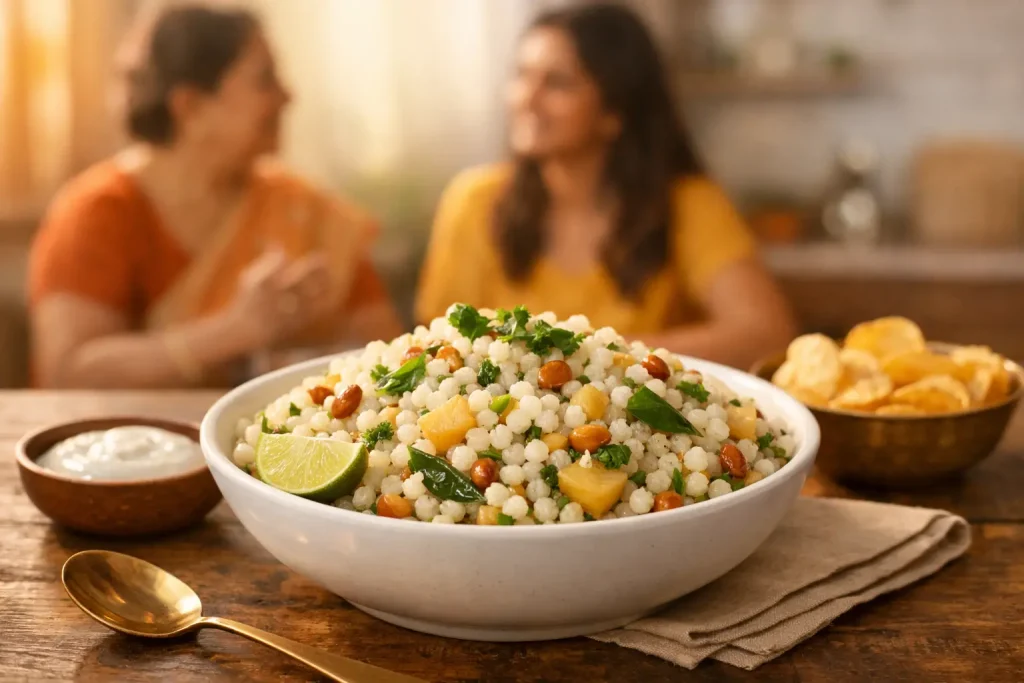
Sabudana khichdi looks simple, but the difference between light, separate pearls and a sticky pan of tapioca comes down to one detail: soaking it correctly. Once you know how to prepare sabudana khichdi with the right amount of water and a gentle hand at the stove, it becomes an easy, comforting meal for fasting days, busy mornings, or a quick evening bite.
The best version has soft, translucent sabudana pearls with a slight bite, nutty roasted peanuts, warm cumin, and just enough ghee or oil to carry the flavor. It does not need a long ingredient list. It needs good pantry staples and a little patience before cooking.
For a family-sized batch, start with 1 cup sabudana, also called tapioca pearls or sago. Choose medium-sized pearls where possible, as they tend to cook evenly and give the classic khichdi texture. You will also need:
Roasted peanuts are more than a garnish here. Their texture keeps the pearls from clumping, while their rich flavor gives the dish substance. If you are cooking for someone with a peanut allergy, leave them out and use a little extra ghee, though the finished khichdi will have a softer, less nutty character.
Place the sabudana in a bowl and rinse it two or three times with cool water. Move the pearls gently with your fingers, then drain well each time. The goal is to wash away surface starch without crushing the pearls.
After the final rinse, add only enough water to sit level with the sabudana, not far above it. For many varieties, this is around 2 to 3 tablespoons for 1 cup of pearls, but packaging and pearl size can vary. Cover the bowl and leave it for 4 to 6 hours, or overnight if that suits your schedule.
This is the stage that determines the result. Too much water turns sabudana gummy. Too little water leaves hard centers. Before cooking, press one pearl between your fingers. It should flatten easily with no dry, chalky spot in the middle. If it still feels firm, sprinkle over a teaspoon or two of water, cover it again, and wait 20 to 30 minutes.
Fluff the soaked sabudana with a fork or your fingertips. Add the ground roasted peanuts, salt, and sugar, then toss gently until the pearls are coated. This pre-mixing helps spread the seasoning evenly without overworking the khichdi in the pan.
Sugar may sound unexpected, but a small amount rounds out the savory, nutty flavor. It should not make the dish sweet. If you prefer a more savory profile, reduce it or skip it entirely. Rock salt is often used for fasting-style cooking, while regular salt works well for an everyday meal.
Heat ghee or oil in a wide, heavy skillet over medium heat. Add cumin seeds and let them sizzle until fragrant. Add the curry leaves and optional mild spice powder, stirring briefly so the ghee becomes aromatic.
A wide pan matters because sabudana cooks best in a shallow layer. A crowded, deep pan traps steam and makes it easier for the pearls to stick together. Keep the heat at medium rather than high. Sabudana does not benefit from aggressive frying.
Add the seasoned sabudana mixture to the skillet. Fold it through the tempering with a spatula, then let it cook for a minute before stirring again. Continue cooking for about 4 to 6 minutes, turning gently every so often.
As the pearls cook, they will change from white and opaque to glossy and translucent. Remove the pan from the heat when most pearls have made that change. A few pale centers are fine because residual heat will finish them. Cooking too long is one of the main reasons sabudana khichdi becomes heavy or sticky.
Serve it hot, while the pearls are still soft and separate. It is satisfying on its own and works equally well as a light breakfast, snack, or simple meal after a long day.
If your sabudana khichdi has ever resembled a paste, the issue almost always began before the stove was turned on. Sabudana absorbs water gradually, and every brand behaves slightly differently. The reliable method is to rinse thoroughly, drain completely, and soak using minimal water.
Avoid soaking the pearls in a large bowl of water as you would rice. They do not need to float. They need time to absorb moisture slowly. After soaking, there should be no standing water at the bottom of the bowl. If there is, drain it off and let the pearls rest for 10 minutes before seasoning.
Humidity can also affect results. On a very warm day, sabudana may soften faster. If you are making it for the first time with a new brand, check it after four hours instead of assuming it needs an overnight soak. Small adjustments are normal, and once you learn how a particular packet behaves, the recipe becomes very dependable.
Hard pearls usually mean the sabudana needed more soaking time. Do not try to fix this by pouring a lot of water into the hot pan. Instead, add a tablespoon of water, cover briefly, and allow the trapped steam to soften the centers. Use this sparingly so the texture does not become wet.
Clumping usually comes from excess soaking water, too little peanut powder, or stirring too frequently. Separate the pearls gently with a fork before cooking and use a wide skillet. Once the khichdi is in the pan, fold rather than mash or constantly stir it.
If the khichdi tastes flat, do not immediately add more salt. A little extra roasted peanut powder, cumin, or ghee often brings back the familiar, satisfying flavor more effectively. Taste after each small adjustment, especially if you are using salted peanuts.
If the pearls brown before they turn translucent, the heat is too high. Lower it and keep the mixture moving gently. Browning is not always bad, but it changes the soft, delicate texture that makes this dish special.
Sabudana khichdi is ideal when you plan one small step ahead. Rinse and soak the sabudana before bed, then keep it covered in the refrigerator if you are preparing it the next day. Roast and grind peanuts in advance as well, storing them in an airtight container for quick use.
For reliable pantry shopping, One Stop Supermarket brings together sabudana, roasted peanuts, ghee, spices, and other familiar Indian cooking essentials in one convenient place. Keeping these basics on hand means a comforting homemade dish is never far away.
The next time you make sabudana khichdi, resist the urge to rush the soak or stir nonstop. Give the pearls time, use a light touch, and let the simple flavors do their work.