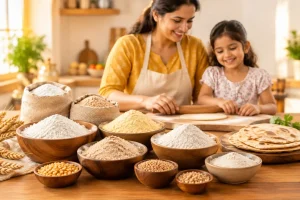
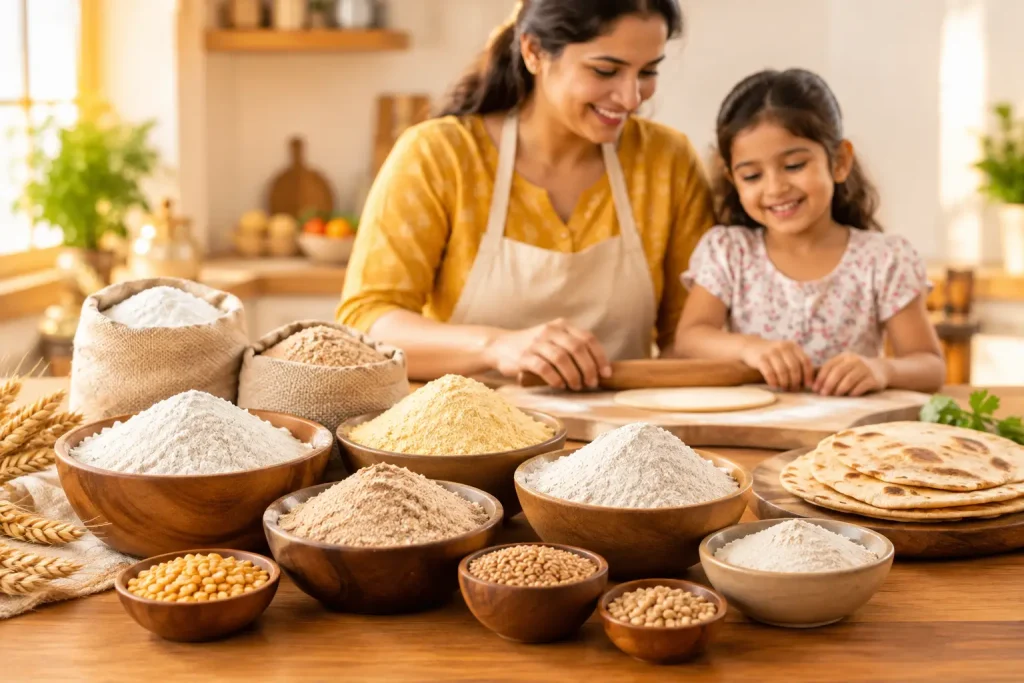
A packet of flour can decide whether a roti stays soft through dinner, a dosa turns crisp at the edges, or a batch of pakoras holds together properly. This Indian flour varieties guide makes everyday choices easier, whether you are stocking a family pantry, trying a familiar recipe for the first time, or replacing a flour that has run out halfway through cooking.
Indian kitchens use flour for far more than bread. Different grains and lentils are milled to different textures, and each one brings its own flavor, color, binding ability, and cooking behavior. Keeping a few reliable options at home means fewer last-minute substitutions and more confidence when planning breakfast, lunch, snacks, or a quick dinner.
Atta is the flour most households reach for first. Made from whole wheat, it is finely milled but retains enough bran to give rotis, chapatis, and phulkas their familiar taste and flexibility. Good atta dough should feel smooth and pliable after resting, not dry or crumbly.
For soft rotis, add water gradually and knead until the dough is supple. A short rest lets the flour absorb moisture, making it easier to roll and cook. Atta also works well for parathas, puris, stuffed flatbreads, and some everyday baking, although it produces a heartier result than standard all-purpose flour.
There is a practical trade-off when choosing atta. Higher-fiber whole wheat flours can make satisfying rotis, but they may need a little more water and a longer rest. For busy weeknight meals, keeping a trusted atta brand on hand is often the simplest way to get consistent results.
Maida is refined wheat flour with a soft, pale texture. It is commonly used for naan, bhatura, bakery-style biscuits, cakes, pastries, and many snack doughs. Because it has less bran than atta, it creates a smoother and lighter finish.
Maida is useful when texture matters most, but it is not always the right replacement for atta. A roti made entirely with maida will taste and behave differently, while a 50-50 blend can make parathas softer and easier to roll. Keep it for recipes that call for lift, tenderness, or a delicate crumb rather than using it as an all-purpose substitute for every Indian bread.
Besan, also called gram flour, is made from chana dal or brown chickpeas. It has a warm, nutty flavor and a distinctive golden color. It is a pantry essential for cheela, kadhi, pakoras, dhokla, sev, ladoo, and thickening certain gravies.
Besan behaves differently from wheat flour because it has no gluten. It does not form an elastic dough, but it is excellent for batters and savory mixes. When making cheela or pakoras, whisk the batter thoroughly with water to remove lumps, then let it sit briefly so the flour hydrates evenly.
Choose besan based on the dish. A finer grind gives smoother cheela and sweets, while a slightly coarser grind can add pleasant texture to savory snacks. Store it in an airtight container after opening, especially if you use it slowly, as its natural oils are best enjoyed when the flour is kept well sealed.
Rice flour is mild, light, and especially useful when you want crisp texture. It is a familiar ingredient in dosa and idli mixtures, murukku, chakli, appam, and snack batters. A small amount mixed into a coating or batter can help create a lighter, crunchier finish.
It is also helpful in gluten-free cooking, although rice flour alone can be dry or fragile in baked goods. Combining it with other flours, such as besan or millet flour, usually gives better structure. The type matters here: regular rice flour, idli rice flour, and roasted rice flour can produce noticeably different results, so check the recipe before choosing.
Millet flours have long held a place in Indian home cooking. They offer earthy flavors and are useful for anyone looking to rotate grains in everyday meals. They can be more delicate than wheat flour, so the best method depends on the dish and the blend.
Ragi flour, made from finger millet, has a deep brown color and a slightly malty taste. It is popular for porridge, dosa, malt drinks, laddus, and flatbreads. Ragi dough can crack if made with cold water or rolled too thin, so many cooks use warm water and pat the dough by hand rather than rolling it. Adding a little atta can make ragi rotis easier to handle.
Jowar flour, made from sorghum, is traditionally used for soft bhakri and rotis. It has a mild, grainy flavor and is naturally gluten-free. Freshly prepared warm dough is much easier to shape than dough left sitting for too long. If you are new to jowar, start with a wheat-jowar blend before moving to a fully gluten-free flatbread.
Bajra flour, from pearl millet, has a stronger, nuttier flavor. It makes filling winter-style rotis and pairs beautifully with rich dals, yogurt, and pickles. Bajra dough is naturally less elastic, so shape it gently between your palms or with a rolling method that uses parchment. It rewards a little patience with a wonderfully hearty result.
A well-stocked flour shelf does not need every variety at once. Still, a few specialty options can save a recipe and bring more range to weekly cooking:
Be careful with names on the package. In many Indian grocery aisles, “corn flour” can refer to a very fine white starch used to thicken sauces, while makki atta is the yellow cornmeal-like flour used for flatbreads. They are not interchangeable. Similarly, besan and chickpea flour may look alike, but the grind and chickpea variety can change the final flavor and texture.
Start with the result you want. For soft, everyday rotis, choose atta. For light doughs and bakery-style treats, use maida. For savory batters and quick snacks, besan is the dependable choice. When crispness is the goal, rice flour often makes the difference.
For millet flours, expect a learning curve rather than a failure. They need different amounts of water, benefit from warm handling, and may not stretch like wheat dough. Following a recipe written specifically for ragi, jowar, or bajra is more reliable than swapping them cup for cup into an atta recipe.
Package size matters, too. Households that make rotis daily may save by buying larger atta bags, while specialty flours are often best purchased in smaller packs unless they are used regularly. Check for a clean, dry package and a recent best-before date. At home, transfer opened flour to airtight containers, label them clearly, and keep them away from heat and moisture.
One Stop Supermarket brings together everyday atta, trusted besan, rice flour, millet flours, and other authentic Indian pantry essentials, so a complete cooking shop does not have to mean visiting several stores. Choosing familiar brands and the right pack size can make weekly grocery planning simpler and better value for the whole household.
The next time you reach for flour, think beyond what is quickest. A bag of atta may handle tonight’s rotis, but besan can turn into a fast snack, rice flour can add crunch, and a millet flour can bring a favorite regional meal back to the table. That little bit of pantry variety keeps home cooking practical, comforting, and full of possibility.