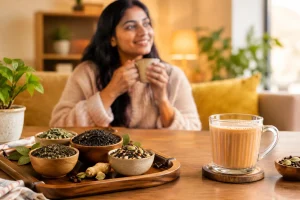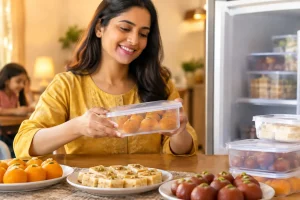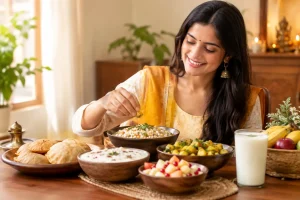
A festival visit rarely begins with a full meal. It begins with a sweet box on the table, a quick cup of chai, and the familiar question: “Have some mithai?” Popular Indian festival sweets carry that feeling of welcome. They make a prayer gathering warmer, turn a family visit into an occasion, and give everyone something small and memorable to share.
For busy households, the best choice is not always the most elaborate sweet. It is the one that suits the festival, travels well, serves the group, and tastes like the version your family knows. From rich milk-based mithai to syrupy classics and nut-filled favorites, here are the sweets worth adding to your festival shopping list.
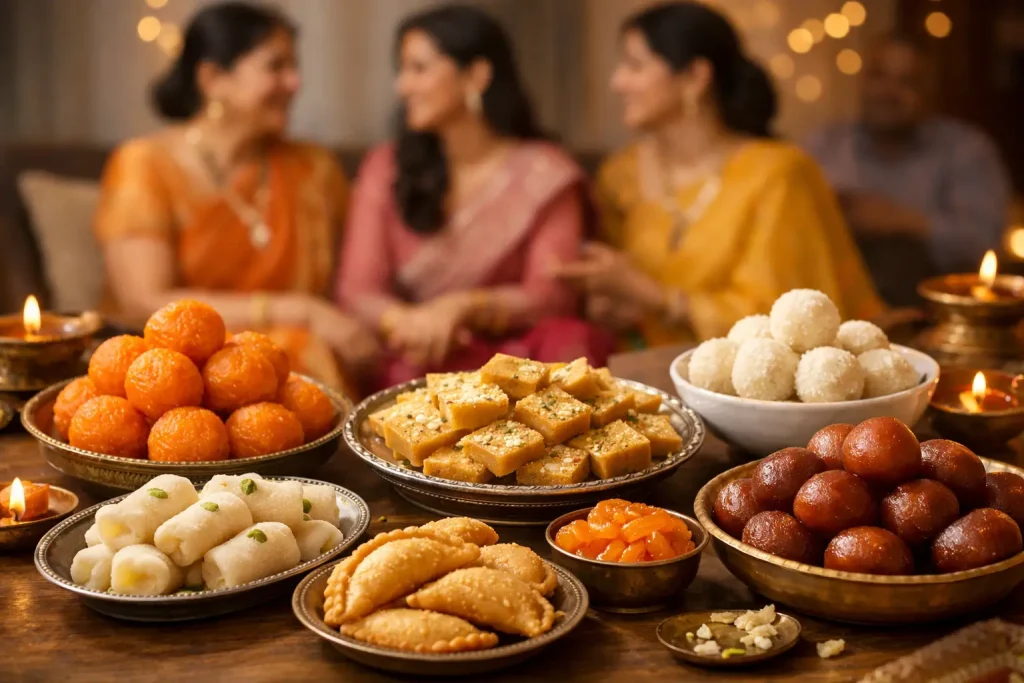
Kaju katli is one of the most requested sweets for Diwali gifting, house visits, and office celebrations. Its smooth cashew texture, light sweetness, and diamond shape make it look special without feeling overly heavy after a meal.
It is a dependable choice when you are unsure of everyone’s preferences. A neatly packed box of kaju katli also works well for hosts, teachers, neighbors, and relatives. If you are serving a larger gathering, pair it with one syrup-based sweet for contrast.
Soft, rich, and soaked in fragrant sugar syrup, gulab jamun is the sweet that disappears first from the serving bowl. It is especially welcome at Diwali dinners, Eid gatherings, weddings, and family celebrations where dessert needs to feel generous.
Serve it at room temperature or gently warmed, with the syrup on the side for anyone who wants an extra spoonful. Gulab jamun is richer than dry mithai, so smaller portions are usually enough. Ready-to-make mixes are useful when you want the homemade experience without starting from scratch.
Rasgulla brings a lighter, bouncier texture to the festival table. These soft cheese balls in clear syrup are closely associated with Bengali celebrations but have become a favorite across Indian households.
They are a good option when guests prefer sweets that are juicy rather than dense. Keep rasgulla chilled until it is time to serve, and use a deep bowl so each guest can take some syrup too. For a mixed dessert spread, rasgulla balances richer choices such as peda or ladoo.
No list of festival mithai feels complete without ladoos. Motichoor ladoo, made with tiny golden boondi pearls, is bright, celebratory, and easy to serve one piece at a time. It is commonly offered during Ganesh Chaturthi, Diwali, Raksha Bandhan, and religious prayers at home.
Ladoos are practical for gatherings because there is no cutting, plating, or mess. They also travel well when you are taking a sweet offering to friends or family. Choose a pack with evenly shaped ladoos and a fragrant, tender texture rather than ones that feel dry or overly firm.
Besan ladoo has a deeper, roasted flavor that many families associate with homemade festival cooking. Made from gram flour, ghee, sugar, and nuts, it has a warm, comforting taste that suits cooler evenings and long conversations after dinner.
This is a smart sweet to keep at home through the festive season. Unlike syrup sweets, besan ladoo is easy to portion for unexpected visitors. It also makes a thoughtful choice for people who prefer traditional flavors over very sweet, syrup-soaked desserts.
Soan papdi is instantly recognizable for its flaky, melt-in-the-mouth layers. It is a Diwali classic, often exchanged in decorative boxes, and it remains popular because it is easy to share across a crowd.
The texture is the main appeal, so store it carefully in a cool, dry place and keep the box closed between servings. Soan papdi is usually lighter than milk-heavy mithai, though it can still be quite sweet. Offer small squares alongside tea or coffee after a festival meal.
Peda is simple in appearance but full of festival nostalgia. Its soft, fudgy milk flavor makes it a staple for Janmashtami, Diwali, temple offerings, and family prayer ceremonies. Saffron, cardamom, or pistachio-topped varieties add a little extra celebration to the plate.
Because peda is compact and rich, it is ideal for gifting and for serving alongside savory snacks. It also suits children and older family members who enjoy a softer sweet. For a more varied mithai box, combine plain milk peda with kaju katli and a ladoo.
Mysore pak is a South Indian favorite with a bold ghee aroma and a crumbly, rich bite. Its texture varies by style: some pieces are dense and fudge-like, while others are airy and melt quickly on the tongue.
It is a wonderful choice for Deepavali and family occasions, especially when you want a sweet with a strong regional identity. Since it is very rich, cut or serve modest pieces. That is not a drawback – it simply means one good piece feels satisfying.
Barfi is a broad category, which is exactly why it belongs on a festival table. Coconut barfi, almond barfi, pista barfi, and plain milk barfi all bring different flavors while keeping the familiar soft, square-shaped presentation.
Choose barfi when you are building a mixed box for people with different tastes. Nut varieties feel festive and premium, while coconut barfi brings a gentle texture that works nicely after a spicy meal. Check the ingredients if you are buying for guests with nut or dairy allergies.
Jalebi is for moments when the celebration needs energy. Its bright coils, crisp edges, and warm syrup make it a favorite for Dussehra, Diwali mornings, Independence Day events, and weekend family gatherings.
Jalebi is best enjoyed soon after it is prepared, when the contrast between crunch and syrup is at its best. If you are buying it ahead, plan to serve it the same day. It is not the easiest sweet for formal gifting, but it brings plenty of excitement to a shared table.
Halwa is less about a perfect square or round piece and more about serving comfort by the spoonful. Suji halwa, moong dal halwa, and carrot halwa are familiar choices for prayers, family meals, and cooler-weather celebrations.
The right halwa depends on the occasion. Suji halwa is quick and traditional for prasad, while moong dal halwa feels richer and more festive. Ready mixes and pantry staples can make preparation easier when guests arrive with little notice.
Dry fruit rolls, dates-and-nut bites, and mixed nut barfi offer a more indulgent option for gifting. Their attractive appearance and rich ingredients make them especially suitable for Diwali boxes, milestone celebrations, and visits where you want to bring something that feels a little more special.
These sweets can be a better fit for guests who prefer less refined sugar, but recipes and brands vary. They are still rich, so treat them as a festive sweet rather than an everyday snack. A small assorted box often makes a stronger impression than one oversized pack.
Start with the people you are serving. For a prayer gathering, ladoo, peda, or suji halwa may feel most appropriate. For a dinner party, add gulab jamun or rasgulla to give guests a plated dessert option. For gifting, dry sweets such as kaju katli, soan papdi, barfi, and dry fruit assortments are easier to carry and share.
It also helps to build contrast rather than buying five versions of the same texture. A box with kaju katli, motichoor ladoo, milk peda, and coconut barfi offers something smooth, soft, nutty, and chewy. For a family dessert table, one dry sweet and one syrup sweet is often enough.
Quantity depends on the group and the rest of the menu. Plan two to three small pieces per person for a mixed mithai tray, or one to two pieces per person when serving a very rich sweet such as Mysore pak. Buying a little extra is sensible during festival season because an unexpected visitor should never leave without something sweet.
Festival weeks can get busy quickly, particularly when you are also buying pantry essentials, snacks, drinks, and ingredients for home cooking. Shopping from one trusted Indian grocery store means less running around and more time with family.
At One Stop Supermarket, shoppers can pick up traditional sweets alongside everyday Indian favorites, making it easier to prepare for a gathering or send a thoughtful box with a visiting relative. Look for well-packed sweets, recognizable brands, and a variety that lets you serve both familiar classics and regional favorites.
The sweetest festival tradition is not choosing the most expensive box. It is keeping a few good mithai options ready, opening the door with a smile, and making every guest feel expected.