
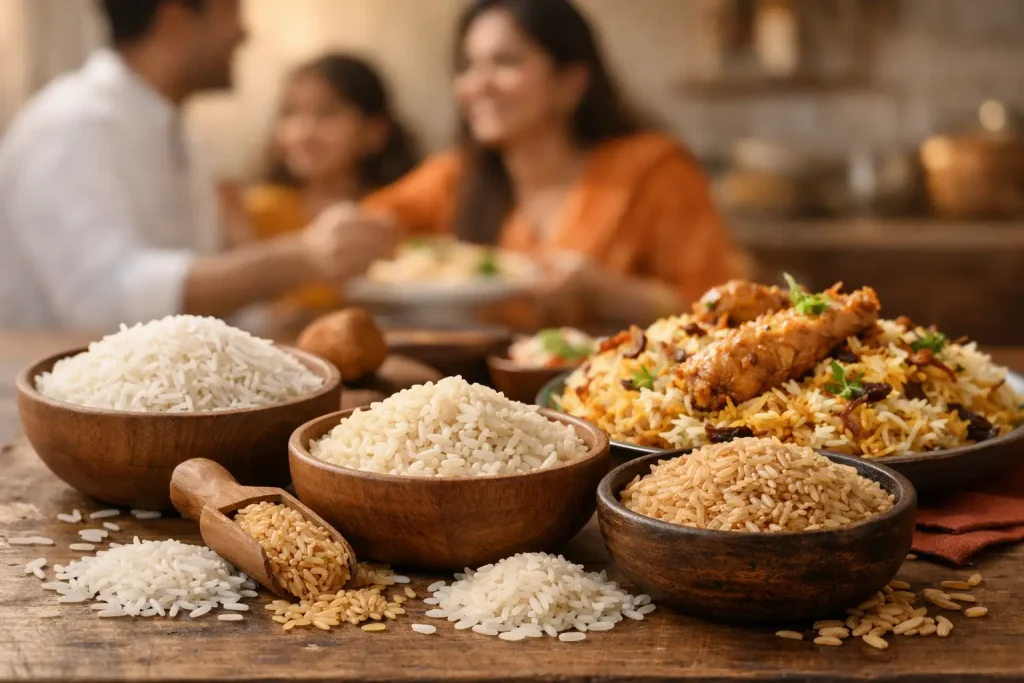
A biryani can have the right spices, the right layering, and the right cooking method, but if the rice turns soft, sticky, or flat in aroma, the whole dish feels off. If you have ever stood in the rice aisle wondering which rice is best for biryani, the short answer is this – aged basmati is the most reliable choice for the classic long-grain, fragrant result most home cooks want.
That said, not every biryani needs the same rice. Some families prefer extra-long grains for a more festive look. Some want a softer finish for home-style dum biryani. Others are shopping for everyday value and want a rice that still cooks well without stretching the budget too far. The best choice depends on the style of biryani you are making, how you cook it, and what kind of texture you like on the plate.
For most home kitchens, basmati rice is the standard for good reason. It has the long, slender grain, the separate fluffy texture, and the light aroma that make biryani feel special. When cooked properly, basmati stays distinct instead of clumping together, which matters in layered dishes where every spoonful should show individual grains.
Aged basmati is usually the better option than newly harvested rice. As basmati ages, it tends to lose excess moisture and cook up with better grain separation. That is why many experienced cooks look for words like aged, extra-long grain, or premium basmati on the pack. You are not just paying for appearance. You are paying for performance in the pot.
If you want the safest answer to which rice is best for biryani, choose a good-quality aged basmati from a trusted Indian brand. It works well for chicken biryani, vegetable biryani, paneer biryani, and most dum-style recipes made at home.
Basmati gives biryani three things that ordinary rice often cannot. First is length. Long grains create that classic restaurant-style look after cooking. Second is aroma. Good basmati has a natural fragrance that supports the whole dish without competing with the spices. Third is texture. The grains stay light and separate when parboiled correctly and finished on dum.
This does not mean every basmati pack will give the same result. Budget basmati can still be good for everyday meals, but the grain length may be shorter and the aroma milder. Premium basmati usually gives a better finish, especially when you want biryani for guests or festive meals.
There is also a practical point here. Biryani is not a one-pot rice dish where slight softness goes unnoticed. Every layer shows. Every grain matters. So even if the spice mix is simple, better rice still makes a visible difference.
A common question in Indian grocery stores is whether regular basmati or sela basmati is better. Sela rice is parboiled before milling, which changes the grain slightly. It tends to be firmer, less likely to break, and often gives very long grains after cooking. Some cooks prefer it because it is more forgiving and holds shape well during biryani cooking.
Regular aged basmati, on the other hand, usually gives a more delicate aroma and a softer, more traditional bite. If you like biryani that feels lighter and more fragrant, regular basmati is often the better pick. If you want extra grain length, stronger holding power, and easier handling for large-batch cooking, sela basmati can be a smart choice.
So which rice is best for biryani between the two? For classic flavor and aroma, regular aged basmati wins. For durability and value in bigger home cooking batches, sela basmati is a very practical option.
Not every rice in the pantry is suited for biryani. Sona masoori, for example, is excellent for everyday meals in many South Indian homes, but it is not usually the first choice for biryani if you want long, separate grains. It cooks softer and shorter, which can work for certain home-style rice dishes, but it will not give the same visual finish as basmati.
Jeerakasala and seeraga samba are a different story. These shorter aromatic varieties are traditionally used in some regional biryanis, especially in South India. They absorb flavor beautifully and can produce deeply satisfying biryani, but the final result is very different from the long-grain basmati style many shoppers expect. If your family recipe specifically calls for one of these, then that is the right rice for that dish.
This is where context matters. If you are asking which rice is best for biryani in the broadest sense, basmati is the answer. If you are making a regional recipe with a traditional rice variety, the best rice may be the one that matches that style, not the one with the longest grain.
When you are shopping, start with the grain description on the pack. Look for long grain or extra-long grain basmati if appearance matters most. If the bag mentions aged rice, that is usually a positive sign for biryani.
Brand trust matters too. In Indian grocery shopping, familiar brands often earn repeat buyers for a reason – consistency. A rice that cooks the same way week after week saves time and reduces guesswork. For busy households, that reliability matters just as much as premium packaging.
Price is also part of the decision. A top-tier biryani rice is worth it for special occasions, dinner guests, or weekend cooking when biryani is the main event. For regular family meals, a mid-range aged basmati often gives the best balance between quality and value. There is no need to overbuy the most expensive pack if your household is cooking biryani often and prioritizing everyday savings.
Even the best rice can disappoint if it is handled poorly. Washing the rice well helps remove excess surface starch. Soaking it for around 20 to 30 minutes helps the grains elongate more evenly during cooking. Then comes the most important part – do not fully cook the rice before layering.
For biryani, the rice is usually boiled only until it is partially cooked, then finished during dum. If you take it too far in the first stage, the grains can break or turn mushy by the time the biryani is done. Many people blame the rice when the real issue is overcooking.
The water ratio, pot size, and heat level all play a role too. A crowded pot can break grains. Too much moisture in the final cooking stage can flatten the texture. Good rice helps, but careful cooking is what brings out its strength.
If you are making a classic layered biryani for a family meal, aged regular basmati is usually the best all-around choice. It gives aroma, grain separation, and that familiar biryani look.
If you are cooking for a crowd or want a more forgiving rice that stays intact, sela basmati can be the better buy. It holds shape well and often offers strong value.
If you are following a regional recipe that traditionally uses shorter aromatic rice, it is worth respecting that style. The rice may look different on the plate, but the flavor can be exactly what the dish needs.
For shoppers who want convenience without trial and error, buying from a trusted local Indian supermarket makes the choice easier. Stores that regularly serve South Asian households usually stock the brands people actually cook with, not just generic options that happen to say basmati on the label.
If you want a dependable answer to which rice is best for biryani, go with aged basmati rice. It gives the aroma, grain length, and separate texture that suit most biryani recipes and most home cooks. If you prefer firmer grains and easier large-batch cooking, sela basmati is a strong alternative. And if your family recipe comes from a specific regional tradition, the best rice is the one that keeps that tradition tasting right.
The good news is that once you find a rice brand and grain style that works for your kitchen, biryani becomes much more consistent. That is one less thing to second-guess the next time you are planning a weekend meal or stocking up on pantry staples.