
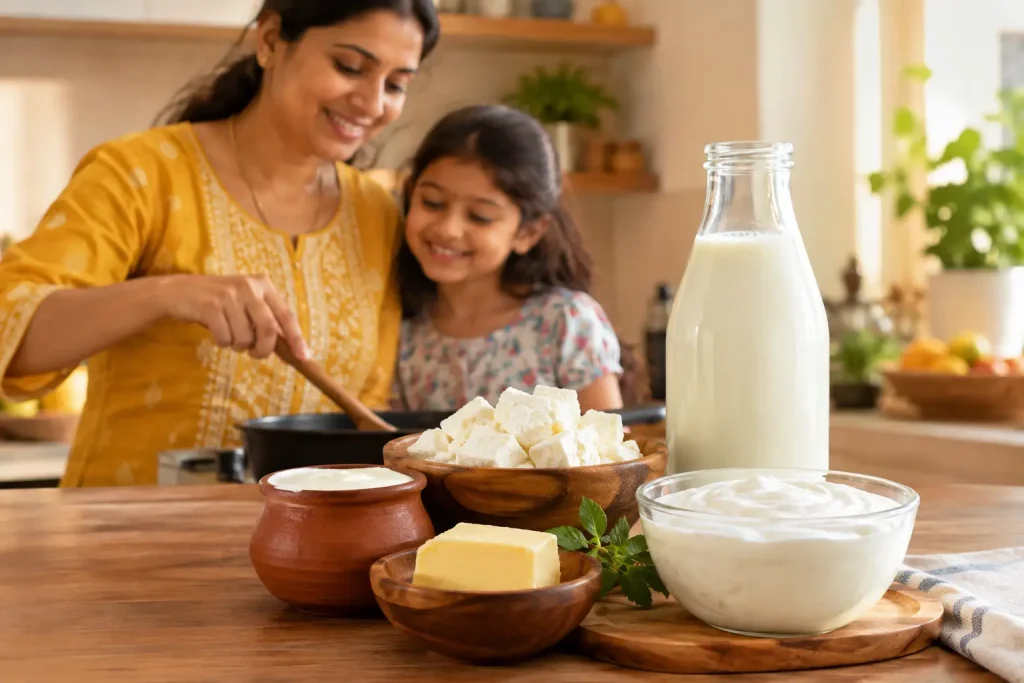
A cup of masala chai without milk, a palak paneer made with the wrong cheese, or kadhi without dahi never quite tastes like home. Indian dairy is not one item on a grocery list. It is a group of everyday kitchen staples that gives familiar meals their richness, tang, texture, and comfort.
For many households, dairy shopping is part of the weekly routine. The right pack of paneer can turn into a quick weeknight curry. A jar of ghee can carry the flavor of tempering for weeks. Dahi can become breakfast, a side dish, a marinade base, or a cooling bowl beside spicy food. Knowing what each product does helps you buy with confidence, use it well, and avoid a refrigerator full of half-used packs.
Indian cooking uses dairy for more than creaminess. It is often there to balance spice, add body, or create a specific texture that cannot be replaced easily. Ghee gives dal tadka a deep, toasted aroma. Dahi adds gentle tang to kadhi and helps create a tender coating for tandoori-style dishes. Paneer stays soft and holds its shape in gravy, unlike many everyday cheeses that melt or become oily when heated.
This is why choosing recognizable Indian brands and purpose-made products matters. A plain yogurt may work in a pinch, but a thicker dahi usually performs better when whisked into raita or cooked slowly into a sauce. Similarly, paneer made for Indian cooking is designed to cube, fry, simmer, and stay satisfying rather than disappear into the pan.
Taste is personal, too. Some families prefer full-bodied dairy for festive sweets and richer curries, while others choose lighter options for daily tea and meals. The best choice depends on what you cook most often, how quickly your household uses dairy, and the flavor you grew up with.
Paneer is a fresh, non-melting cheese with a mild, milky flavor. It is the dependable choice for classics such as matar paneer, palak paneer, paneer butter masala, kadhai paneer, and paneer tikka. It also works beautifully in wraps, stuffed parathas, and quick sautéed snacks.
Look for a firm but springy block with a clean appearance and a current use-by date. Once opened, keep it refrigerated in a sealed container and use it promptly. If the paneer feels dry after chilling, soaking the cubes briefly in warm water before cooking can help restore a softer bite. For crisp edges, pat it dry and pan-fry gently before adding it to gravy.
Dahi is one of the hardest-working items in an Indian kitchen. Serve it plain with rice dishes, whisk it into raita, use it for chaas, or add it to a curry where a light tang is needed. It is also a practical base for marinades, especially when you want spice to cling evenly to paneer or other ingredients.
Choose the thickness that suits your cooking. Set-style dahi is useful when you want a spoonable, creamy texture. A thinner yogurt can still be useful for drinks and sauces, but it may release more liquid. When cooking with dahi, bring it closer to room temperature and stir it well first. Adding cold yogurt directly to a very hot pan can cause it to split.
Ghee is clarified butter with a rich, nutty character. A small spoonful can make a noticeable difference in dal, khichdi, pulao, halwa, and roasted snacks. It is also a smart pantry staple because it keeps well when stored according to the label, unlike many refrigerated dairy products.
Use ghee when you want flavor to be part of the dish, not just a cooking medium. Heat it for cumin seeds, mustard seeds, curry leaves, or hing at the start of a recipe. Add a final drizzle over warm rice and dal when you want an easy comfort meal. Because ghee is concentrated, a little goes a long way, which makes it good value for regular home cooking.
Milk remains essential for chai, coffee, cereal, kheer, and countless family recipes. Keep the type your household enjoys most, whether that is whole milk for a fuller cup of tea or a lighter option for everyday use. If chai is non-negotiable in your home, buying enough for the week prevents the familiar disappointment of reaching for an empty carton at breakfast.
Milk powder and condensed milk solve different problems. Milk powder is useful for recipes where you want dairy richness without adding too much liquid, including certain sweets and doughs. Condensed milk is sweetened and thicker, making it handy for fast desserts, kheer shortcuts, and festive treats. They are not interchangeable, so check the recipe before adding either one.
A chilled lassi or glass of chaas is a simple addition to lunch, a spicy snack, or a relaxed weekend meal. Sweet lassi offers a dessert-like finish, while salted chaas has a lighter, savory profile. Ready-to-drink options are especially useful for busy households that want familiar flavors without extra preparation.
Check labels for serving size and sweetness, particularly if you are buying drinks for children or stocking up for guests. Keeping a couple of options on hand makes it easy to offer something more special than a standard beverage when family visits.
The easiest way to shop is to start with your actual week, not an idealized menu. If you make chai every day, milk belongs on the regular list. If paneer curry appears once or twice a week, buy a pack size you can finish after opening. If ghee is only for tempering, one jar may last far longer than you expect.
Before placing dairy in your cart, check the use-by date, storage instructions, and pack size. Larger packs can offer better value, but only when your household will use them in time. This matters most for paneer, dahi, milk, and ready-to-drink dairy products.
A practical Indian dairy shopping list often includes four roles: one everyday milk product, one cooking staple such as ghee, one meal ingredient such as paneer or dahi, and one treat or convenience item such as lassi or condensed milk. This approach keeps the kitchen flexible without overbuying.
Dairy needs a little attention after checkout. Put refrigerated items away as soon as possible and keep them toward the back of the refrigerator, where temperatures tend to stay steadier. Close packs tightly after opening, and avoid using a wet or unclean spoon in dahi, ghee, or milk powder.
Paneer is best used soon after opening. If you have extra, portion it before storing so you only handle what you need. Dahi should be covered between uses to preserve its clean flavor. Ghee should stay tightly sealed and away from heat and moisture. Milk powder should be kept dry, because even small amounts of moisture can cause clumping.
If a dairy item has an unusual smell, changed texture, swelling package, or signs of spoilage, do not try to cook around it. Replacing one item costs less than losing a full meal.
The real value of Indian dairy is how quickly it turns pantry basics into food people look forward to. Paneer and a ready-made curry sauce can make dinner easier. Dahi, spices, and a few minutes of whisking can become raita for biryani or pulao. Ghee can transform simple dal and rice into a meal that feels complete.
For sweets, milk, ghee, milk powder, and condensed milk help create the familiar flavors of kheer, halwa, peda-style treats, and more. Some recipes take patience, while others are designed for a quick celebration. Keeping the right dairy staples at home gives you both options.
At One Stop Supermarket, families can find trusted Indian dairy favorites alongside the pantry items that make everyday cooking easier. Choose what suits your household, check dates and pack sizes, and keep a few reliable staples ready for the meals that bring everyone to the table.