A box of warm gulab jamun for a family dinner, a mixed mithai tray for Diwali, or a few pieces of kaju katli with afternoon chai can turn an ordinary visit into an occasion. Knowing how to order Indian sweets makes the experience easier: you can choose familiar favorites, try something new, and bring home the right amount without overthinking it.
Indian sweets, also called mithai, are not one single category. Some are milk-based and soft, some are nutty and rich, some are soaked in syrup, and others have a light, crumbly texture. The best order depends on who you are serving, when you plan to enjoy it, and whether you are buying for home, guests, gifting, or a celebration.
Start with the occasion and the number of people. A small family treat calls for a modest mixed box, while a gathering may need a larger selection with enough variety for different tastes. For a visit to relatives, a neat box of premium-looking sweets such as kaju katli, assorted barfi, or ladoo is often a thoughtful choice. For a party, mixing dry sweets with syrup-based options gives guests more to choose from.
If you are ordering online, read the product name and description carefully before adding items to your cart. Look for the weight, piece count when provided, and any storage guidance. Buying by weight is common, so it helps to think about how many people will be sharing. For a small household, a smaller box keeps the sweets enjoyable and fresh. For a larger family event, ordering a few varieties in sensible quantities is usually better than buying one very large box of a single sweet.
When shopping in-store, do not hesitate to ask which sweets are freshly made, what customers are buying most often, and which options travel well. A good local Indian supermarket can help you choose a combination that suits your budget and the occasion.
A mixed order works well when you are serving different age groups or are not sure what everyone prefers. Choose two or three styles rather than several versions of the same texture. This keeps the box interesting while making the decision simple.
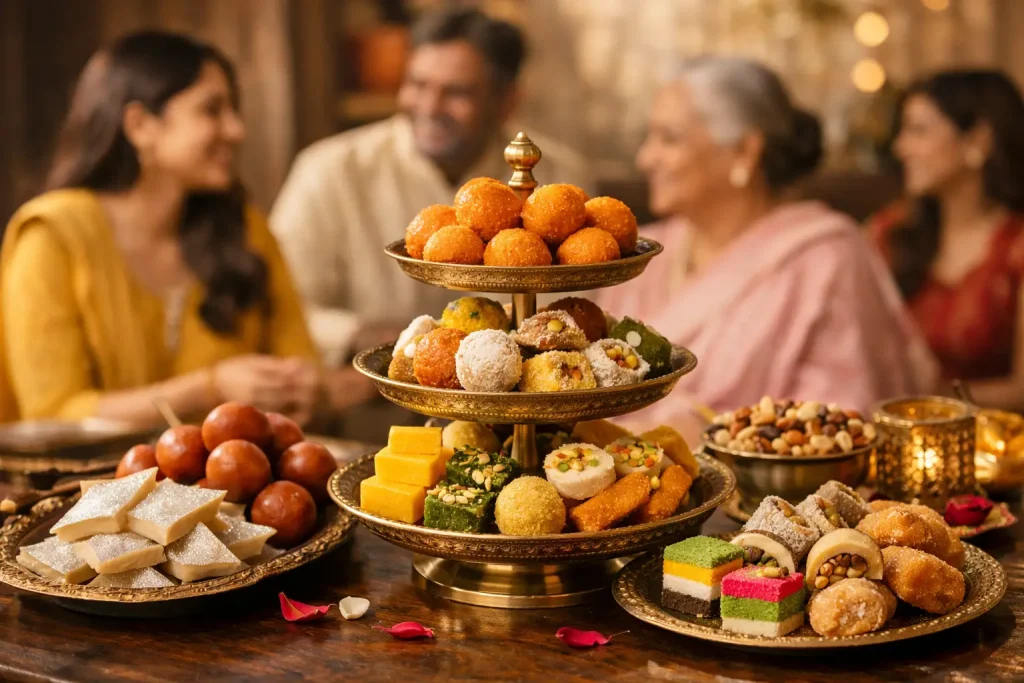
For soft, rich sweets, try milk-based favorites such as milk cake, peda, rasgulla, rasmalai, or gulab jamun. Gulab jamun is a familiar crowd-pleaser with its soft center and sweet syrup. Rasgulla is lighter in texture, while rasmalai is creamy and best enjoyed chilled. These options are especially popular for family meals and festive tables, but they may need more careful storage than dry sweets.
For a firmer, gift-friendly choice, kaju katli and barfi are dependable options. Kaju katli has a smooth cashew flavor and a refined appearance that suits celebrations, thank-you gifts, and religious occasions. Barfi comes in many styles, including plain milk, pistachio, almond, and coconut varieties. It is a useful choice when you want something rich but easy to portion and share.
Ladoo brings a more traditional, home-style feel. Besan ladoo has a roasted gram flour flavor, while motichoor ladoo is soft, colorful, and often chosen for celebrations. Some households also look for special favorites such as mysore pak, soan papdi, or halwa. If you are buying for someone who already knows their preferred sweet, choosing that familiar favorite can mean more than an elaborate assortment.
The amount you order depends on whether mithai is the main dessert or one part of a larger spread. If sweets are being served after a full meal alongside tea, coffee, biscuits, and snacks, guests may take only one or two pieces. If the sweets are the main focus of a celebration or are being given away in boxes, plan more generously.
For a casual family meal, a small assortment is often enough. For a gathering, estimate at least two pieces per guest, then add extra for popular choices and unexpected visitors. For gifting, presentation matters as much as quantity. A smaller, well-chosen box can feel more special than an oversized assortment with items no one finishes.
It also helps to think about leftovers honestly. Sweets are meant to be enjoyed, but different varieties keep differently. If your household prefers a little dessert over several days, choose a balance of dry and refrigerated items instead of ordering only delicate milk sweets. If you are taking mithai directly to a celebration, choose varieties that are easy to transport and serve.
Freshness should be part of every order. Handmade Indian sweets are best when they are purchased from a trusted store with regular turnover and clear storage practices. Ask for guidance if you are unsure whether an item should be refrigerated, kept in a cool place, or enjoyed the same day.
Milk, ghee, nuts, and wheat may be used in many traditional recipes. If you are buying for guests, ask about allergens before ordering. Do not assume that a sweet is vegan, nut-free, gluten-free, or suitable for a particular dietary need simply because it looks simple. A quick question can prevent a disappointing surprise later.
Syrup sweets and chilled dairy-based desserts generally need prompt refrigeration after you bring them home. Dry sweets may be easier to keep for a few days, but they should still be stored as advised by the store. Keep different sweets in their original containers when possible, especially if they have distinct aromas or syrup. Before serving, let chilled items sit briefly if you prefer a softer texture, but avoid leaving dairy-based sweets out for extended periods.
During Diwali, Raksha Bandhan, Eid, weddings, housewarmings, birthdays, and puja, sweets are often one of the first items people buy. Popular selections can sell quickly around major celebrations, particularly handmade favorites and gift-ready assortments. Ordering ahead gives you more choice and reduces last-minute shopping stress.
For puja or a religious offering, ask for sweets that suit your family tradition. Different households have different preferences, and a store team can help you find a familiar option. For gifting, choose items that look neat, travel well, and can be shared easily. Kaju katli, ladoo, barfi, and mixed dry-sweet boxes are practical choices because they are easy to portion.
When sending sweets to someone else, consider their household size. A large box may be perfect for a joint family, while a smaller box is more practical for one or two people. Add a mix only when you know they enjoy variety. Otherwise, ordering their favorite mithai is the more personal gesture.
Online ordering is especially useful when you are managing a busy week, planning a get-together, or need groceries and sweets in the same order. Add mithai after you have selected your pantry essentials, snacks, dairy items, and frozen breads so you can see the full order clearly before checkout.
Choose a delivery or pickup time that allows you to refrigerate delicate sweets soon after receiving them. If you are ordering for a party, arrange delivery early enough to check the order, store it properly, and set it out when guests arrive. For a same-day visit, pickup can be a convenient option when you want to select sweets close to serving time.
At One Stop Supermarket, local shoppers can combine handmade Indian sweets with everyday grocery favorites in one practical order. That means less time making separate stops and more time preparing for the people you are welcoming.
The best mithai order is not always the biggest one. Choose sweets that fit the moment, ask about freshness and storage, and include at least one familiar favorite. A thoughtfully chosen box is ready to share the minute someone walks through the door.