A bag of lentils can disappear faster than expected in a busy household. One pot of dal for dinner, khichdi for lunch, a quick sambar, and suddenly the pantry needs restocking again. When you buy lentils in bulk, you spend less time chasing essentials and more time cooking the familiar meals your family enjoys.
For households that cook Indian food regularly, bulk lentils are not just a budget choice. They are a practical way to keep everyday staples within reach. The key is choosing the dals you actually use, selecting a pack size that suits your household, and storing each bag properly after opening.
Lentils and dals are among the hardest-working items in an Indian pantry. They can become a simple weekday dal, a filling side dish, dosa batter, idli batter, vada, rasam, snacks, or comforting one-pot meals. Buying a larger pack makes sense when a staple is used every week rather than occasionally.
The biggest advantage is value. Larger packs often offer a better price per pound or kilogram than small packs, especially when you are buying household favorites such as toor dal, masoor dal, chana dal, urad dal, or whole green moong. A bulk pack also reduces last-minute grocery runs when a recipe calls for more than you have on hand.
There is a convenience benefit too. A well-stocked pantry makes meal planning easier on busy evenings. You can pair dal with rice, roti, paratha, pickles, papad, or a ready-to-eat side and have a satisfying meal without overthinking dinner.
Still, bigger is not automatically better. If your family only uses a particular lentil once every few months, a smaller bag may be the smarter buy. Bulk shopping works best when it reflects your real cooking habits, not just a good-looking deal.
Start with the dals that appear most often in your kitchen. Every household has different favorites, but a few varieties earn a regular place in many pantries.
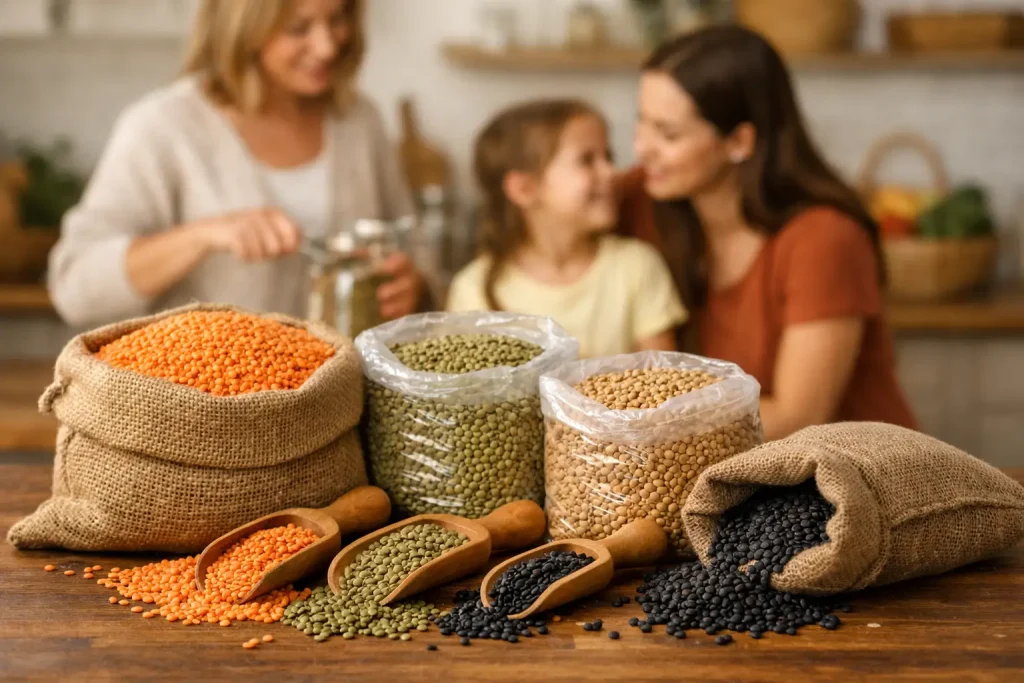
Toor dal, also called pigeon peas, is a dependable choice for everyday dal and sambar. It has a mild, satisfying flavor and cooks into a soft texture that works well with rice or roti. If sambar, dal tadka, or simple pressure-cooker dal is part of your weekly routine, a larger pack of toor dal is usually a safe purchase.
Split yellow moong dal cooks quickly and is especially useful when you want a gentle, uncomplicated meal. It works beautifully in khichdi, dal fry, soups, and simple lunch dishes. Whole green moong has a firmer bite and is useful for curries, sprouts, and snacks. Choose the type your family reaches for most rather than buying both in large quantities by default.
Chana dal adds body and a slightly nutty taste to many dishes. It is useful in dal preparations, vada, sweets, and tempering for certain regional recipes. Because it takes longer to cook than softer lentils, it may not be the first choice for a rushed dinner, but it is worth stocking for households that enjoy traditional cooking.
Urad dal is essential for many South Indian kitchens. Whole or split urad is used for idli and dosa batter, while split urad dal is often used in tempering and snacks. If weekend batter-making is part of your home routine, buying urad dal in bulk can be a sensible way to avoid running out at the wrong time.
Red masoor dal is a strong option for quick meals because it cooks fast and develops a creamy consistency. It is ideal for households balancing work, school, and evening cooking. A bulk bag is practical if you use it frequently, but its shorter cooking time means it can be easy to overcook, so match it to the dishes you enjoy making.
Before adding a large bag to your cart, think about how often you cook that lentil. A family that prepares dal several times a week may finish a large pack comfortably. A smaller household, or someone trying a new variety, may be better served by a medium-size pack first.
It also helps to avoid buying every type of dal in bulk at the same time. That can tie up pantry space and leave you with too many open bags. A better approach is to keep two or three core lentils in larger packs, then buy specialty varieties in smaller quantities until you know how quickly they move through your kitchen.
Check the package before you buy. Look for clean, evenly colored lentils with minimal broken pieces or powder at the bottom of the bag. Trusted Indian brands can make repeat shopping simpler because you know what texture and cooking results to expect.
At One Stop Supermarket, shoppers can build a practical pantry with familiar Indian dals and lentils alongside rice, spices, snacks, dairy, frozen breads, and everyday meal essentials. It is a straightforward way to restock the items your household uses most without visiting multiple stores.
Once you buy lentils in bulk, storage matters as much as selection. Leaving an opened bag folded in the cupboard can work for a short time, but airtight containers provide better protection from moisture, pantry pests, and unwanted odors.
Transfer lentils into clean, completely dry containers with tight-fitting lids. Clear containers are especially helpful because you can see how much is left before starting a recipe. Label the container with the lentil type and the month you opened it. Similar-looking dals can be confusing when you are cooking quickly.
Store containers in a cool, dry, dark cabinet away from heat and steam. Avoid keeping them close to the stove, dishwasher, or any area that gets damp. If you buy very large quantities and have limited cabinet space, keep a smaller everyday container in the kitchen and store the unopened or extra portion separately in a dry place.
Do not combine a new bag with older lentils until you have used the older batch. Rotating stock first helps prevent forgotten food at the back of the shelf. If you notice an unusual smell, moisture, insects, or discoloration, do not use the lentils.
The easiest way to use bulk staples well is to give them a place in your regular meal rotation. You do not need a complicated plan. A simple dal one night, khichdi another day, and a lentil-based dish over the weekend can use a meaningful amount without making meals feel repetitive.
Cook a larger batch when time allows, then refrigerate portions for the next day. Many dals thicken as they sit, so add a little water when reheating and adjust salt or seasoning if needed. Keeping cooked rice, roti, or paratha available can turn leftover dal into a quick meal with very little effort.
Lentils also help balance grocery spending. They are filling, versatile, and able to carry a meal with spices, aromatics, rice, or breads you already keep at home. For families watching weekly costs, this matters as much as the discount on the bag itself.
Bulk shopping should make home cooking easier, not create crowded cabinets and forgotten packages. Buy the lentils your household genuinely cooks, choose a size you can finish in a reasonable time, and keep each variety sealed and labeled after opening.
The next time your favorite dal is running low, restock before the last cup is gone. A reliable bag in the pantry means one less decision at dinner time and more chances to put a familiar, comforting meal on the table.