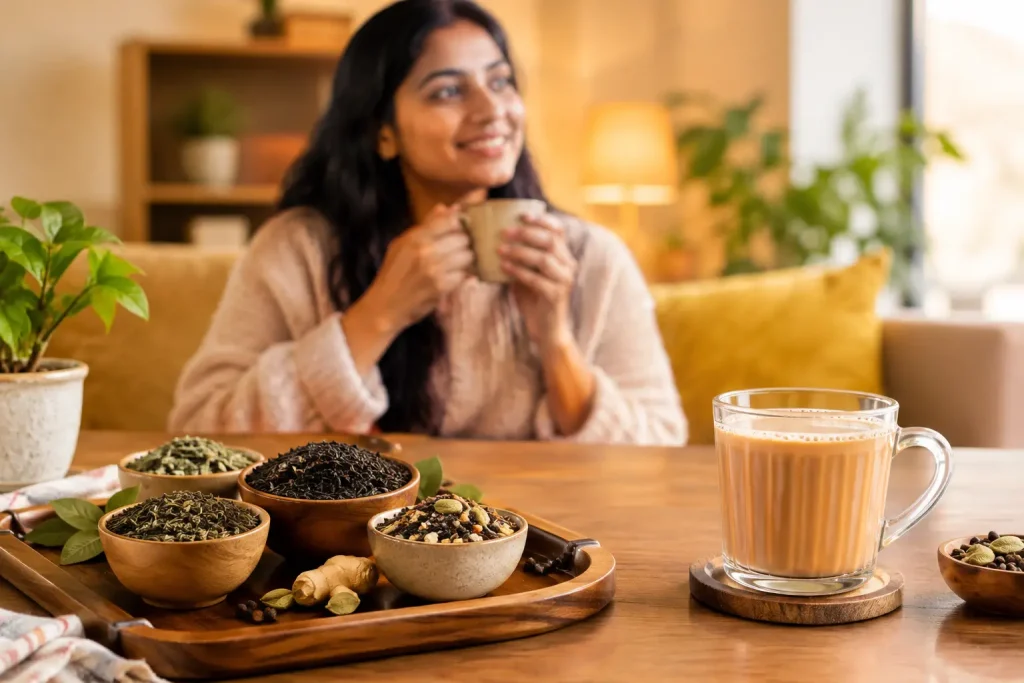
A good cup of chai can set the pace for a busy morning, make an afternoon break feel more settled, or welcome unexpected guests without any fuss. The best indian teas are not all the same: some are made for a bold milk chai, while others deserve a lighter brew where their floral or malty character can shine. Keeping a few trusted varieties at home means there is always the right tea for the moment.
For many households, tea is not a specialty purchase. It is a weekly essential, alongside pantry staples, biscuits, and snacks. Knowing the differences between popular Indian teas makes it easier to choose well, avoid a weak cup, and stock the flavors your family actually enjoys.
Before choosing a packet, think about your usual cup. If your chai is simmered with milk, sugar, ginger, or spices, a strong CTC tea is generally the dependable choice. Its small, curled leaves infuse quickly and hold their flavor against milk.
If you prefer tea without milk, or with just a little, whole-leaf Assam, Darjeeling, and Nilgiri can offer more aroma and detail. There is no single best tea for every household. The right one depends on whether you want everyday strength, a lighter evening cup, or something special to serve guests.
Assam CTC is the classic foundation for a full-bodied Indian milk tea. CTC stands for crush, tear, curl, a processing method that creates small pellets with a quick, powerful infusion. The result is dark in color, brisk in taste, and strong enough for generous milk.
This is the practical choice for families who make chai every day. Brew it with water first, then add milk and sugar to taste. It also pairs beautifully with fresh ginger, cardamom, cloves, or a ready-made masala chai blend. If your cup tastes thin after adding milk, move toward a stronger CTC grade rather than simply adding more sugar.
Orthodox Assam uses longer, more intact leaves than CTC tea. It still has Assam’s familiar malty depth, but the cup can feel smoother and more layered. You may notice notes that resemble toasted grain, cocoa, or dried fruit.
Choose orthodox Assam when you enjoy a strong tea but want to drink it with less milk or without milk altogether. It works well for a slower morning cup and can be brewed in a teapot or infuser. Because the leaves are larger, it usually needs a little more steeping time than CTC.
Darjeeling is often chosen for its lighter body, fragrant aroma, and elegant finish. It is not designed to make a heavy, creamy chai. Instead, it is best appreciated with a short steep and little or no milk, so its delicate character is not covered up.
First-flush Darjeeling is typically bright and floral, while later harvests may be rounder and more muscatel, with a grape-like note. It is a lovely tea to keep for quiet afternoons or when serving guests who enjoy a refined black tea. Use water that is just off the boil and avoid over-steeping, which can bring unwanted bitterness.
Grown in the Blue Mountains of southern India, Nilgiri tea is aromatic, clean, and pleasantly brisk. It sits somewhere between the strong depth of Assam and the light fragrance of Darjeeling, making it a flexible choice for many tea drinkers.
Nilgiri can be enjoyed black, with a splash of milk, or chilled as iced tea. It is also a good option for people who want a flavorful cup without the heavier feel of a very strong chai. For a household tea shelf, it brings useful variety without requiring a complicated brewing routine.
Masala chai is less about one tea-growing region and more about a comforting flavor profile. Most blends start with black tea and add warming spices such as cardamom, ginger, cinnamon, cloves, pepper, or fennel. The exact balance varies widely from brand to brand.
A pre-blended masala chai is a smart time-saver on rushed mornings. You get the familiar spiced taste without measuring several ingredients each time. For a richer result, simmer the tea briefly with milk rather than only steeping it. If a blend is already heavily spiced, keep the brewing time moderate so the cloves or pepper do not take over the cup.
Cardamom tea, often called elaichi chai, has a sweet, fragrant warmth that feels familiar at any time of day. It can be a simple black tea blend with cardamom or a stronger CTC base made specifically for milk chai.
This is a crowd-pleasing option when guests are coming over because it feels special without being too sharp or spicy. It is also easy to serve with biscuits, rusks, or Indian sweets. If you make chai from plain tea leaves, lightly crushing a few green cardamom pods before simmering gives a fresher flavor than adding a large amount of powder.
Ginger tea has a lively, warming taste that works especially well in milk chai. Some shoppers prefer ready-made ginger tea blends for convenience, while others keep a plain CTC tea and add ginger during brewing. Both approaches can make an excellent cup.
The trade-off is control. A blend gives consistency and speed, but fresh ginger lets you adjust the intensity for each person. Start with less than you think you need, especially when making a small pot. Ginger becomes stronger as it simmers.
Kashmiri kahwa offers a very different tea experience from everyday chai. This light green tea preparation is usually scented with spices such as cardamom and cinnamon, and may include saffron, almonds, or rose petals depending on the blend. It is usually served without milk.
Kahwa is a wonderful after-meal tea or a gentle choice for an evening when a heavy black tea feels like too much. Brew it carefully with hot, not aggressively boiling, water. The goal is a fragrant golden cup, not a bitter one. Because it is quite different from milk chai, it is worth keeping as a second option rather than a replacement for your daily tea.
Indian green tea is a simple choice for people who prefer a lighter, cleaner cup. It has more grassiness and gentle astringency than black tea, and it is best brewed for a shorter time. Boiling water and long steeping can make it harsh.
Choose plain green tea when you want something uncomplicated, or try a flavored version with lemon, mint, tulsi, or spices if you prefer more aroma. It does not need milk, and it is easy to prepare between errands, meetings, or household tasks.
Tulsi, also known as holy basil, has a distinctive herbal, slightly peppery aroma. It is commonly sold on its own or blended with green tea, ginger, lemon, or other herbs. Unlike a bold black tea, tulsi is usually chosen for its calming, aromatic character.
It makes sense to keep tulsi tea for evenings or for anyone in the household who does not want a strong cup of black tea. Check the packet before brewing: some blends contain black or green tea, while others are naturally caffeine-free herbal infusions.
A useful tea shelf does not need ten open packets at once. Start with a strong everyday CTC tea for milk chai, then add one lighter black tea such as Assam orthodox or Nilgiri. A spiced option, such as masala chai or cardamom tea, covers guests and easy weekend cups. Finally, choose a caffeine-free or lighter option like tulsi or kahwa for evenings.
Store tea in a cool, dry cupboard in an airtight container after opening. Tea absorbs surrounding odors easily, so keep it away from strongly scented spices. Buy packet sizes that suit how quickly your household drinks tea. A larger value pack is sensible for daily chai, but smaller packs are often better for delicate leaves or specialty blends that you enjoy less often.
At One Stop Supermarket, finding familiar Indian tea brands alongside the essentials for chai makes regular shopping simpler. Whether you need a strong packet for the morning routine or a fragrant blend for visitors, choosing genuine brands and keeping a few varieties on hand gives every cup its place.
The best tea routine is the one that fits your household: strong chai ready for busy mornings, a fragrant cup for company, and a gentler brew waiting when the day finally slows down.