A well-stocked snack shelf saves the 5 p.m. scramble. When kids are hungry after school, guests arrive without notice, or a cup of chai calls for something more than a plain cookie, familiar Indian favorites make the moment easy. This Indian snack pantry guide helps you build a practical mix of crunchy, sweet, spicy, and quick-cook choices that your household will actually reach for.
The goal is not to buy every item in one visit. Start with the flavors your family already enjoys, keep a few options for unexpected visitors, and replenish the packets that disappear first. A good pantry balances everyday value with the little treats that make home feel more welcoming.
For most households, the foundation is a reliable mix of namkeen, biscuits, and tea-time snacks. These are the packets that work across ages and occasions: something light with chai, something salty for a movie night, and something familiar to pack in a lunch box.
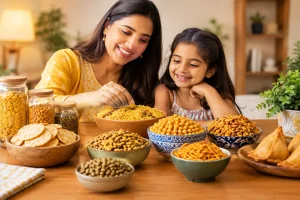
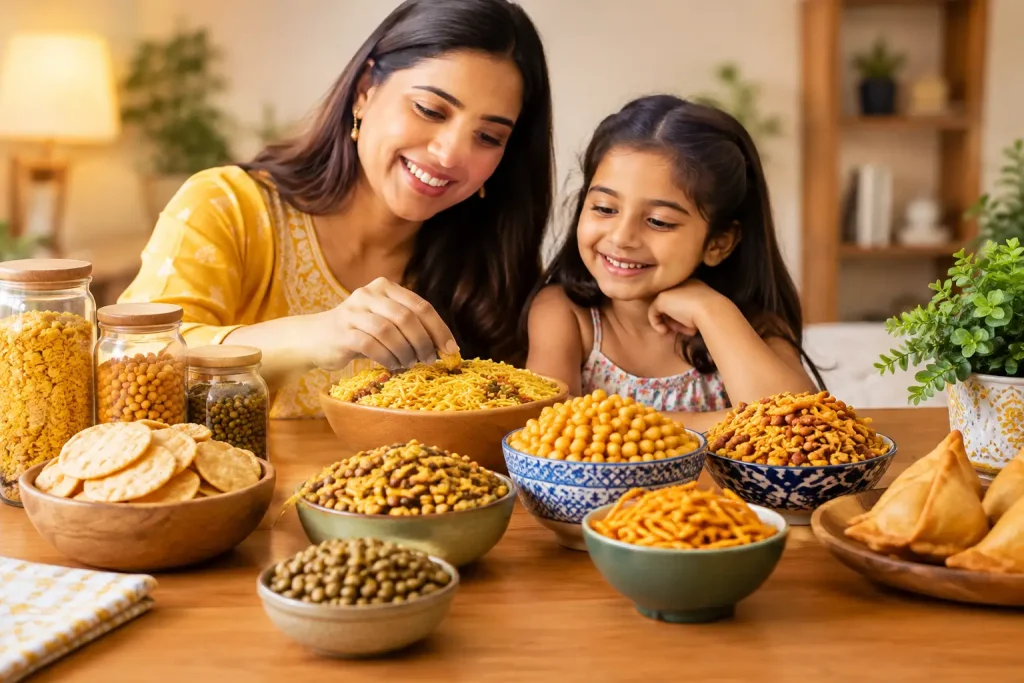
Namkeen covers a wide range of savory mixes, from mild sev and crunchy chivda to bolder mixtures with peanuts, lentils, and warming spices. It is worth keeping at least one mild option and one spicier option. Spice preferences vary widely within the same family, so this simple choice avoids opening a large pack that only one person will eat.
Biscuits earn their shelf space because they are easy to serve and easy to store. Glucose biscuits, Marie-style biscuits, buttery cookies, and salty crackers each have a place. Keep everyday biscuit packs for regular tea breaks, then choose a more indulgent variety for guests or weekend evenings. Rusk is another useful tea companion, especially for those who enjoy a crisp, dunkable bite.
For households that like a classic crunchy snack, consider stocking a few of these dependable categories:
Buy the pack size that fits your routine. Larger value packs make sense for a busy family that snacks often. Smaller packets are better when you are trying a new brand, managing portion sizes, or keeping several flavors fresh at once.
A snack pantry should not be all heat and crunch. Indian sweets and sweet biscuits are useful for hospitality, festivals, celebrations, and the ordinary days when someone wants a small treat after dinner.
Packaged sweets are convenient when you want a traditional flavor without last-minute preparation. Choose based on how quickly your household will finish them, and check storage directions before bringing home a larger box. For a simpler everyday option, keep a few sweet biscuits, coconut cookies, or cream-filled favorites where they are easy to find.
Jaggery-based snacks, sesame bites, and peanut chikki can be especially handy when you want something sweet with more texture and staying power. They are not the same as candy, and their bold, nutty flavor often satisfies with a smaller portion. Still, they can be hard and sticky, so choose them thoughtfully for younger children and anyone with dental concerns.
The best approach is to have one dependable sweet option open and a second unopened choice in reserve. That keeps the shelf tidy while ensuring you are ready when relatives stop by for chai.
Some of the most useful snacks are not ready to eat straight from the bag. They need only hot water, a few minutes on the stove, or a quick warm-up, making them a smart answer for rushed evenings and late hunger.
Instant noodles, upma mixes, poha mixes, and ready-to-cook snack blends can turn a short break into a satisfying meal-like snack. They are particularly helpful for students, working adults, and families juggling pickups, activities, and dinner plans. Keep a few varieties, but read the preparation instructions before you need them. Water quantities and cooking times can differ from one brand to another.
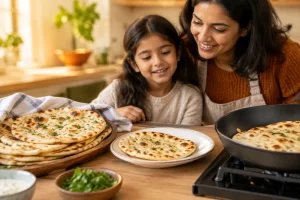
Frozen roti and paratha also deserve a spot in a practical snack plan. Warm one and serve it with yogurt, pickle, chutney, or a leftover filling for something more substantial than chips. They are useful when a family member wants a warm bite but a full meal is not needed.
Ready-to-eat snacks are another convenience category worth considering. The trade-off is simple: they cost more per serving than pantry staples that require preparation, but they can save time when time is the real shortage. Keep them for the days when convenience matters most, rather than relying on them for every snack.
Indian snacks are full of regional tastes, and that variety is part of the fun. A spicy bhujia may be a family favorite, while a milder chivda works better for children or guests who are less familiar with chili. Tangy, sweet, peppery, and garlic-forward choices all bring something different to the shelf.
When you are stocking up, avoid buying five versions of the same flavor profile. A better pantry includes contrast: one spicy namkeen, one mild crunchy snack, one biscuit, one sweet bite, and one quick-cook option. This makes the selection feel generous without filling the cabinet with half-finished packets.
If you are shopping for an older relative or someone with specific dietary needs, check labels carefully for salt, sugar, allergens, and ingredients such as peanuts. Familiar packaging is helpful, but recipes can change, and similar-looking products are not always interchangeable.
The fastest way to waste good snacks is to leave an opened packet folded loosely in the cabinet. Crisp items lose their texture quickly in humid conditions, while biscuits can go soft and sweets may need different handling depending on the product.
Transfer opened namkeen, khakhra, chikki, and biscuits into clean, dry airtight containers whenever possible. Labeling is optional, but it helps if your household has several similar mixes on hand. Keep older packets toward the front and newly purchased items behind them so the first items bought are used first.
Do not store everything in one large container. If a snack loses its crunch or a child reaches in with damp hands, the whole batch can be affected. Smaller containers protect the rest of the pack and make portioning easier.
For a simple weekly routine, take a quick look at the snack shelf before your grocery order. Note what is nearly finished, what has been sitting too long, and which favorites disappeared first. That small habit keeps your shopping focused and helps you spend on the products your household truly enjoys.
A great snack pantry is built over time, not through one oversized haul. Watch for multi-pack savings on regular favorites, especially biscuits, namkeen, instant foods, and household tea-time staples. Stocking up is sensible when the item has a good shelf life and you know it will be used.
For new flavors, buy one packet first. This is the easiest way to find a new favorite without adding waste to the cabinet. It also lets you compare brands, spice levels, and textures based on what your family genuinely likes, rather than what looks familiar on the shelf.
At One Stop Supermarket, you can shop trusted Indian snack brands alongside the everyday essentials that keep a household running. Add a few dependable favorites to your regular order, then try one new item each time. Before long, your pantry will be ready for chai, guests, school-day hunger, and those small moments when a familiar snack is exactly what everyone wants.