
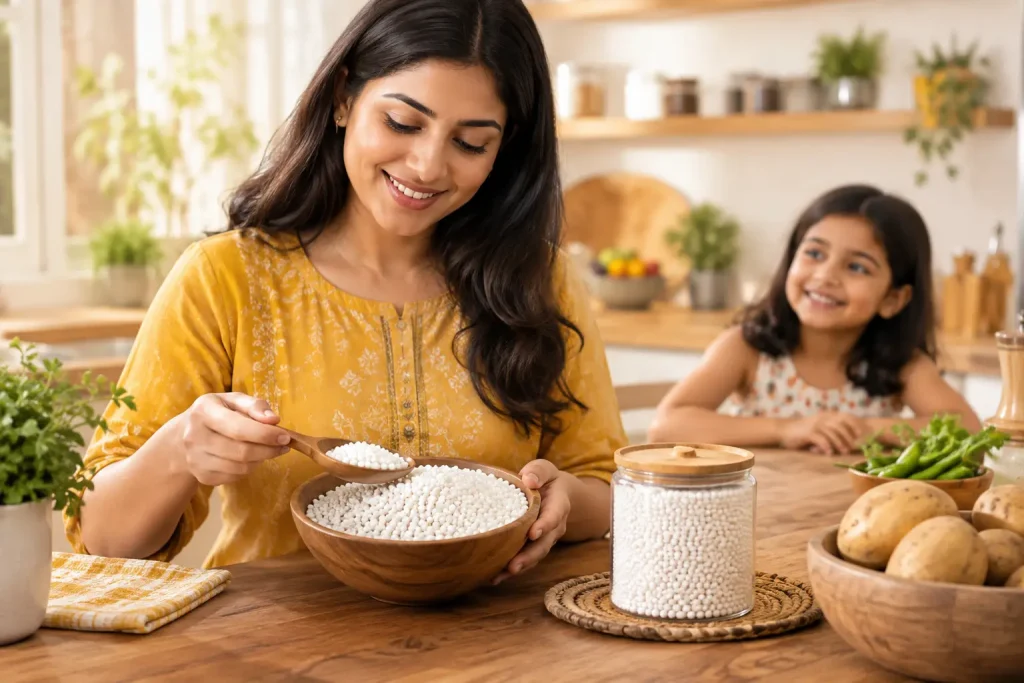
Sabudana is one of those pantry staples you often need at the exact moment you cannot substitute it. Whether you are planning vrat-friendly sabudana khichdi, crisp sabudana vadas, kheer, or a quick snack for the family, knowing where to buy sabudana saves a last-minute trip to several stores. The best choice is usually a trusted Indian grocery store that carries familiar brands, keeps staples moving regularly, and makes it easy to add the rest of your ingredients to the same order.
Start with an Indian supermarket rather than relying on a general grocery aisle. Sabudana, also called tapioca pearls or sago in some stores, is a regular household ingredient in many Indian kitchens, but it is not stocked consistently everywhere. A dedicated Indian grocery store is more likely to offer the right pack sizes, dependable brands, and other essentials you may need for your recipe, such as peanuts, cumin, green chilies, spices, ghee, yogurt, or fasting-friendly snacks.
Shopping locally has a practical advantage: you can check the package, compare pearl sizes, and pick up ingredients for the week while you are there. For busy households, online ordering from a neighborhood Indian supermarket can be just as useful. Check the current product listing, choose your preferred pack size, and add it to a larger pantry order for delivery or pickup.
For shoppers around Calamvale, Pallara, Algester, Sunnybank Hills, and Brisbane South, One Stop Supermarket offers a convenient place to shop for authentic Indian pantry essentials in one visit or order. Availability can change, especially around fasting periods and festival seasons, so checking current stock before planning a large batch is always a smart move.
Not every pack of sabudana cooks the same way. The pearls may vary in size, whiteness, moisture level, and how easily they soften after soaking. These differences do not automatically mean one pack is poor quality, but they do affect the dish you are making.
For sabudana khichdi and vadas, medium to large, fairly uniform pearls are often the easiest choice. Even-sized pearls tend to absorb water more consistently, helping you avoid a mix of hard centers and overly soft pieces. A package with lots of crushed powder at the bottom may still be usable for kheer or thickening, but it is less ideal when you want separate, fluffy pearls in khichdi.
Check that the package is sealed and dry. Sabudana should look clean and free-flowing, without signs of moisture or clumping. Review the best-by date as you would with any pantry staple. Since sabudana is commonly bought for specific recipes rather than daily use, it is easy for an old pack to stay at the back of a cabinet longer than expected.
Brand familiarity can also help. Many families have a preferred brand because they know how long it needs to soak and how it performs in their usual recipes. If you are trying a new brand, start with a smaller pack. Once you know the soaking time that works in your kitchen, buying a larger value pack can make sense.
A small pack is convenient if you make sabudana occasionally or are cooking for one or two people. Larger packs offer better value for families who prepare khichdi, vadas, kheer, and fasting meals throughout the year. It depends on how often you use it and how much dry storage space you have.
Buying too much simply because it is on discount is not always the best saving. Choose an amount you are likely to use while it is fresh, especially if you are still testing a new brand. For frequent home cooks, keeping one unopened backup pack means you are ready for a quick meal without a separate shopping trip.
When you buy sabudana from a store built around Indian household shopping, you are not just looking for one ingredient. You are shopping in the context of the meal. That matters when dinner plans change, a fasting day is approaching, or you need to replenish staples for the week.
A well-stocked Indian supermarket lets you pair sabudana with pantry basics, dairy items, spices, ready-to-eat foods, biscuits, beverages, frozen breads, sweets, and snack options without stopping at multiple places. That one-stop convenience is especially helpful for families balancing work, school schedules, and regular household cooking.
There is also the familiarity factor. Indian grocery retailers understand that ingredients such as sabudana, urad dal, toor dal, sona masoori rice, poha, and besan are not specialty purchases for many customers. They are part of the regular pantry. Stores that serve this need well are more likely to maintain a useful range of trusted brands and practical pack sizes at everyday prices.
If you are ordering online, read the product name carefully. Sabudana may be listed as sabudana, sago, tapioca pearls, or by a brand name. Look at the package weight before adding it to your cart, as product images can make a small pack appear larger than it is.
If the listing includes a photo, use it to check the pearl size and package details. When you have a brand you already like, choosing the same one makes cooking more predictable. If your preferred brand is unavailable, compare the size and description of the alternative rather than assuming every pack will behave identically.
It is also worth planning the rest of the recipe at the same time. For classic sabudana khichdi, many households need peanuts, cumin, potatoes, green chilies, lemon, and a little ghee or oil. For vadas, you may want extra peanuts and spices. Adding everything at once keeps the meal plan simple and helps you make better use of local delivery or pickup.
Great sabudana dishes begin before the pan is heated. Rinsing and soaking correctly is usually more important than adding extra ingredients later. The exact soaking time varies by brand and pearl size, which is why keeping the package details and learning your preferred brand is worthwhile.
Use only enough water for the pearls to absorb, then let them rest until they are soft but still hold their shape. If sabudana feels sticky, soggy, or gluey, it may have absorbed too much water. If it remains hard in the center, it likely needs more resting time. A little trial and adjustment turns this affordable staple into a reliable favorite.
Sabudana earns its place in the pantry because it can become a filling meal, snack, or dessert with a few familiar ingredients. It is especially popular during fasting days, but it is not limited to vrat cooking. Sabudana khichdi makes a satisfying breakfast or light dinner, while kheer offers an easy homemade sweet when you want something comforting.
Keep a pack on hand if your household enjoys quick Indian breakfasts, traditional snacks, or simple recipes that can stretch a few pantry items into a complete dish. It is also useful when you want a naturally gluten-free ingredient, though anyone with specific dietary needs should still check the label for processing and allergen information.
The best place to buy sabudana is the place that gives you confidence in the pack and makes the rest of your grocery shopping easier. Choose a trusted Indian supermarket, buy a size you will use, and keep one pack ready for the next khichdi, vada, or kheer craving.