
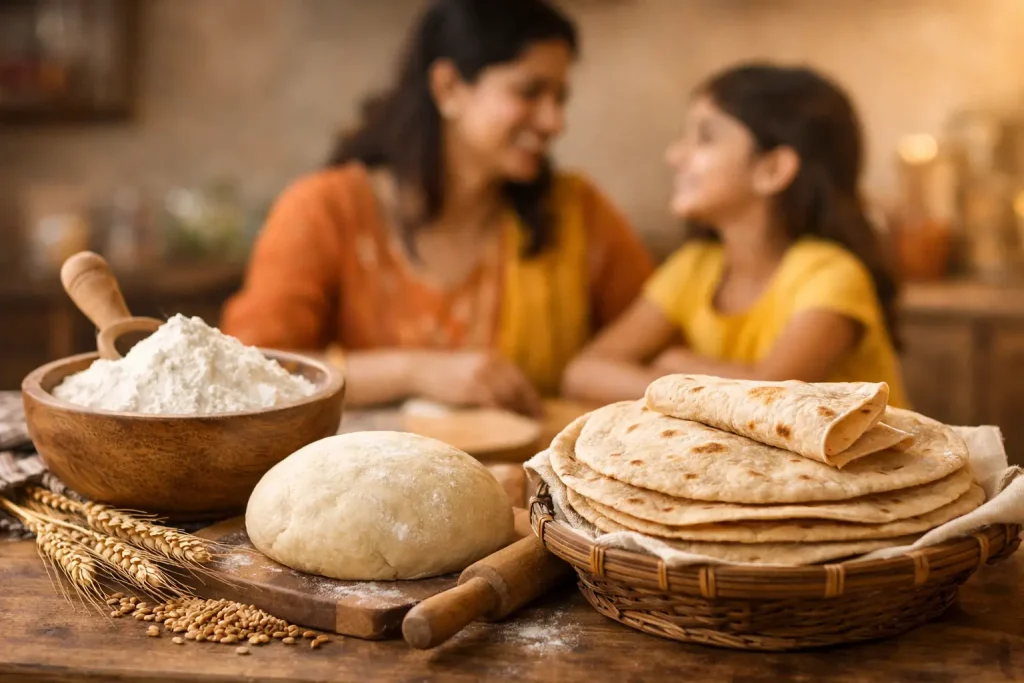
A chapati that bends neatly around dal instead of cracking at the edges usually comes down to one choice made before the dough is even mixed: flour. If you are asking which flour makes soft chapati, the dependable answer is fresh, finely milled whole wheat atta, often labeled chapati flour or chakki atta. It has the familiar wheat flavor, gentle texture, and flexibility that make everyday homemade rotis feel right.
Softness is not only about buying the right bag, though. The flour’s grind, its protein level, how much water it absorbs, and the time you give the dough to rest all work together. With a good atta and a few small adjustments, you can make chapatis that stay tender from the first one on the tawa to the last one at the table.
For traditional soft chapati, choose whole wheat atta made specifically for Indian flatbreads. Chakki atta is a particularly good option because it is usually stone-ground or milled to mimic that texture. It is fine enough to make smooth dough, yet it retains the wheat components that give chapati its flavor and satisfying bite.
The word “whole wheat” can be confusing in the grocery aisle. Standard whole wheat flour made for American-style baking may be coarser, drier, or ground differently than atta. It can still make a decent flatbread, but the dough may feel less supple and the cooked chapati can turn firmer or develop rough edges. For the softest result, look for packages that clearly say atta, chapati flour, or whole wheat flour for roti.
A good chapati atta should feel soft and powdery when rubbed between your fingers, without large, gritty pieces. Freshness matters as well. Flour that has been sitting open for a long time can lose its pleasant aroma and may not absorb water as evenly. Store it in a sealed container in a cool, dry cupboard, especially if chapati is part of your regular weekly cooking.
Chapati dough needs enough gluten to stretch as you roll it and puff when it hits a hot tawa. At the same time, it should not be so strong that the bread becomes chewy like a pizza crust. Atta sits in that useful middle ground. Its wheat proteins create structure, while its fine milling helps the dough stay pliable.
All-purpose flour is smoother and lighter in color, but it is not the best first choice for everyday chapati. It can make a soft bread straight off the tawa, yet the flavor is milder and the texture is less traditional. Chapatis made only with all-purpose flour may also feel more delicate and lack the wholesome bite many families expect.
Bread flour has more protein, which can make dough elastic but also tougher. It is better suited to loaves and yeast doughs than tender chapati. Semolina, rice flour, millet flour, chickpea flour, and other specialty flours add wonderful character to specific flatbreads, but they do not usually make a classic soft chapati on their own because they do not form the same gluten structure.
If you need to use another flour for a personal dietary preference, expect to adjust your method. A blended dough may need a little more water, a brief rest, or gentler rolling. For classic, flexible roti, though, whole wheat atta remains the reliable household staple.
Both can work very well. Chakki atta is often favored for its fuller wheat flavor and soft, slightly rustic texture. Many home cooks find it absorbs water beautifully after resting, giving the dough a smooth, easy-to-roll feel.
Regular packaged atta can be just as successful when it is fresh and finely milled. The best choice may come down to the brand your family enjoys and the way you like your chapati: slightly hearty, very soft, or thin and delicate. Trying two trusted atta brands over a few meals is more useful than judging after a single batch, because water absorption can vary from one flour to another.
Even the best flour cannot compensate for rushed dough. Start by placing atta in a wide bowl and adding water gradually. Room-temperature water is easy to control, while slightly warm water can help the flour hydrate comfortably. Mix until the flour comes together, then knead until the surface looks smoother and the dough feels soft rather than stiff.
A useful starting point is about 2 cups of atta with roughly 3/4 cup of water, added slowly. This is only a guide. Some atta needs a little less water and some needs more, depending on its milling and age. The finished dough should be soft enough to press with a finger easily, but not sticky enough to cling heavily to your hands.
Once kneaded, cover the dough and let it rest for at least 20 to 30 minutes. This step makes a noticeable difference. The flour absorbs the water fully, the gluten relaxes, and rolling becomes easier. A rested dough is less likely to spring back, tear, or produce dry chapatis.
For extra softness, many cooks knead in a teaspoon or two of oil or ghee after the dough has come together. It is optional, not essential. If your chapatis already come out tender with plain atta and water, there is no need to add it. If your household prefers a softer finish that stays pleasant for longer, a small amount can help.
Divide the rested dough into smooth balls with no visible cracks. Dust lightly with atta and roll using gentle, even pressure. Too much dry flour while rolling can make the finished chapati dusty and dry, so use only enough to prevent sticking.
Heat the tawa well before you begin. A chapati cooked on a pan that is not hot enough spends too long drying out. Place the rolled dough on the hot surface and wait for small bubbles to appear, then flip it. Cook the other side briefly, flip again, and press lightly with a clean cloth or spatula if needed to encourage puffing.
Do not leave it on the heat after brown spots have formed and the chapati is cooked through. Overcooking is one of the most common reasons a soft chapati turns stiff. Stack cooked chapatis in a covered container or wrap them in a clean kitchen towel to hold in gentle warmth and moisture.
When chapati is hard, the flour may not be the only issue. Dough that feels firm before rolling will usually cook firm as well. Add water slowly next time and aim for a softer dough. Skipping the resting time, rolling the discs too thick or unevenly, and cooking at low heat can also affect the result.
If chapatis become tough after sitting for a while, keep them covered immediately after cooking. A container with a lid helps more than leaving them on a plate. For packed lunches or later meals, wrapping the stack while still warm helps preserve softness.
Pay attention to your flour, too. If the same method suddenly produces dry dough, the atta may simply be absorbing more water than the previous bag. Adjusting the water by a tablespoon or two is normal home cooking, not a mistake.
For families making chapati often, keep a quality atta as a regular pantry essential alongside rice, dals, spices, and cooking basics. Choose a pack size that you can use while it is still fresh, rather than buying more than your household can finish comfortably. A dependable flour makes quick weeknight chapati far easier, whether you are serving it with a simple dal or a favorite ready-to-eat meal.
At One Stop Supermarket, shoppers can find authentic Indian pantry staples for everyday cooking in one convenient stop. When selecting atta, check the package for a fine texture, a recent best-before date, and wording such as chakki atta or chapati flour. Those small details help you bring home a flour that performs well on the tawa.
The most satisfying chapatis are rarely the result of a complicated recipe. Start with fresh, fine whole wheat atta, make the dough soft, let it rest, and cook each roti briskly on a properly heated tawa. Soon, the feel of the dough in your hands will tell you exactly when it is ready.