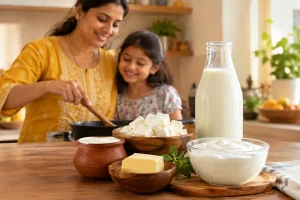
A good indian dairy products guide starts where most family shopping decisions happen – right in the middle of a busy week, when you need ingredients that are familiar, reliable, and worth adding to the cart again. Indian dairy is not just one shelf category. It is the base for quick breakfasts, lunchbox snacks, everyday curries, sweets, and comfort food that tastes like home.
If you have ever stood in front of the dairy section wondering whether to pick paneer or yogurt, full-fat dahi or buttermilk, cooking butter or ghee, you are not alone. Some products overlap, some do very different jobs, and the best choice depends on what you plan to cook, how often you use it, and how much convenience matters in your weekly shop.
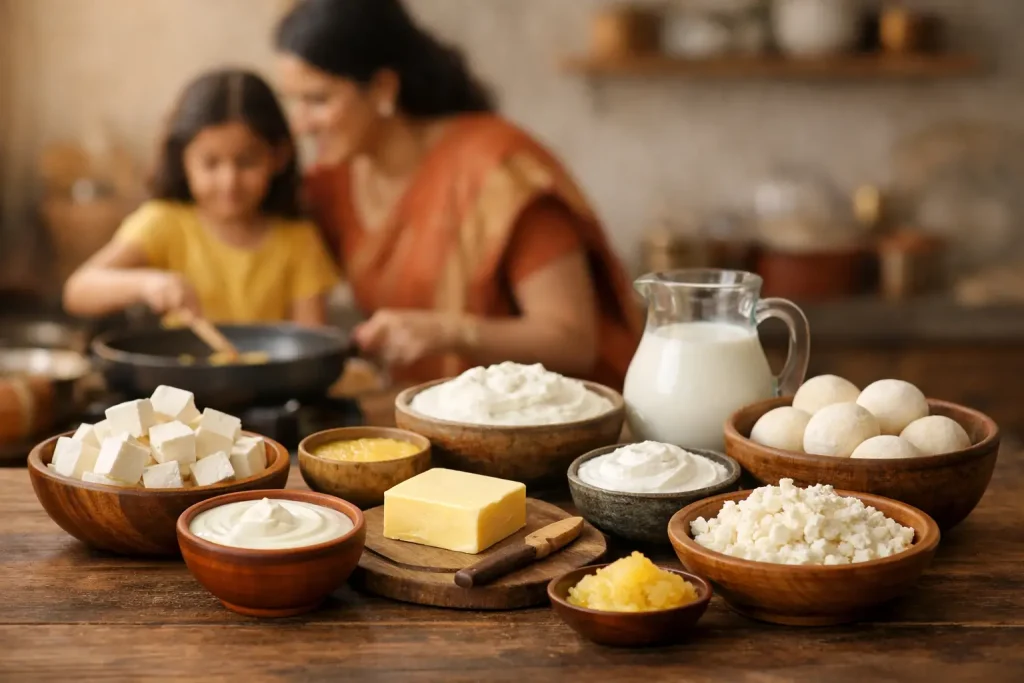
Indian dairy covers a practical mix of essentials rather than a fancy collection of specialty items. For most households, the core products are milk, curd or dahi, paneer, ghee, butter, buttermilk, cream, khoa or mawa, and traditional sweets made from milk solids. Each one plays a different role in the kitchen.
Milk is the everyday base. It is used for tea, coffee, breakfast, desserts, and home cooking. Whole milk is often the better pick when you want richer chai, creamier kheer, or a fuller taste in homemade yogurt. Lower-fat milk can work for regular drinking, but it may not give the same body in traditional recipes.
Dahi is one of the hardest-working items in an Indian kitchen. It can go into raita, marinades, kadhi, lassi, and rice dishes, or simply be served plain with a meal. Texture matters here. A thick, fresh dahi is better for raita and marination, while a looser one can still work well in kadhi or drinks.
Paneer is the weeknight hero for many families because it cooks fast and works across many dishes. It can be cubed into curries, crumbled into fillings, pan-fried for wraps, or added to pulao. Freshness makes a noticeable difference. Good paneer should feel firm but not rubbery, and it should hold its shape without tasting dry.
Ghee is less about volume and more about flavor. A small spoonful can change the character of dal, khichdi, halwa, or paratha. It also has a higher heat tolerance than butter, which makes it useful for tempering and finishing dishes. If you use it often, buying a trusted brand in a value size usually makes more sense than picking up small jars repeatedly.
The easiest way to shop Indian dairy is to think in terms of use, not just product names. If you are cooking a curry, paneer and cream may be the key choices. If you are planning breakfast or side dishes, dahi and butter may matter more. If you want depth of flavor in simple food, ghee often gives the best return.
For everyday meals, dahi is one of the smartest buys because it does several jobs at once. It supports quick meals, balances spicy food, and can be turned into snacks and drinks without much prep. Households that cook regularly usually go through it fast, so freshness and pack size both matter.
Paneer is a better buy when you want a protein option that fits vegetarian cooking and saves time. It does not need long soaking or extended prep. That said, not all paneer suits every recipe. Softer paneer is great for rich gravies and tikka-style dishes, while firmer blocks can be easier to cut for stir-fries and skewers.
Ghee makes sense if your cooking relies on finishing flavors. It is not just for festive dishes. Even a simple bowl of dal or steamed rice can feel complete with a spoon of ghee. But if you cook mostly with neutral oils and only use ghee occasionally, a smaller pack may be the better value because freshness still matters.
If you are stocking up for a normal week rather than a festival or party, these three products usually do the most work.
Paneer gives you flexibility. It can become paneer bhurji for breakfast, paneer butter masala for dinner, or a fast filling for sandwiches and wraps. For busy families, this matters. One product can cover several meals without feeling repetitive.
Dahi helps with balance and convenience. It cools spicy food, supports digestion for many people, and turns into raita or lassi in minutes. It is also one of those products that makes leftovers more useful. Plain rice becomes curd rice, and simple pulao feels more complete with a bowl of dahi on the side.
Ghee is the flavor shortcut that still feels traditional. You do not need much, and that is part of its value. A spoon over hot rotis, moong dal khichdi, or upma changes the aroma immediately. For some families, this is not optional. It is what makes the meal taste right.
When buying Indian dairy, packaging matters because these products are sensitive to handling and storage. Always look at the use-by date, but do not stop there. A product can still be within date and not be the best choice if the packaging looks puffed, cracked, or poorly sealed.
For paneer, check whether the block looks moist and evenly colored. If it appears dry around the edges or broken down inside the pack, quality may be inconsistent. For dahi, look for a clean seal and a texture that fits how you will use it. For ghee, choose a trusted brand with a clear aroma and no sign of contamination around the lid.
Brand consistency also matters more in dairy than in many pantry staples. Households often stay loyal to the same paneer, yogurt, or ghee because they know how it behaves in familiar recipes. That is one reason many shoppers prefer buying from a store that focuses on genuine Indian brands and reliable turnover rather than taking chances on random substitutes.
This part of the indian dairy products guide is where shopping becomes easier. Once you know the main use of each product, it is much simpler to decide what belongs in your weekly order.
Dahi works for raita, kadhi, marinades, chaas, lassi, and side servings with biryani or pulao. Paneer works for curries, stir-fries, wraps, pakoras, and stuffed flatbreads. Ghee works for tempering dal, spreading on roti, finishing rice dishes, and making sweets.
Butter has its own place too. It is especially popular for pav bhaji, butter paneer dishes, and toast-style breakfast items. Cream is useful for restaurant-style gravies and desserts, but it is not always necessary for everyday cooking. If you want rich results without making food too heavy, it depends on the dish. Sometimes a little cream lifts a curry. Sometimes dahi does the job better and keeps the flavor brighter.
Khoa or mawa is more specialized, but worth buying when you are preparing traditional sweets or festive dishes at home. It saves time compared with reducing milk from scratch. For regular weekly shopping, though, it may not be essential unless sweets are already part of your plan.
A practical dairy cart should match your cooking rhythm. If your home cooks Indian food most days, larger tubs of dahi and bigger packs of paneer may offer better value. If your schedule changes week to week, smaller packs can reduce waste even if the unit price is slightly higher.
This is where a neighborhood-focused store earns trust. You want authentic products, fair everyday pricing, and the confidence that your regular brands will be there when you need them. One Stop Supermarket serves that need well by keeping Indian grocery shopping simple, familiar, and convenient for households that do not want to visit multiple stores just to complete one meal plan.
It also helps to shop with a short list of repeat-use items rather than buying everything at once. Many families do best with a base of milk, dahi, paneer, and ghee, then add cream, buttermilk, or sweets as needed. That keeps the fridge useful without overloading it.
Once home, dairy needs the right handling. Paneer should stay refrigerated and tightly sealed after opening. If you do not plan to use it immediately, keeping it in water for a short period can help maintain softness, but it should still be used promptly.
Dahi should stay cold and be handled with a clean spoon to preserve freshness. Ghee is more forgiving, but it still benefits from dry, clean handling and proper closure. Cross-contamination is a quiet problem in busy kitchens, and it shortens shelf life faster than most people expect.
A well-stocked dairy shelf is not about buying more. It is about buying the right products for the meals your household actually cooks. When your paneer is fresh, your dahi is thick, and your ghee tastes right, everyday cooking gets easier, faster, and a lot more satisfying. The best cart is the one that helps dinner come together without a second trip.