
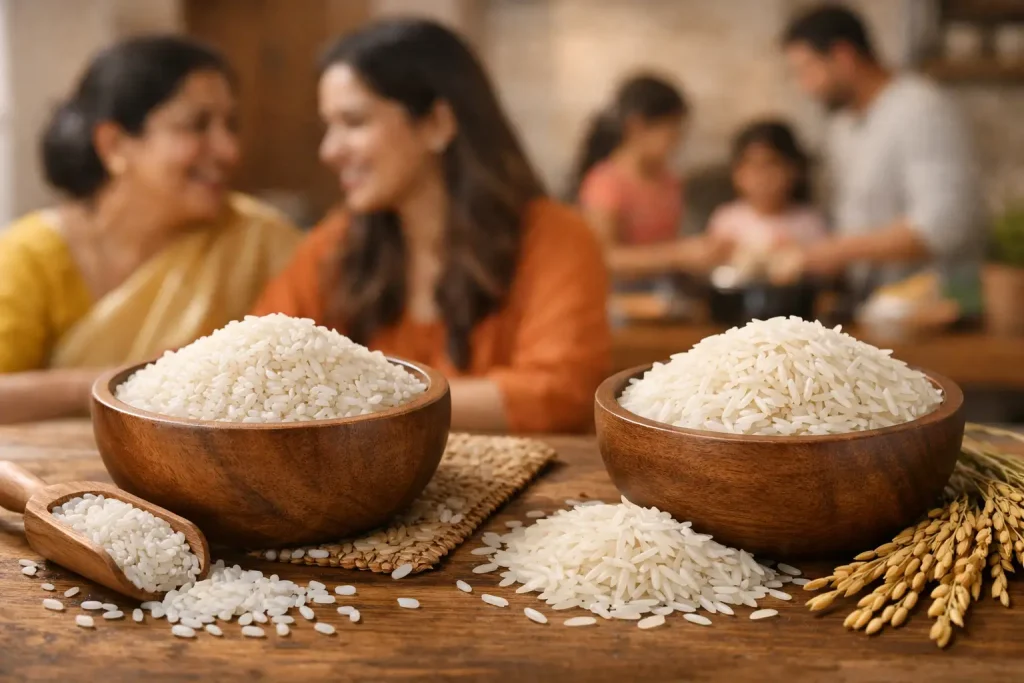
Standing in the rice aisle and choosing between sona masoori vs basmati rice can feel simple until you think about the meal you are actually cooking. A pot of everyday dal rice, a weekend biryani, lemon rice for lunch boxes, or a light side for curry all ask for something different. That is why the better question is not which rice is best overall, but which one fits your kitchen, your budget, and the food your family eats most often.
At a practical level, both are trusted staples in Indian homes, but they behave very differently once washed, soaked, and cooked. One is soft, light, and easy for daily meals. The other is aromatic, long-grained, and better known for dishes where the rice itself needs to stand out. If you shop for rice regularly, knowing that difference helps you buy with confidence instead of guessing based on the bag.
Sona masoori is a medium-grain rice that is popular for everyday South Indian and general household cooking. It is known for being lighter than many heavier rice varieties, and it cooks into grains that are soft without turning overly sticky when handled well. For many families, it is the rice that suits regular lunches and dinners because it feels comfortable, familiar, and versatile.
Basmati rice is a long-grain variety famous for its aroma and elongated shape after cooking. It tends to look more elegant on the plate, and the texture is usually drier and more separate than sona masoori. That makes it a strong choice for biryani, pulao, and meals where presentation and fragrance matter as much as taste.
If you want the shortest answer, sona masoori usually fits daily comfort meals, while basmati often suits special dishes and rice-forward recipes.
The biggest difference most home cooks notice is texture. Sona masoori cooks softer and feels more delicate in the mouth. It pairs naturally with sambar, rasam, curd, pappu, and simple curry meals because it absorbs flavor well and is easy to eat. If your household likes rice that blends into the meal instead of dominating it, sona masoori often makes more sense.
Basmati holds its shape more clearly. The grains stay long and distinct, especially if soaked and cooked carefully. That texture is useful when you want rice that stays fluffy and separate on the plate. It also works well for layered dishes where broken or clumped rice would spoil the result.
This does not mean one is better cooked than the other. It just means they are trying to do different jobs. If you serve rajma rice or dal rice and want a softer, comforting base, sona masoori is often the easier fit. If you are making jeera rice for guests or a fragrant pulao, basmati usually gives a more polished finish.
Basmati is the more aromatic rice. Even before cooking, it has a distinctive fragrance, and that aroma becomes part of the dish. In biryani and pulao, that quality is a major advantage. The rice adds its own character instead of simply carrying spices and gravies.
Sona masoori has a milder flavor and less perfume. For many everyday meals, that is exactly the point. It does not compete with the dal, chutney, pickle, or curry on the table. It supports the meal quietly, which is often what you want when the rest of the food already brings plenty of flavor.
So if your recipe depends on the rice making a statement, basmati has the edge. If you want the rice to stay in the background and let the rest of the meal lead, sona masoori can be the smarter buy.
When customers ask which bag to add to cart, the answer often comes down to what they cook every week.
Sona masoori is well suited to plain steamed rice, tomato rice, lemon rice, curd rice, pongal-style meals, and regular lunch or dinner combinations with dal and curry. It is also popular in homes where rice is made often and eaten in larger quantities across the week. Because it feels lighter and more familiar for daily use, many families keep it as their main household rice.
Basmati is the better match for biryani, pulao, jeera rice, fried rice, and festive meals where appearance matters. The long grains create a more restaurant-style result, and the aroma helps lift simpler rice dishes too. If your family enjoys rice dishes where the grains need to remain separate, basmati is usually the safer choice.
There is still some overlap. Some people use basmati every day because they enjoy the texture. Others make certain pulaos with sona masoori because they prefer a softer bite. It depends on personal taste, not just tradition.
For routine household shopping, price matters just as much as texture. Sona masoori is often chosen as an everyday staple because it can offer dependable value for families cooking rice frequently. If you are making large pots several times a week, the cost difference adds up over time.
Basmati is often seen as a premium option, especially aged or branded varieties. Many shoppers are happy to pay more when making biryani or serving guests because the fragrance and long grains justify it. But if your main goal is a reliable rice for daily meals, sona masoori may be the more practical purchase.
This is where shopping at a trusted Indian grocery store helps. Quality can vary across brands and price points, so it is worth choosing rice from reliable names rather than buying only on the lowest price. A cheaper bag that cooks unevenly is not really a bargain.
From a general nutrition point of view, both are white rice varieties and both mainly provide carbohydrates. The exact nutrition depends on the brand, processing, and serving size, so the difference is not as dramatic as people sometimes expect. Neither should be treated like a miracle food over the other.
That said, many households feel sona masoori is lighter for regular meals, while others prefer basmati because of its texture and portion control. Since basmati grains stay longer and separate, some people feel satisfied with a slightly smaller serving. On the other hand, sona masoori can feel easier and more natural for daily eating, especially with traditional home food.
If you are shopping based on health goals alone, the better choice often depends on how much rice you eat, what you pair it with, and your household preferences. The rice variety matters, but your full meal matters more.
If you are still deciding, think less about labels and more about your weekly menu. If your home runs on dal rice, curd rice, rasam rice, and simple comfort food, sona masoori usually gives better everyday value. If your meals often include biryani, pulao, or rice dishes where aroma and grain length matter, basmati will likely make you happier.
It can also make sense to keep both. Many Indian households do exactly that – one rice for daily use and one for guests, weekends, or specific recipes. That approach avoids compromise and helps you get the best result from each dish.
Storage matters too. Buy a pack size that matches how quickly your household uses rice. A good-quality rice kept sealed and dry will stay in better condition and cook more consistently.
If you want one straightforward rule, choose sona masoori for comfort and daily cooking, and choose basmati for aroma and presentation. That covers most situations without overthinking it.
For shoppers who want authentic Indian pantry staples without making extra stops, stores like One Stop Supermarket make it easier to compare trusted rice varieties, pick the right pack size, and stock up for the week in one go. When your pantry works for the meals you actually cook, everyday shopping gets a lot simpler.
The best rice is the one that suits your table, your routine, and the dishes your family asks for again and again.