A fasting day should not mean searching through the pantry and settling for the same plain meal again. With a few trusted staples on hand, vrat food can be comforting, filling, and easy to prepare around a busy family schedule. This Indian fasting foods guide focuses on the everyday ingredients that help create familiar fasting meals without complicated planning.
Fasting traditions vary by family, region, and occasion. Some households follow a strict phalahar routine, while others include dairy, certain flours, nuts, and specific pantry staples. The best approach is to shop according to the rules your family follows, then keep those essentials together so they are ready when a fasting day arrives.
A well-stocked vrat pantry removes the pressure from fasting-day cooking. Rather than buying a long list for one occasion, choose versatile ingredients that can become breakfast, a light snack, or a satisfying dinner.
Sabudana is one of the most reliable staples. These tapioca pearls are used for khichdi, vada-style snacks, kheer, and lightly seasoned meals. Good sabudana should soak evenly and cook into soft, separate pearls rather than turning overly sticky. Since soaking time can vary by brand and batch, it is worth checking the texture before cooking. Start with less water than you think you need, then adjust if the pearls remain firm.
Kuttu flour, also called buckwheat flour, is another fasting favorite. It has a hearty taste and is commonly used for flatbreads, pancakes, and crisp snacks. It can be delicate to handle because it does not behave like everyday wheat flour. Mixing it with a binding ingredient permitted in your household tradition and working with a lightly oiled surface can make preparation easier.
Singhara flour brings a milder flavor and a softer texture. Made from water chestnuts, it works well for cheela, puri-style breads, and sweet preparations. Many families keep both kuttu and singhara flour because each gives a different result. Kuttu is often more substantial, while singhara can feel lighter. Which one is right depends on the dish and your family’s preference.
Makhana, or fox nuts, deserves a permanent place in the pantry. It can be dry-roasted for a quick snack, prepared with milk for a gentle dessert, or added to a warm, savory dish. Roast it slowly over low heat until crisp, then store it in an airtight container. This simple step means there is always something ready between meals.
Peanuts and other permitted nuts add crunch, richness, and staying power to fasting food. They are especially useful with sabudana, makhana, and flour-based dishes. Keep them plain or roast them at home so you can control the seasoning. If someone in the household avoids peanuts, choose another approved nut and check package labels carefully.
Dairy can make vrat meals more satisfying when it fits your tradition. Milk, yogurt, paneer, ghee, and butter are useful for both savory and sweet dishes. Yogurt offers a cooling side for kuttu or singhara preparations, while ghee adds familiar flavor to roasted makhana and warm desserts. Choose products your family already trusts for freshness and consistency.
Rock salt, commonly sold as sendha namak, is another essential for many fasting kitchens. It has a distinct mineral taste and is often used instead of regular table salt during vrat. A little goes a long way, particularly in simple recipes where the seasoning is more noticeable. Keep a separate packet in the pantry so there is no confusion on fasting days.
The easiest fasting meals are built around one main ingredient, a dairy element if permitted, and a small snack for later. That keeps cooking practical without making the menu feel repetitive.
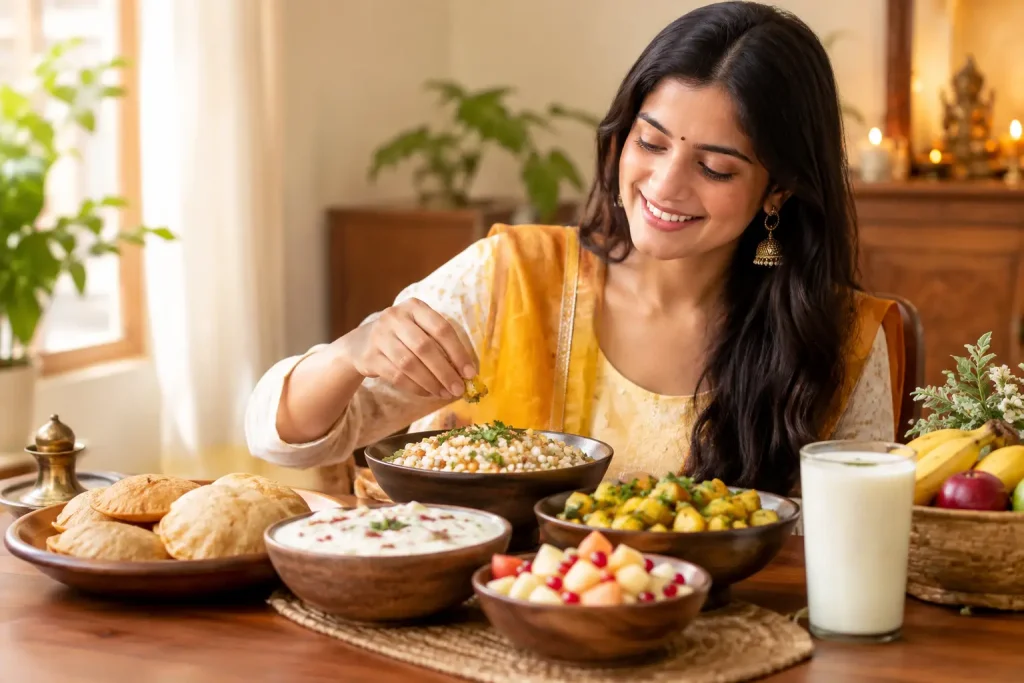
For breakfast, sabudana can be cooked into a lightly seasoned khichdi with roasted peanuts and sendha namak. If mornings are rushed, soak the sabudana the night before, drain it well, and keep it covered in the refrigerator. Makhana roasted in ghee is another quick option when there is no time for a full meal.
At midday, make a kuttu or singhara cheela and serve it with plain yogurt. The batter should be thick enough to hold its shape but loose enough to spread gently. Cook over moderate heat so the center sets without the outside becoming too dark. If your family prefers a softer texture, singhara flour is often the easier choice.
For an evening snack, roasted makhana or a small bowl of yogurt can carry everyone through until dinner. On longer fasts, avoid relying only on tea or sweet packaged snacks. A combination of dairy, nuts, and a cooked fasting staple tends to feel more sustaining.
For dinner, a simple sabudana meal or a warm milk-based makhana dish can be enough. If several people are fasting, make one large batch and set aside plain portions before adding stronger seasonings. This is helpful when family members observe different rules.
Authentic ingredients matter, but the label matters too. Packaged mixes, snack blends, and seasonings can contain regular salt, grain flours, or ingredients that may not suit your fasting practice. A product labeled as traditional or Indian is not automatically vrat-friendly.
Check the ingredient list, especially when buying ready-to-cook foods. Plain sabudana, plain makhana, single-ingredient flours, dairy, nuts, and sendha namak give you the most control. Ready-made options can save time, but they work best when you know exactly what is inside.
This is also where buying from a familiar Indian grocery store helps. You can find the specific flours, pantry brands, dairy items, and snacks that are part of everyday Indian cooking, rather than trying to replace them with unfamiliar alternatives. One Stop Supermarket makes it easier to pick up fasting essentials alongside the household staples you already need.
There is no single universal vrat menu. Some people include sabudana but not certain flours. Others use dairy freely, while some keep meals much simpler. Family elders, religious guidance, personal health needs, and the reason for the fast can all shape the food choices.
That is why it is better to build a flexible pantry than follow a fixed online menu. Keep a few basics such as sabudana, makhana, kuttu flour, singhara flour, permitted nuts, dairy, and rock salt. Then use only the items that align with your household custom.
If you are preparing food for guests or relatives, ask before cooking. A quick question about whether they use sendha namak, dairy, or particular flours shows care and prevents waste. For anyone with allergies or dietary restrictions, separate utensils and careful label checks are just as important as the recipe itself.
Dry goods stay at their best when stored in airtight containers away from heat and moisture. Label flours clearly, especially if your pantry has several similar-looking packets. Sabudana and makhana should remain dry to preserve their texture, while nuts are best kept sealed so they retain their flavor.
Before a festival or planned fast, check what you already have. Replacing a nearly empty packet of sendha namak or buying a fresh bag of makhana ahead of time is far easier than making a last-minute grocery run. It also gives you room to choose the brands and sizes that offer the best value for your household.
A thoughtful vrat pantry is less about buying everything at once and more about keeping a few authentic basics within reach. When fasting day comes, you can cook with confidence, serve food that feels familiar, and spend more time with the people and traditions that matter.