
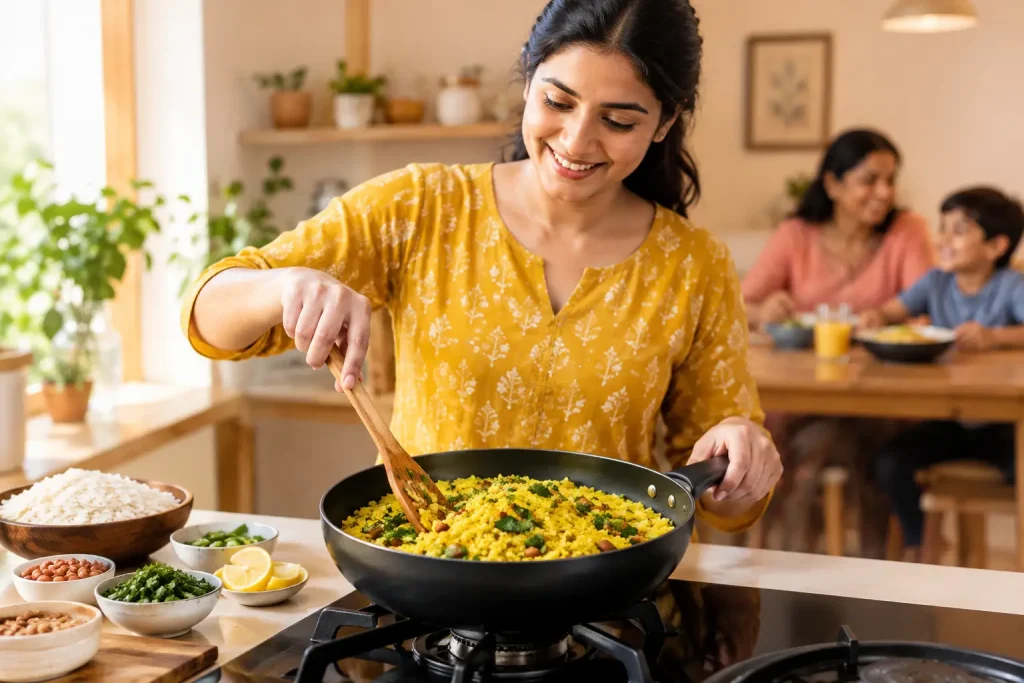
A good bowl of poha is soft but never soggy, lightly seasoned but full of aroma, and ready before the morning rush takes over. Once you know how to cook poha flakes with the right rinse-and-rest method, this familiar Indian breakfast becomes one of the easiest meals to make from pantry staples.
Poha is made from flattened rice and comes together quickly, but it rewards a little attention. The biggest difference between a fluffy poha and a sticky, heavy one is not complicated cooking technique. It is choosing the right flakes, adding only enough water, and letting the poha absorb its seasoning gently rather than overcooking it.
Start with thick or medium poha for a warm breakfast-style dish. These flakes hold their shape after rinsing and work well with a traditional tempering of mustard seeds, peanuts, curry leaves, turmeric, and green chili. Thin poha absorbs water almost immediately, so it is better suited to quick snack mixes or recipes where it is lightly moistened rather than cooked in a pan.
Check the packet before you buy. Flakes should look dry, separate easily, and have an even, clean appearance. If you cook poha regularly, keeping a dependable pack of thick poha in the pantry makes busy mornings much easier. It pairs naturally with spices, roasted peanuts, sev, coconut, and a cup of chai.
For a basic family-sized pan of poha, use about 2 cups of thick poha flakes, 2 tablespoons oil, 1/3 cup peanuts, 1 teaspoon mustard seeds, a small pinch of cumin seeds, 8 to 10 curry leaves, one finely chopped green chili, 1/2 teaspoon turmeric, 1 teaspoon sugar, and salt to taste. Keep 2 to 3 tablespoons of water nearby in case the finished poha needs a little more moisture.
The method is quick, but each stage has a purpose. Rinsing softens the flakes. Resting gives them time to hydrate evenly. The tempering carries flavor through every spoonful, while the final covered cook warms everything together without breaking the rice.
Place the poha in a wide colander or fine strainer. Run cool water over it briefly, moving the flakes gently with your fingers so all of them are moistened. Do not soak the poha in a bowl of water. Thick flakes usually need only 15 to 30 seconds under running water, while medium flakes may need even less.
Let the poha drain for 8 to 10 minutes. During this time, sprinkle in the salt, sugar, and turmeric, then toss very gently. The turmeric is easier to distribute at this stage, and the sugar gives classic poha a balanced flavor without making it sweet.
Test one flake before you start the pan. It should bend easily and feel tender in the center, but it should not dissolve when pressed. If it is still hard, sprinkle one tablespoon of water over the poha, wait two minutes, and test again. This small adjustment is safer than adding too much water all at once.
Heat the oil in a wide skillet or sauté pan over medium heat. Add the peanuts and stir until they are crisp and lightly golden. Remove a spoonful for garnish if you like, then leave the rest in the pan.
Add mustard seeds. When they begin to pop, add cumin seeds, curry leaves, and green chili. Stir for just a few seconds, until the curry leaves smell aromatic. Keep the heat at medium rather than high, because spices can burn quickly and give the poha a bitter edge.
Some households prefer a stronger chili flavor, while others keep the dish mild and serve extra chili on the side. That is one of poha’s strengths: the base is simple enough to fit the tastes around your table.
Lower the heat and add the rested poha to the skillet. Use a broad spatula to lift and fold it through the tempering. Avoid stirring hard or repeatedly pressing down, as softened flakes can clump or break.
If the poha looks a little dry, drizzle in 1 to 2 tablespoons of water around the edges of the pan. Cover with a lid and cook on low for 2 to 3 minutes. The trapped steam warms the poha and helps the spices settle in without turning the flakes wet.
Turn off the heat and let it stand, covered, for one more minute. Fluff gently, taste for salt, and top with the reserved peanuts. A handful of sev or a sprinkle of grated coconut can add a pleasant finishing texture if those are part of your usual pantry.
Poha is a fast dish, not a rushed dish. From rinsing to serving, thick flakes generally take about 20 minutes, with most of that time spent resting rather than standing over the stove. Preparing the spices and peanuts before heating the pan keeps the tempering calm and controlled.
The main trade-off is moisture. Under-rinsed poha stays chewy and dry, especially in the middle. Over-rinsed poha loses its shape and can become paste-like once it reaches the pan. Because brands and flake thickness vary, use the texture test instead of relying only on a fixed amount of water.
If you are making poha for the first time, begin with thick flakes. They are more forgiving. Once you are comfortable, medium poha can be excellent for a softer result, but it needs a quicker rinse and less resting time.
If your poha turns mushy, the flakes were likely soaked too long or cooked with too much water. Next time, rinse more briefly and use the covered steam step only if the poha needs it. Do not add water simply because the recipe suggests it – look at the flakes first.
If the poha is dry or firm after cooking, sprinkle a tablespoon of water over it, cover, and warm it on low for another minute. Avoid adding a large splash, which creates uneven wet patches.
If the flavor seems flat, the problem is usually not the poha itself. Taste for salt first, then consider whether the mustard seeds, curry leaves, chili, and turmeric had enough time in the oil to release their aroma. A proper tempering is what makes a simple bowl of flattened rice taste like a complete breakfast.
If the peanuts soften, they may have been added after the poha rather than fried first. Cook them in the oil before adding the spices, or reserve some crisp peanuts to scatter over the finished dish.
Poha is especially useful when you need a satisfying meal without a long ingredient list. Keep poha flakes alongside mustard seeds, cumin, turmeric, peanuts, curry leaves, and sev, and you have the foundation for a dependable breakfast or light evening meal. It also makes a practical option for a quick weekend brunch when family wants something familiar and comforting.
For shoppers around Brisbane’s south side, One Stop Supermarket offers authentic Indian pantry staples that help keep everyday cooking simple, from quality poha flakes to the spices and snacks that complete the meal. Choosing trusted brands means you can cook the dishes your household knows and enjoys without making extra stops.
Poha is best enjoyed soon after cooking, while the flakes are warm, light, and separate. Make it once with care, notice how your preferred brand absorbs water, and the next pan will feel less like a recipe and more like a reliable part of your morning.