
If you have ever picked up a pack of sabudana and wondered what is sabudana used for, the short answer is this – it is one of those pantry staples that does far more than it first appears. In many Indian homes, sabudana is the ingredient that turns into a quick fasting meal, a crispy snack, a soft dessert, or a light breakfast depending on how you prepare it.
Sabudana, also called tapioca pearls, is made from cassava starch. Once cooked properly, the pearls become soft, glossy, and pleasantly chewy. That texture is exactly why sabudana has stayed popular for generations. It is simple, filling, and easy to pair with everyday ingredients already found in the kitchen.
In Indian cooking, sabudana is used mainly for fasting recipes, comfort foods, and snack-style dishes. It is especially common during vrat because it is light on the stomach and cooks into satisfying meals without needing a long ingredient list. At the same time, many families use it well beyond fasting days because it is affordable, versatile, and familiar.
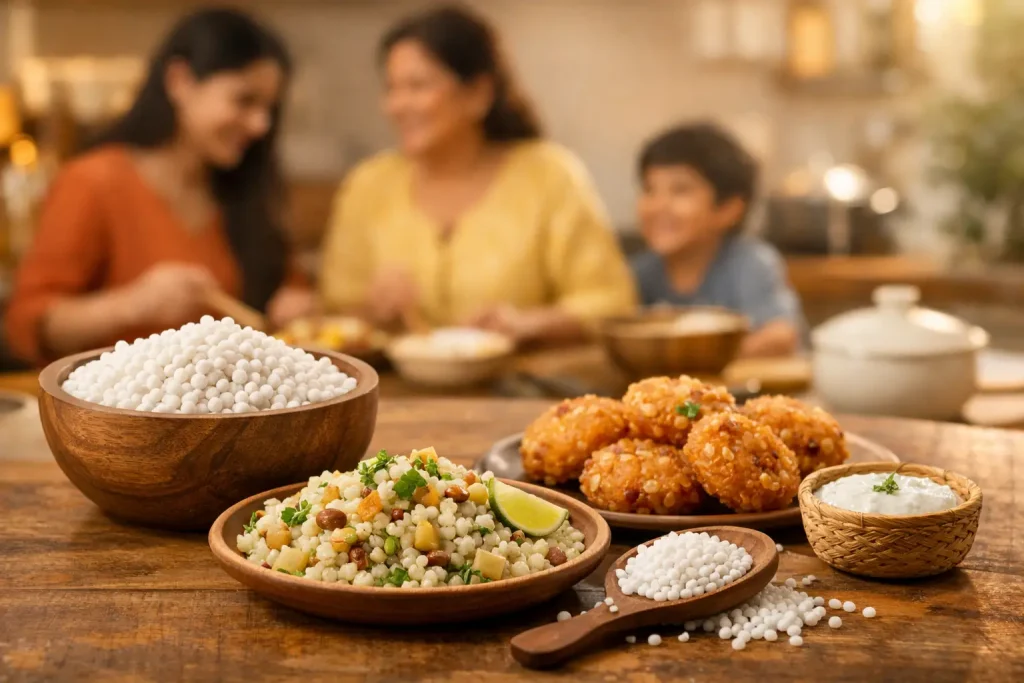
The most well-known use is sabudana khichdi. This dish combines soaked sabudana with peanuts, cumin, green chili, and potatoes for a soft yet fluffy texture with a little crunch. When made well, the pearls stay separate instead of turning sticky. That balance is why it remains a top choice for breakfast, a light lunch, or a fasting dinner.
Sabudana is also widely used for vada. In this form, it is mixed with mashed potatoes and seasonings, shaped into patties, and fried until crisp outside and tender inside. It works well when you want something more filling than khichdi and a little more indulgent. For many households, sabudana vada is the kind of snack that disappears fast with tea.
Then there is sabudana kheer, a simple dessert where the pearls are simmered in milk with sugar and cardamom. Here, sabudana acts as a thickener while also adding texture. The result is gentle, comforting, and easy to serve warm or chilled.
One reason sabudana is so closely linked with fasting is that it feels substantial without being too heavy. During vrat, people often look for ingredients that fit traditional food guidelines but still provide enough energy through the day. Sabudana does that well because it is rich in carbohydrates and easy to digest when soaked and cooked properly.
That said, it depends on how you use it. Sabudana on its own is mostly starch, so many home cooks pair it with peanuts, milk, or potatoes to make the meal more balanced and satisfying. If you are making a fasting meal for longer-lasting fullness, adding roasted peanuts or serving it with yogurt usually works better than keeping it too plain.
Texture also matters. Undersoaked sabudana can stay hard in the center, while oversoaked sabudana can become gluey. That is why experienced cooks pay attention to soaking time rather than treating all brands the same. Some pearls need only a few hours, while others benefit from an overnight soak.
Even if you do not observe fasting, sabudana earns its place in the pantry because it can be used across different meal types.
For breakfast, sabudana khichdi is the classic choice, but sabudana can also be added to light porridge-style dishes. Some families like to keep it simple with mild spices, while others prefer extra peanuts, curry leaves, and green chilies for more flavor.
For snacks, sabudana vada is the best-known option, but sabudana papad and fried sabudana crisps are also popular. These are the kinds of items that work well for entertaining, lunchboxes, or evening tea. They bring that familiar crunch many people want from a savory snack.
For sweets, sabudana kheer remains the easiest route, especially when you want a dessert that feels homemade without too much effort. You can keep it traditional with milk, sugar, and cardamom, or make small changes with jaggery or nuts depending on your household preference.
In some homes, sabudana is also used in cutlets and light savory mixes where texture matters more than strong flavor. Because sabudana itself is mild, it takes on the taste of what you cook it with. That can be a real advantage if you like flexible ingredients.
Sabudana has a very neutral taste. On its own, it is not strongly sweet or savory, which is why it fits into so many different recipes. Its main contribution is texture.
When soaked and cooked correctly, the pearls become soft, slightly chewy, and almost translucent. In khichdi, that creates a fluffy bite when combined with peanuts and potatoes. In kheer, the same pearls feel delicate and smooth. In vada, they help create a contrast between a crisp outside and a tender center.
This texture is also where the trade-off comes in. If you enjoy soft, comforting foods, sabudana is excellent. If you prefer ingredients with a stronger natural flavor, sabudana may seem plain unless it is seasoned well.
The biggest challenge with sabudana is getting the texture right. Many people buy it once, end up with a sticky batch, and assume the ingredient is difficult. Usually, the issue is not the sabudana itself but the soaking method.
Start by rinsing it well to remove excess surface starch. Then soak it with just enough water to cover it, or slightly less, depending on the pearl size. After soaking, the pearls should press easily between your fingers without a hard center. If there is too much water left sitting in the bowl, the sabudana is more likely to clump.
When cooking, avoid stirring too aggressively. Gentle mixing is enough. High heat and too much movement can break the pearls and turn the dish heavy instead of light. A little patience makes a big difference here.
Different brands can behave differently, so once you find one that gives you reliable results, many shoppers prefer to stick with it. That matters in everyday cooking, especially when you want a pantry staple you can count on.
Not at all. Traditional uses are still the most common, but sabudana can fit modern home cooking too. If you like practical ingredients that stretch across breakfast, snacks, and dessert, sabudana makes sense.
Some people use cooked sabudana in fusion-style patties or light puddings. Others keep it simple and stay with classic Indian recipes because that is where sabudana performs best. There is no single right approach. It depends on whether you want comfort, convenience, or a specific fasting dish.
For busy families, the real appeal is that sabudana can help you put together a familiar meal without needing a long shopping list. A few pantry basics, a quick soak, and you have something filling and home-style.
When buying sabudana, look for clean, evenly sized pearls. Consistent size helps with even soaking and cooking. If the pearls are dusty, broken, or very uneven, the final texture can be less reliable.
It is also worth thinking about how you plan to use it. Medium pearls are often a practical all-rounder for khichdi, vada, and kheer. If you cook sabudana regularly, keeping an extra pack in the pantry is a smart move because it stores well and comes in handy on fasting days, snack cravings, or quick meal plans.
At a trusted Indian grocery store, choosing authentic pantry staples is simpler because you can find familiar brands in one place instead of guessing with random substitutes. That convenience matters when you are doing a weekly household shop and want dependable results at home.
Sabudana may look modest on the shelf, but it earns its place through versatility. Whether you want a classic vrat meal, a crispy tea-time snack, or an easy dessert, it gives you plenty of value from one simple ingredient. If you have not cooked with it in a while, this is a good time to add it back to your pantry and make something familiar, filling, and satisfying.