Monday night is when most pantries tell the truth. If you are halfway through cooking and realize the toor dal is nearly gone, the cumin jar is empty, and there is no rice left to serve with dinner, the week already feels harder than it should. That is exactly why learning how to stock a weekly dal pantry matters. A smart weekly setup keeps everyday meals simple, affordable, and familiar, without turning each dinner into a last-minute grocery run.
For many households, dal is not just one dish. It is backup dinner, lunch for the next day, a comfort meal, and the easiest way to feed the family well without overthinking it. A weekly dal pantry should support that kind of real cooking. It does not need to be huge, and it does not need ten varieties of everything. It just needs the right staples in the right quantities.
The biggest mistake people make is shopping for possibilities instead of habits. A pantry built around fantasy cooking usually ends up with unopened packs and missing essentials. A better approach is to stock for the dal meals your household actually makes in a normal week.
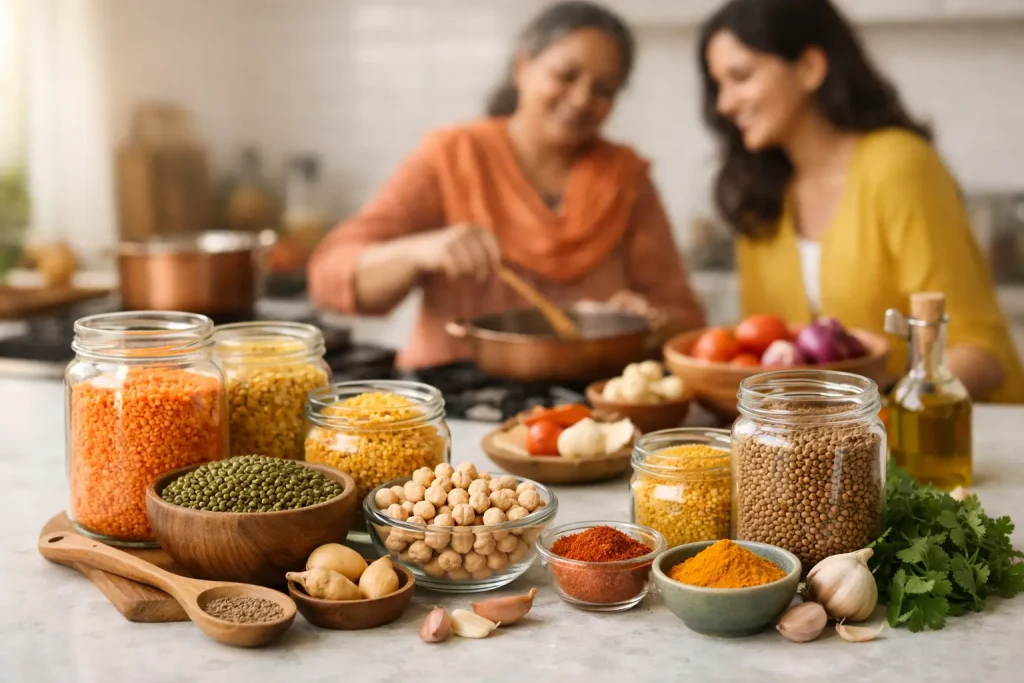
If your family cooks dal three or four times a week, start there. Think about the dals you reach for most often. For one home, that may be toor dal for everyday comfort cooking. For another, it may be moong dal because it cooks fast and feels light. Some families always keep chana dal for texture and urad dal for dosa batter, tadka, or mixed recipes. The point is not to buy every lentil on the shelf. It is to keep the ones you use most, plus one or two backups for variety.
For a typical weekly pantry, most households do well with two core dals and one supporting dal. That gives enough flexibility without crowding the shelf. If you cook larger batches for leftovers, buy a little extra. If you prefer fresh small-batch cooking, you can keep smaller packs and replenish more often.
A useful weekly dal pantry usually begins with three everyday categories: a main cooking dal, a quick-cook dal, and a recipe-specific dal.
Toor dal is often the mainstay because it works for classic dal with rice, sambhar-style meals, and simple pressure-cooked dinners. Moong dal is the weeknight favorite when time is short. It cooks quickly, digests easily, and suits both plain dal and khichdi-style meals. Chana dal or urad dal becomes the supporting staple depending on what your household cooks most.
This is where personal routine matters. If your family leans South Indian, urad dal may be non-negotiable. If you make hearty dals or snacks that use split chickpeas, chana dal earns its place. Masoor dal is another practical option for homes that want a fast, reliable lentil with a softer finish.
A good pantry is not built on rules. It is built on repetition. When you see the same pack going empty every week, that is your core item. Keep that one stocked first.
Dals alone do not make dinner happen. The reason some pantries feel easy to cook from is that the supporting basics are always there too. Rice is the obvious one. If dal is part of your weekly meal plan, your preferred rice should be treated as part of the same pantry system, not a separate purchase.
Then come the flavor builders. At minimum, most weekly dal cooking depends on salt, turmeric, cumin seeds, mustard seeds, red chili powder, whole dried chilies, and hing if your cooking style uses it. Garlic, ginger paste, and cooking oil or ghee also belong in the practical dal pantry because they are the difference between having ingredients and having a meal.
Some households also rely on curry leaves, tamarind, garam masala, or coriander powder depending on the dal recipes they cook most. You do not need every spice in large quantities. But you do need to notice which ones disappear fastest. A half-full pantry often fails because the small seasoning items are missing, not the dal itself.
The easiest way to keep your pantry balanced is to shop with actual meals in mind. If you know the week includes plain toor dal with rice, moong dal khichdi, and one thicker dal with roti or paratha, your buying decisions become much simpler.
This also helps with quantity. A small household may only need one medium pack of dal for the week plus reserve stock. A larger family may go through much more, especially if dal is packed for lunch the next day. There is no perfect number that fits everyone. What matters is knowing your weekly rhythm and buying to match it.
If your routine is unpredictable, keep one quick option and one comfort option. Quick means a dal that cooks fast on busy nights. Comfort means a dal you can make in a larger pot and serve more than once. That balance reduces stress and cuts waste.
Even a well-stocked pantry becomes frustrating if it is messy. The simplest setup is often the best. Keep your everyday dals together, your rice nearby, and your tadka essentials in one visible section. If possible, transfer frequently used items into clear containers so it is easy to see what is running low.
The real goal is not pantry perfection. It is speed. When dinner starts, you should be able to reach for dal, rice, cumin, turmeric, and chili without hunting through multiple shelves.
Labels help, especially when you keep similar-looking lentils in matching containers. So does a quick weekly check before placing your next order. It takes only a minute to spot whether you are low on toor dal, hing, or ghee. That one minute can save you from an extra trip later.
Many shoppers assume saving money means buying the biggest pack available. Sometimes that is true. Sometimes it is not. If a larger pack matches your real usage and storage space, it can be great value. But if it sits too long, gets ignored, or pushes you to buy other essentials less often, it is not really helping.
Weekly pantry shopping works best when it combines a few backup staples with a focused top-up of what you actually use. Think of it as two layers. The base layer is your trusted dals, rice, and spices. The top-up layer is what the week specifically needs.
This is also where trusted brands matter. Consistent quality makes a difference with pantry staples because you are buying them again and again. Reliable texture, cooking time, and taste remove guesswork from everyday meals.
If your schedule is packed, keep your pantry built around convenience as much as authenticity. That can mean ready-to-use ginger garlic paste, a dependable rice variety, a quick-cooking dal, and frozen roti or paratha in the freezer for backup dinners. There is nothing less authentic about making weeknight cooking easier.
This kind of setup is especially helpful for families balancing work, school, and regular household shopping. You want staples that support real life. A pantry that only works when you have plenty of time is not a practical pantry.
That is why many local shoppers prefer buying from one trusted place where they can restock dals, rice, spices, dairy, snacks, and freezer basics together. At One Stop Supermarket, that one-stop convenience is exactly what helps weekly shopping feel manageable instead of scattered.
A strong weekly dal pantry usually comes down to five checks: your main dal, your backup dal, rice, tadka spices, and oil or ghee. If those are covered, most homes can pull together several reliable meals without stress.
You may also want to watch the small extras that make dinner feel complete, like papad, pickles, biscuits for tea after the meal, or instant foods for the busiest nights. These are not the center of a dal pantry, but they do support the weekly routine many households actually live with.
The key is honesty. Stock for your family, your recipes, and your schedule. Not every pantry needs to look the same, and not every week needs a full reset. But when the right dals and basics are already on hand, home cooking becomes easier, faster, and much more consistent.
A weekly dal pantry should feel like peace of mind on the shelf – ready for simple dinners, second servings, and the kind of meals your household never gets tired of.